
It’s Tricky Tuesday, a way for me to share some of the tricks, tips and techniques I’ve used over the years when shooting portraits in the studio, in this case, I’m talking about different kinds of studio lighting and featuring aspiring model Laura May Bachmayer.
Today’s Post by Joe Farace
I will love the light for it shows me the way, yet I will endure the darkness because it shows me the stars.–Og Mandino.
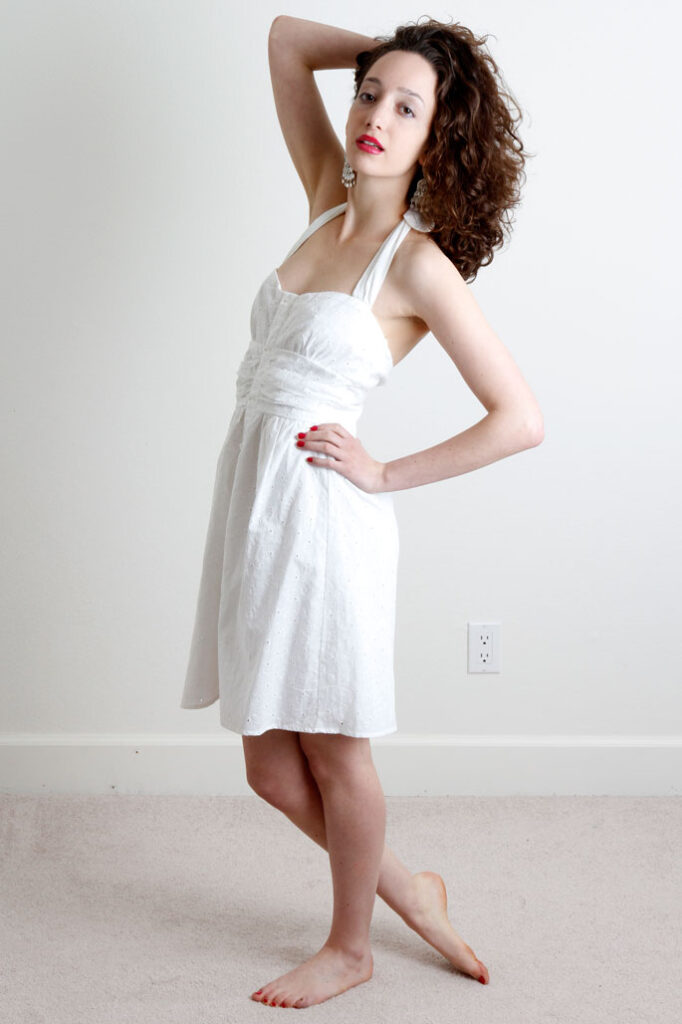 Back when Mary and I started our studio, we were looking at purchasing various kinds of studio lighting equipment, a wise photographer once advised us that, “Light… is light,” which is something I wrote about in this post. If you’re looking to start or add some portrait lighting gear, I would like to give you a look at some of the lighting equipment options you might want to think about.
Basic Types of Studio Lighting
Continuous lighting is the kind of lighting system that when you turn it one, is always “on,” much like turning on a light bulb or shooting outdoors with the sun. The big advantage of using continuous lighting equipment is that it lets you see exactly how the light falls on your subject and since some of this kind of gear is downright inexpensive—even using LED light bulbs—it makes a good starting point for anyone who;s on a budget.
Continuous sources sometimes use quartz or photoflood bulbs that can get hot, even dangerously so, leading to the use of the term “hot lights” to describe them. Some continuous lighting tools are made using fluorescent and LED lights producing what are, in effect, are cool “hot lights.” Although there are many advantages t shooting with Fluorescent lights, they are not as popular as they once were,mainly because of a perceived problem with disposing of FLD bulbs, I wrote a post about this situation, Whatever Happened to Fluorescent Portrait Lighting? that you read when you have time. :ED lights are not without their own set of quirks to, so no matter what kind of lighting system you choose you will have to adapt to each of their idiosyncrasies.
Another advantage of continuous lighting is that they will let you to use your in-camera light meter to measure the light that’s falling on your subject. Most of the time when I’m working with these kinds of light, and that’s likely to be LED, I shoot withe camera in Program mode mainly because it has worked so well for me.
 Electronic flash may be more familiar because almost every DSLR or mirrorless camera, with the exception of most professional models. has one built-in. Because the light from electronic flash is instantaneous you can’t directly see the effect of the light on your subject, which is why most studio electronic flash units have a built-in“ modeling” light that shows a pretty good approximation of what the lighting will look on the final image. But let’s face it, with mirrorless cameras you know what the lighting looks like after making that first shot.
There are different kinds of electronic flash lighting too and it boils down to a choice of monolights and power pack and head systems. Monolights, as I’ve written about before, combine a studio light’s power supply and flash head into a single, often compact, unit. The Paul C Buff DigiBee and AlienBee monolights that I use in my studio come to mind,
Power pack & head systems offer these components as individual units and can be mixed and matched to produce different kinds of lighting set-ups. Because there’s no internal power supply, the flash heads used in these systems tend to be quote small and some are downright tiny allowing you to place them in locations where monolights might not fit. Because these heads are often smaller than a monolight, there’s room for cooling fans without head size getting too large or the fan too big and noisy.
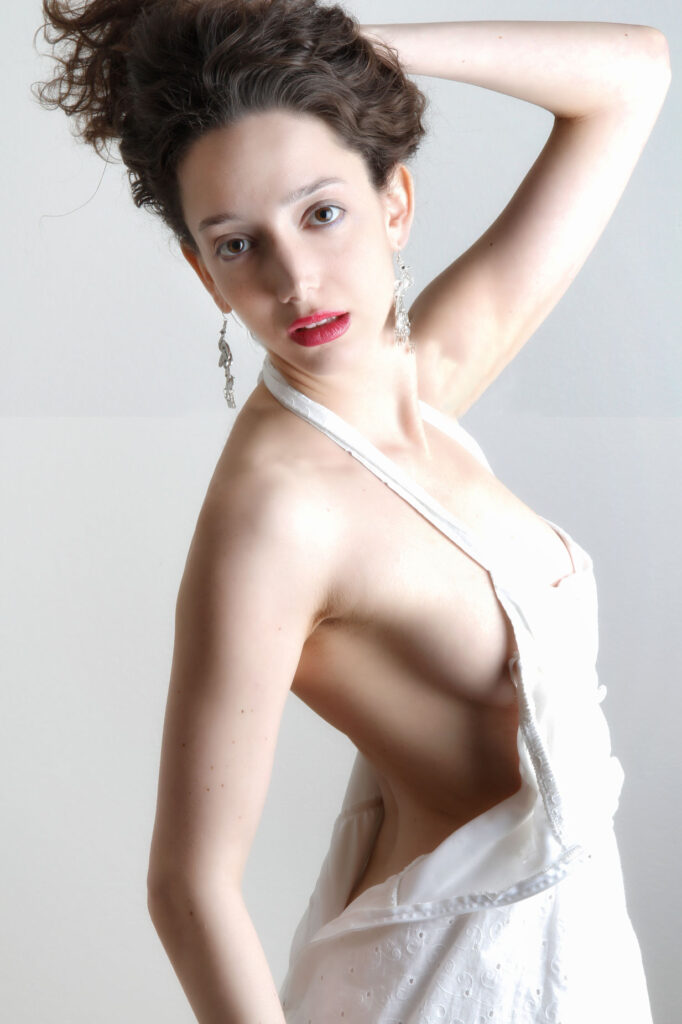
Another advantage of this type of system is that the power supply can control more than one head at the same time. Usually the output for each flash is controlled separately in either symmetric or asymmetric configurations. The power supply itself can be larger because the design needn’t be concerned as much about heat buildup affecting the flash head allowing more flash heads to be connected. Sometimes you can get by with two lights as this set-up demonstrates.
How I made this photograph: Here’s aspiring model Laura May Bachmayer doing her best Holly Golightly turn. She was photographed using a Broncolor power pack and head electronic flash system. The high-key lighting set-up used a Broncolor MobiLED head with 36×48-inch softbox that was placed at camera right, while the second head, at camera right, is aimed at the studio’s originally white (now grey) wall. The camera used is a Canon EOS 60D with EF-S 15-85mm f/3.5-5.6 IS USM lens (at 50mm) with an exposure of 1/125 sec at f/16 and ISO 320.
This particular image is a composite of two shots that were made within a few seconds of one another. I didn’t like her expression on one shot and didn’t like her body pose in the other, so I combined them using the Cut & Paste Portrait technique I’ve explained in the linked post. I don’t consider this cheating because these composite images combine parts of photographs of the same person that were made at the same time using the same camera, lens and lighting. Your may think differently and that’s OK with me.
 If you enjoyed today’s blog post and would like to buy Joe a cup of Earl Grey tea ($2.50), click here. And if you do, thanks so much.
Joe Farace’s Glamour Photography is full of tips, tools and techniques for glamour and boudoir photography with new copies available from Amazon for $30.54. Used copies start at around twenty-five bucks, as I write this and the Kindle version is $19.99 for those who prefer a digital format.