
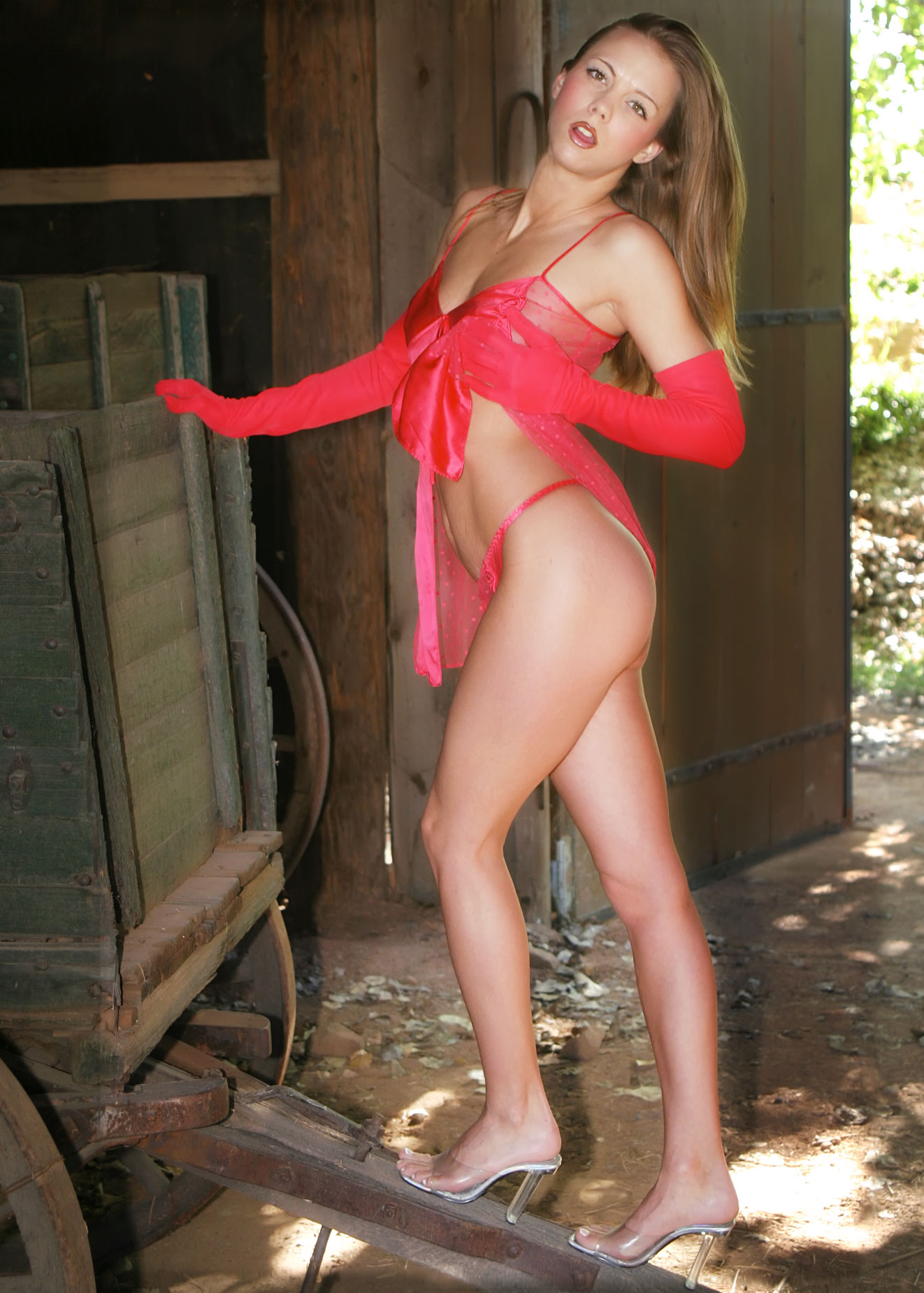
My Sunday Series on outdoor portraiture continues today with a portrait of Tasha. Shooting models wearing lingerie outdoors can be a challenge. In a barn? Not so much, as you will discover.
Today’s Post by Joe Farace
I’ve written four books on the subject of portrait and glamour photography, including one on Available Light Glamour Photography that nicely fits this series of posts. While these kinds of books provide useful information and can kick start your creativity, the best way to continually improve your photography is by practicing. I think you should (try) to make time each week to photograph anything so you’ll eventually reach a point when you don’t have to think about how to use your camera anymore. You’ll just use it.
You shouldn’t worry about trying to produce masterpieces each time you practice. You can use the camera as a sketchpad to explore the visual possibilities and, while you’re at it, don’t be afraid of making mistakes. Sometimes these “sketches” will be successful, sometimes not but take the opportunity to learn from each of the images by analyzing them and seeing what you got right, what you liked and what you didn’t like. So the next time you go out to make an outdoor portrait…
 Here are five tips that might help:
- Look for locations where the light is interesting. Many times photographs are made in locations the photographer or their subject choose without considering the lighting conditions. This approach can work for some outdoor locations but it’s much more critical for indoor portraits. made with available light. In my former home, my favorite place to shoot window light portraits was the kitchen. You may have a similar location in your house but never thought about how an unlikely location might be a great place to make a portrait.
- Search for interesting outdoor locations. Not long ago, there was an on-line discussion about what inspires people to create new images. For me, it’s new things. It can be a new camera, new lens, or just a new place to make photographs. When driving around I’il often make notes about locations that could serve as a location for a portrait session.
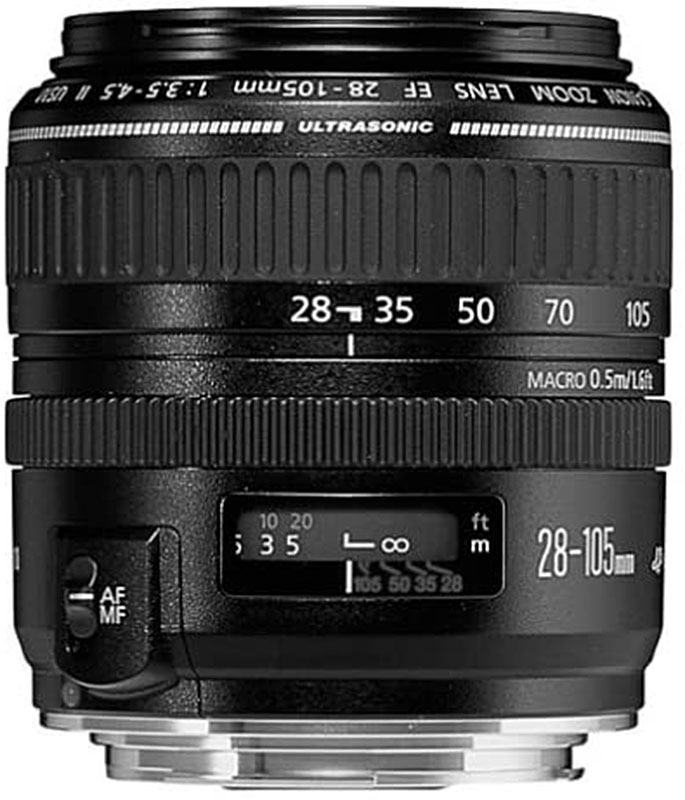
How I Made this Portrait: I had photographed Tasha in my former home before making this image of her at a group model shoot in Phoenix several years ago. This portrait of Tasha was made using a Canon EOS 10D with an EF 28-105mm f/3.5-4.5 II USM lens (at 48mm) and an exposure of 1/60 sec at f/4.5 and ISO 200. A Canon 420EX speedlite with a Sto-Fen Omni Bounce diffuser to soften light from the flash was used as fill and to brighten the dim light inside the barn. This portrait combines parts of two different JPEG files into a single image using my Cut & Paste Portrait technique. You can read about this technique as well as my rationale for using it in the linked post.
- Keep your lighting simple. For these kinds of portraits, I prefer to work with as few (artificial) light sources as possible because the less time spent fiddling with equipment, the more time you can spend putting your subject at ease. Sometimes my available light portraits are made using only a single reflector—sometimes not. I’ll often use an old, inexpensive 32-inch double-sided reflectors that collapses to the size of a large pizza.
 Watch the background. It’s so easy to concentrate on the person you’re photographing that you forget about the background where you’ve placed them. One of Farace’s Laws is: If you watch the background, the foreground will take care of itself. Busy, ugly backgrounds can be thrown out of focus with longer focal length lenses and/or wide apertures but sometimes you may have to physically clean up an outdoor site before making a portrait. While you can always digitally remove beer cans and fast food wrappers, taking the time to tidy up the location before making a portrait leaves it clean for everybody else.
- Talk to your subject. I’ll never forget the advice one of my mentors gave me many years ago. When I asked what was the worst thing I could do when photographing people, I expected him to give me a technical tip but his answer was a surprise: “If you don’t talk to the people you’re never going make a good picture.” I’ve never forgotten that advice and wanted to pass it along to you.
Finally, photographing people combines elements of psychology as much as camera technology and how you personally interact with your subject will have a lot more to do with the success of your session than the camera or lens that you use.
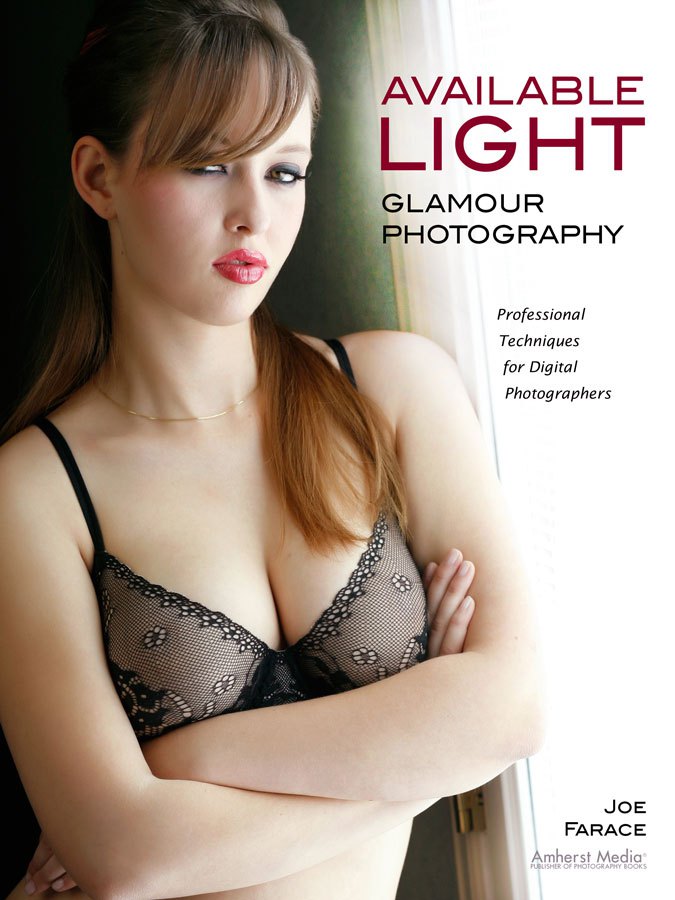
You can learn all of my tips, tools and techniques on shooting available light glamour photography in my book surprisingly titled Available Light Glamour Photography. Used copies of the book are available from Amazon starting around thirty-six bucks as I write this. Kindle copes are $27.69 a digital format.