
It’s #anythingcanhappenday and today’s post features a portrait of Victoria. This image was part of a series of images that I shot in Lightware’s Denver studio and was my third shoot with Victoria.
Today’s Post by Joe Farace
“Blue is the only color which maintains its own character in all its tones. It will always stay blue.” – Raoul Dufy.
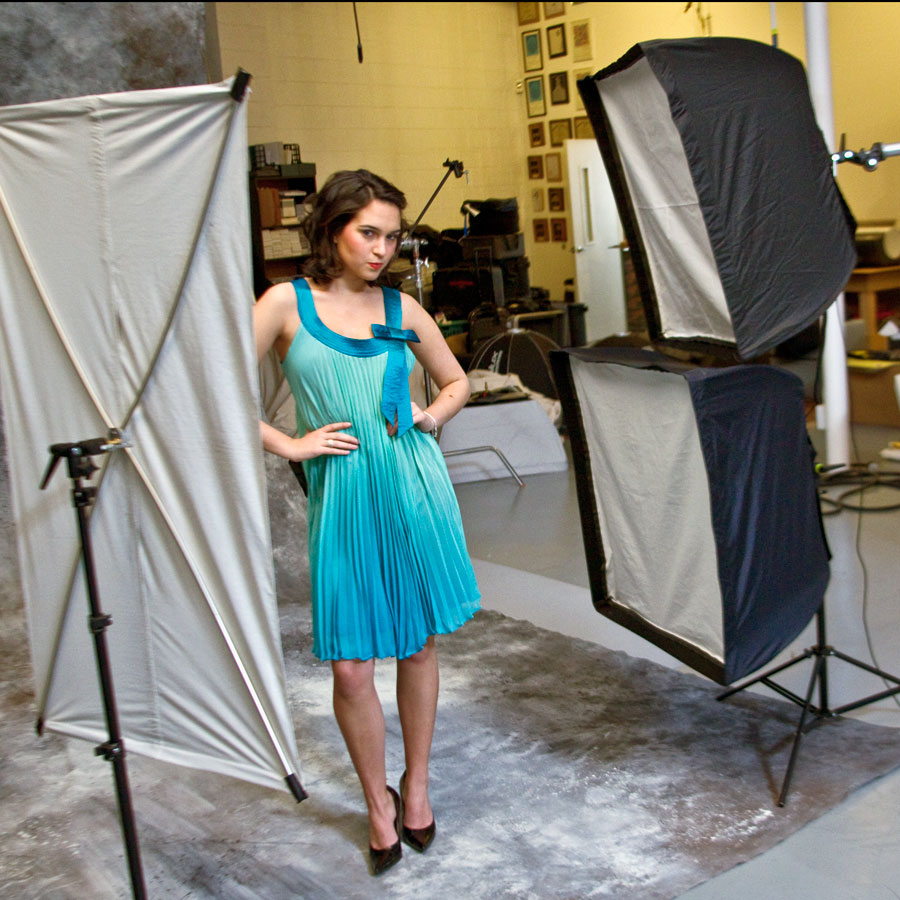 Studio lighting sources have four major characteristics: color, direction, quantity, and quality.
When working with any light source from speedlights to monolights the best way to improve the quality of your lighting is by using a some kind of modification device such as an umbrella or a soft box and each one of these tools has its own advantages and disadvantages. No matter which one you chose, each device is governed by this important rule: The closer a light source is to the subject the softer it is; the further away the light source is, the harder it becomes.
Maybe It’s a Soft Box
A soft box is a type of lighting modifier that’s used in photography and videography. It’s an enclosure that surrounds a light source and (usually) has reflective interior panels with diffusion material located in the front to soften and spread the light. A soft box can be used with either flash or continuous light sources, depending on the light source and heat rating of the soft box.
The main advantage of using soft boxes is they are available in large sizes that when placed close to a subject produce soft, yet directional light not dissimilar to window light. There are lots of accessories available for softboxes, such as grids or louvers that can change the character of the lighting adding to their versatility. What’s the downside?
Compared to umbrellas, softboxes are not inexpensive so all that directionality comes with a price tag. Soft boxes are more complex to produce than umbrellas, so they cost more and sizes can vary from smaller speedlight-specific models to humongous. Unlike umbrellas that are forgiving, soft boxes require some basic knowledge of balancing the main versus fill light (that fill could even be an umbrella) so it won’t produce too contrasty lighting. Unless of course that’s what you want.
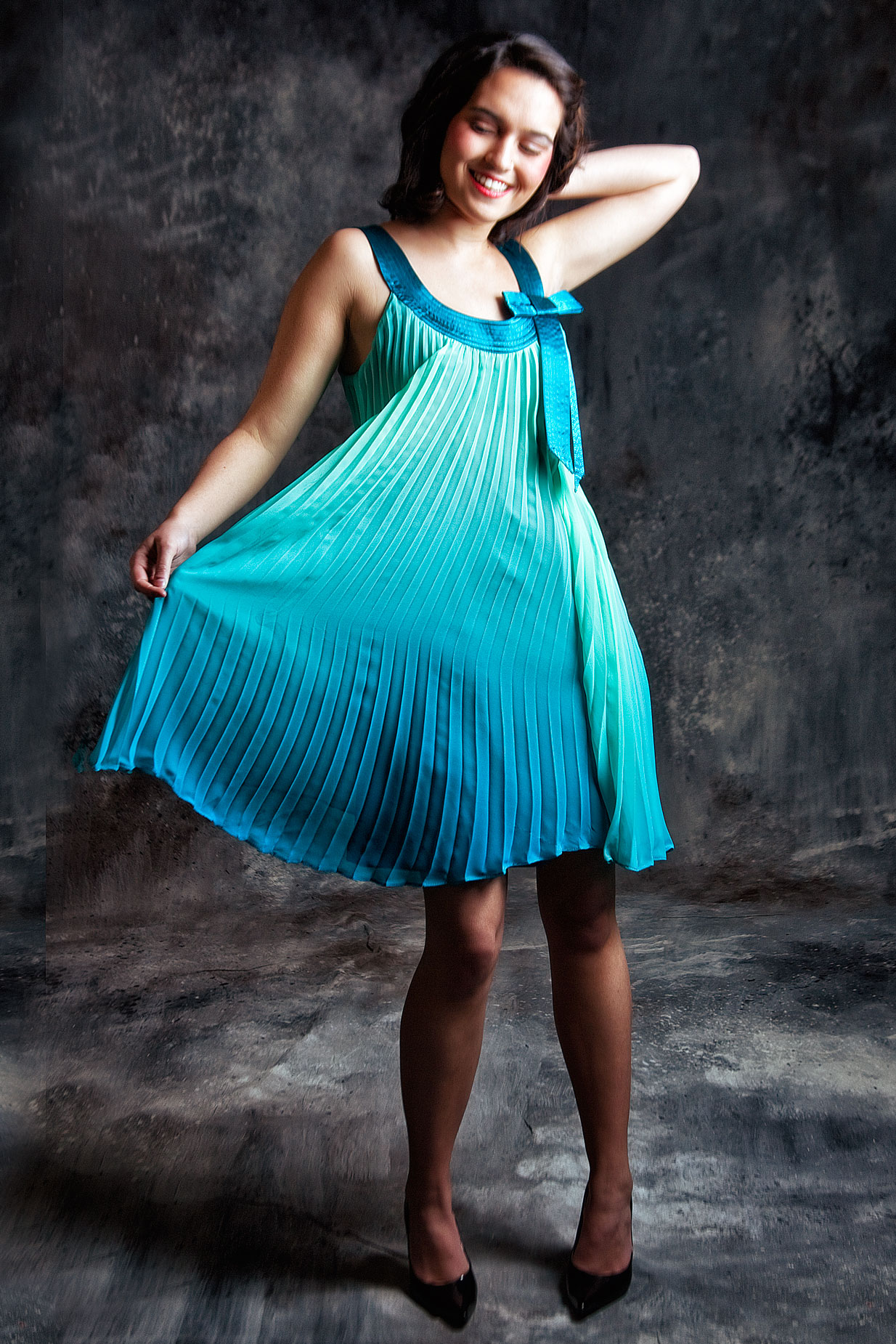 How I made this portrait: For this full-length portrait of Victoria, two 30-inch FourSquare softboxes, each with a single Nikon SB-800 speedlight mounted, was used as the main light. A reflector was placed at camera left. Backdrop was the “Carbonite by Joe Farace” muslin background from Silverlake Photo Accessories. The camera used was a Canon EOS 1D Mark IV with an EF 28-135mm f/3.5-5.6 IS lens at 55mm with an exposure of 1/100 sec at f/5.6 and ISO 200. The original RAW file was sharpened with Photoshop’s Smart Sharpener before being tweaked with Vivenza and then the Tonal Contrast and Glamour Glow filters from Color Efex.
Choices are what this whole discussion about light modifiers is all about and you should select the one that matches the style of portrait you’re trying to make. Sometimes that will require an umbrella and sometimes it’ll be a softbox or as in this case two. There is no “one size fits all” solution to lighting and ultimately the choice is yours and based on the desired lighting style and your budget. Just as you will select the right lens and ISO for a natural light photograph, when it comes to working with artificial light you need to select the right tool for the job.
In and Out of Focus
This series of images could (maybe should ) have qualified for one of my Stupid Photographer’s Tricks series of posts. None of the images I shot of Victoria in either this blue dress or another series with her wearing pink could charitably be called sharp. In some of them the dress is sharp but her face is not. She is an active model but the flash should have frozen her movement and, at the apertures these images were made, there should have been enough depth-of-field to maintain sharpness.
I decided, for whatever reason to compare flash durations, something that most photographers don’t typically think about except for super critical applications. A Nikon SB-800 has a flash duration of 1/1050 sec at full power. The Paul C Buff Digibee 800 monolights I use in my studio have a flash duration of 1/975 sec. so that’s not it. Could it have been a camera problem with the Canon EOS 1D Mk IV? Similar images I shot in a previous session with Victoria at my friend Jack Dean’s studio with that same camera and lens were tack sharp. If you have any ideas about how this might have occurred, please let me know.

My book Joe Farace’s Glamour Photography is full of tips, tools and techniques for glamour and boudoir photography and includes information on all of the cameras used as well as the exposure data for each image. New books are available from Amazon for $45.08 with used copies selling for around forty-four bucks, as I write this. The Kindle version is $19.99 for those preferring a digital format.