
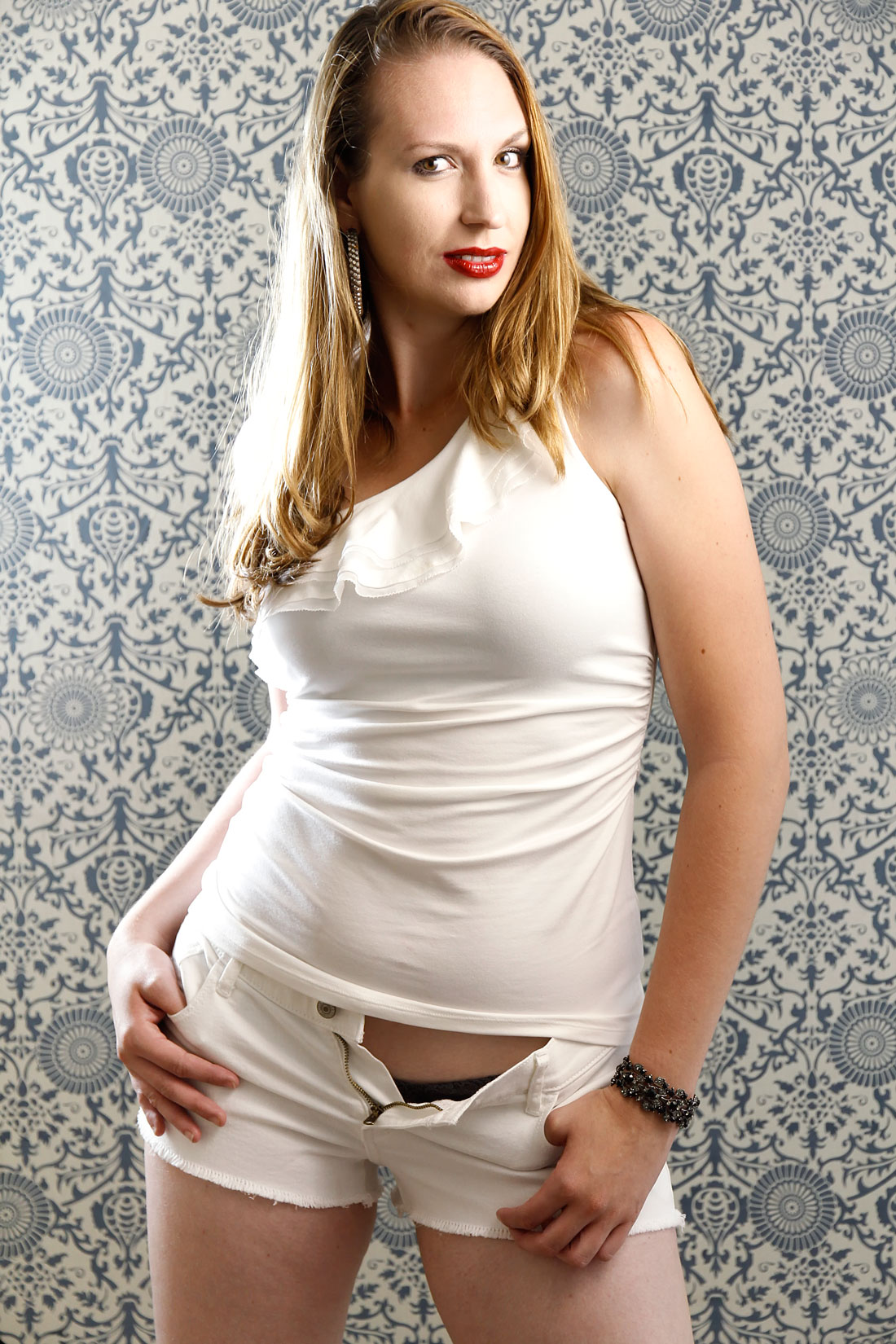
It’s “Tricky Tuesday” which is a way for me to share some of the tricks, tips and techniques I’ve used over the years when shooting portraits in the studio, Today’s post features the statuesque–she’s six-feet tall–and talented Danielle and the image is from the first of our three shoots together.
Today’s Post by Joe Farace
The mind is like an umbrella. Its most useful when open.–Walter Gropius
 This post is a more-or-less follow up to a video I did several years ago called Studio Tour: Found Footage Special video where I showed some of the gear I used to make portrait and glamour images. So, better late then never, I hope to write more posts like this one where I look at some of the specific lighting tools I’m using in my home-based studio. Today’s it’s about one of my favorites, the umbrella, specifically…
…big umbrellas.
New portrait photographers might get confused when selecting lighting equipment for making portraits or even semi-glamour images like today’s featured photograph of Danielle. Photographers just getting started might think that understanding portrait lighting is complicated and the gear you need is expensive but in reality it can be neither. Part of this confusion is created by the often bewildering array of products and buzzwords you may encounter on the Internet. To avoid getting lost, here’s the most important lighting rule you should keep in mind:
The closer and larger a light source is to a subject, the softer the quality of the light will be. Conversely, the further away and the smaller the light source is, the harder it becomes.
That’s why the size and shape of your chosen light source should be part of any decision when determining the products you’ll purchase how those choices will affect the lighting quality for your portrait or glamour photographs.
 Photographic umbrellas produce a broad, soft light source and their construction is not all that different from those designed to keep you dry when its raining. Umbrellas are available in different fabric coverings and sizes and some are even available as collapsible models that let you to create a compact lighting kit you can take on the road.
The type and color of an umbrella’s fabric has a bearing on the color temperature of the kind of light it produces. In addition to neutral-colored white umbrellas, there are gold umbrellas that can be used to “warm up” a portrait subject and there are even “zebra” umbrellas that alternate strips of gold and silver to give some warmth to an image but not too much. Shiny silver fabrics create sparkly looks and soft white does just what it sounds like. Some umbrellas use thin, translucent fabrics allowing you to reverse the umbrella and use it in “shoot through” mode as I did in this case.
Best of all, umbrellas may be the cheapest lighting modifier you can use, which can be a prime consideration for someone getting started in portrait photography.Neewer’s Professional 33-inch White Translucent Umbrella costs just $23.40. and can be used in either bounce or shoot-through mode offering both diffused light or a soft, bounced light source,Paul C Buff’s parabolic white 51-inch PLM umbrella costs $99.95 and can also be used as a shoot-through. That big umbrella provides a wide, unfocused spread of light covering a 150 degree area for low specularity lighting with large round catch lights and soft shadows. PLM umbrellas are available in other sizes (64- and 86-inch) in white and silver. Paul C Buff is not a sponsor of me or this blog. I do not get a single penny from you clicking those links; they are provided for your convenience.
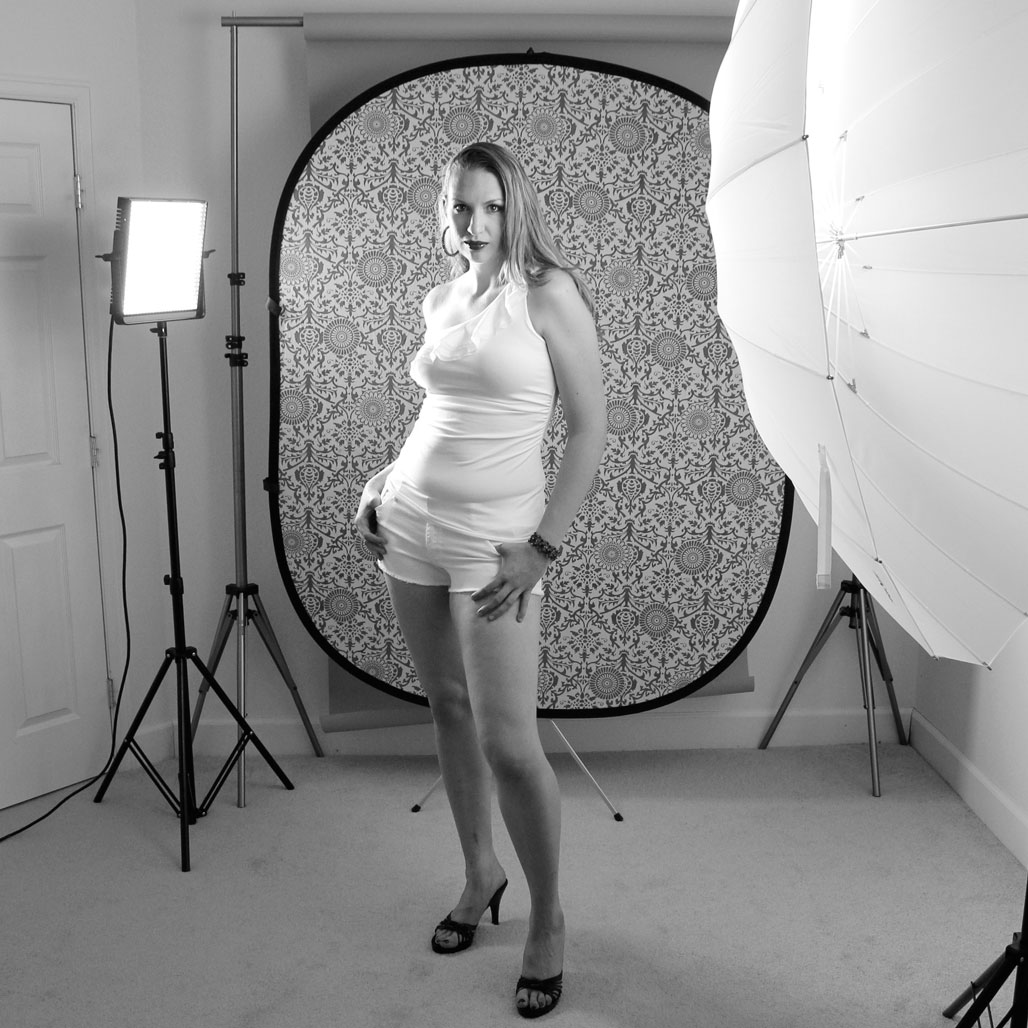
How I made this portrait: In this lighting setup (above right) a large white parabolic umbrella was mounted on an LED light that was placed at camera right. Another LED unit is located at camera left to provide some side lighting. The background was a collapsible Retro 60×72-inch blue Accent backdrop from Savage Universal. The camera used was Canon EOS 60D with EF-S15-85mm f/3.5-5.6 IS USM lens and an exposure of 1/40 sec at f/5 and ISO 640 with a plus one and one-third stop exposure compensation.
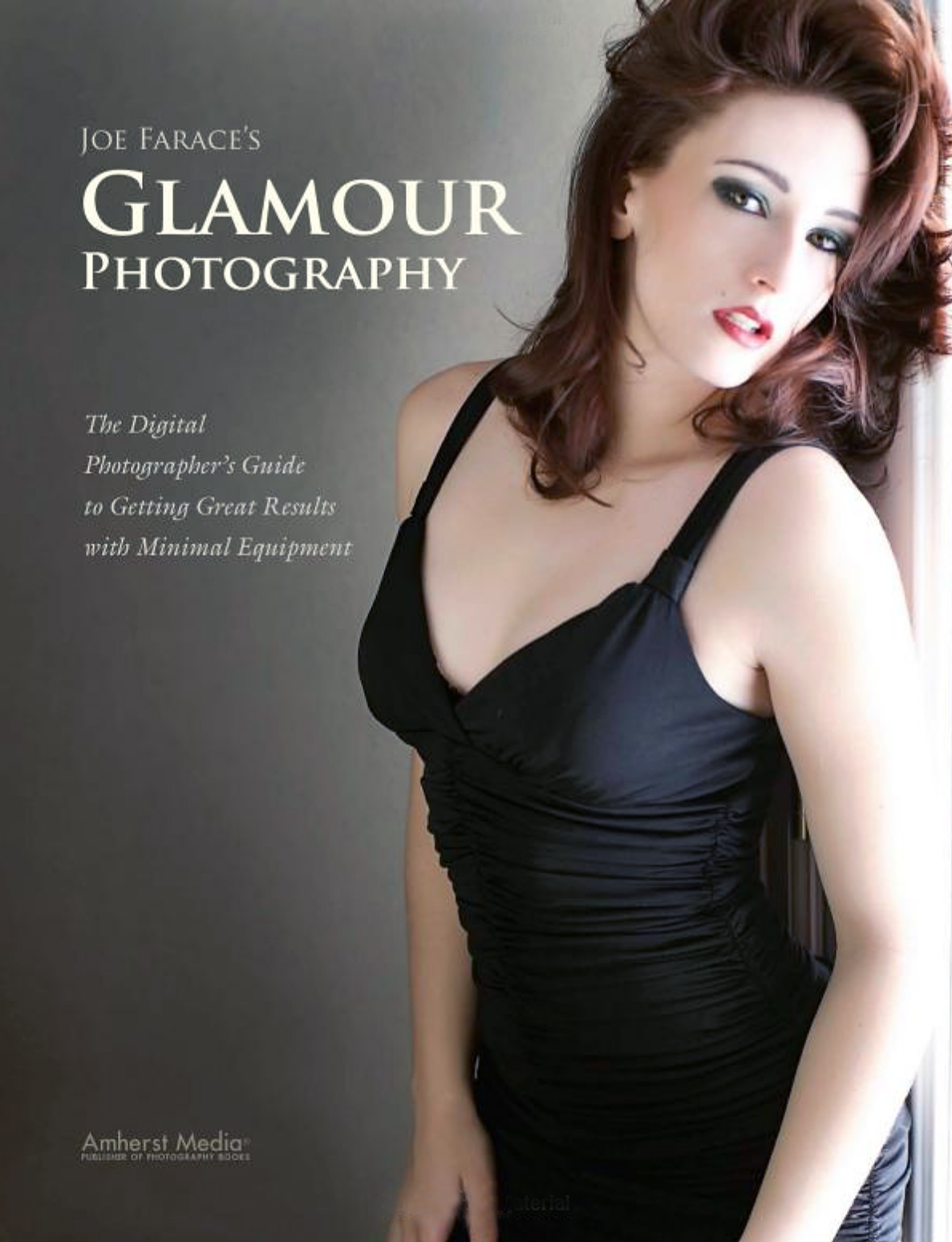
My book Joe Farace’s Glamour Photography is full of tips, tools and techniques for glamour and boudoir photography and includes information on all of the cameras used as well as the complete exposure data for each image. Used copies are $34.19.as I write this. The Kindle version is $19.99 for those preferring a digital format.