
Today’s Post by Joe Farace
“I never travel without my diary. One should always have something sensational to read in the train.” ― The Importance of Being Earnest
 My late brother Michael was a talented actor and when he was in college I was delighted to watch him appear on stage in The Importance of Being Earnest.
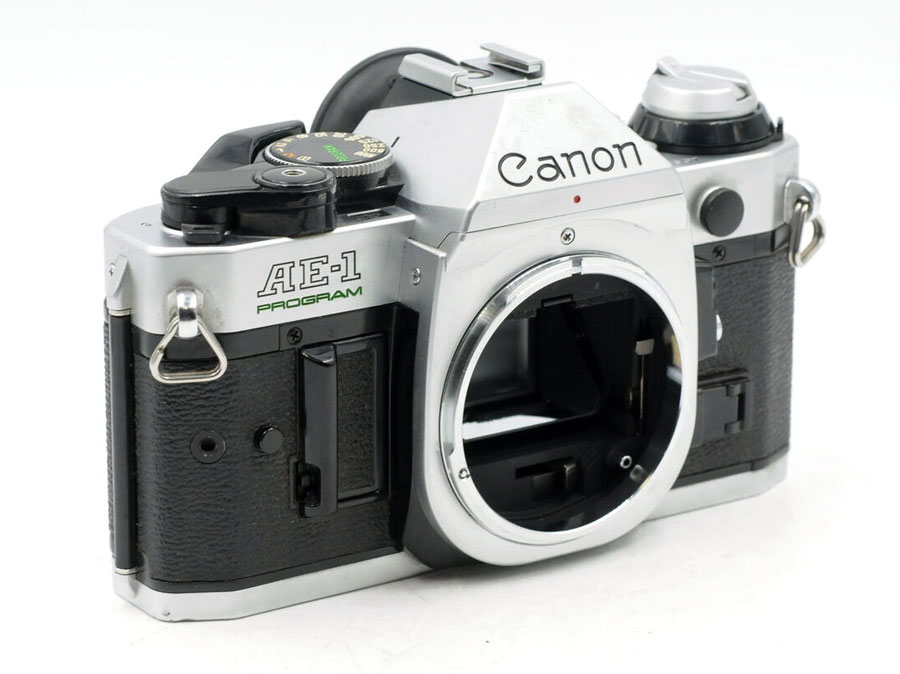
My quest for collecting all of the cameras in Canon’s A-Series began in earnest with the Canon AE-1 Program. Until I purchased this particular model, I didn’t know there were still three more cameras in the A-series.
My Earnest Collection of A-Series Cameras
The Canon AE-1 Program uses Canon’s (manual focus) FD lens mount and was introduced in April 1981 as the successor to the Canon AE-1. According to Canon’s date coding system, my camera was built in March, 1984. The biggest difference between the two models was the addition of the Program mode that Canon first used its A-1 model. If you want more control, the AE-1 Program’s shutter priority auto-exposure and full manual modes are still available.
 Unlike the AE-1, the viewfinder uses LEDs to show information to the user. The AE-1 Program has a right-hand grip on its front but mine was missing it from the “good” condition model— meaning “between 75-89% of original”—that I purchased. It definitely is on the 75% side of that range and the photo makes it look better than it really is.
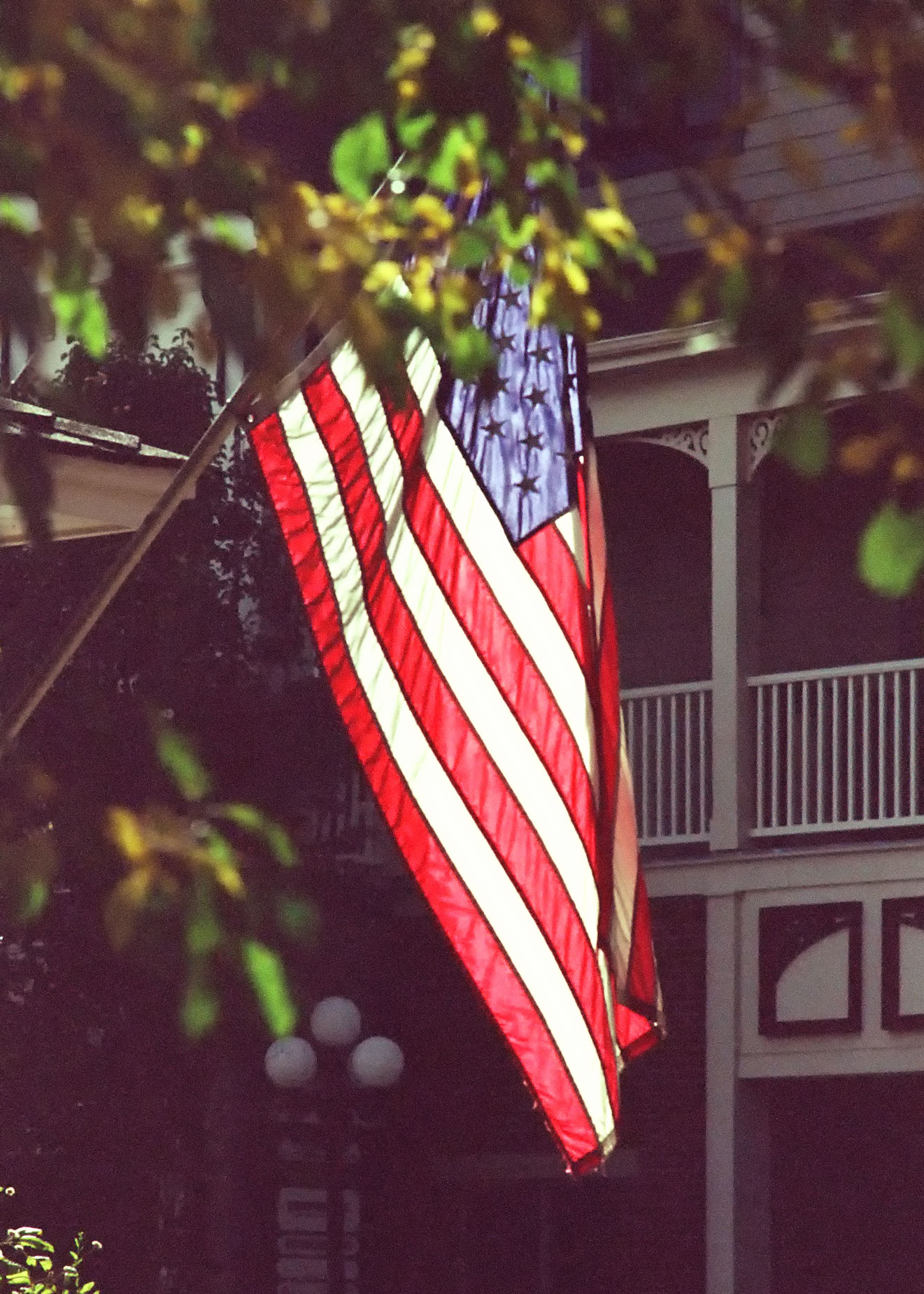
How I Made this Photograph: My typical Parker, Colorado PhotoWalk takes me down Mainstreet (proper spelling) and onto Pikes Peak Drive which is populated with many charming Victorian-era homes. The design of some of these homes give it the feel of New Orleans and not Colorado, especially when shooting with some expired Kodak Portra 160 that was shot with Canon’s FD 135mm f/2.8 lens. I probably should have overexposed the film by two stops but did not, producing this (not-on-purpose) pseudo nighttime look
The PhotoWalk also took me past my wall of perfectly laid bricks, which I found is being covered with construction equipment. It’s been like that for several weeks now with no visible activity. I hope I don’t loose my favorite brick wall but I have already been scouting and auditioning some potential replacement walls.
The Motor Drive MA, which I also ordered from Used Photo Pro, was designed for the A-1 but can be used with the AE-1 and AE-1 Program. Two power sources are available: the Battery Pack MA or the Ni-Cd Pack MA. The Battery Pack MA uses twelve AA batteries! Yet it’s compact —but heavy. With it attached to the AE-1 Program, it’s one-quarter inch taller than an AE-1 with a Winder A attached. With the AE-1 Program, continuous shooting at up to four frames per second is possible and the motorized film advance automatically stops at end of a roll and lights a warning lamp. The lamp also lights when motorized film advance takes a longer than normal indicating battery exhaustion.
Like the A-1, the AE-1 Program supports interchangeable focusing screens that can be replaced by the user. My camera came with a split/microprism screen but seven other options were available. The focusing screen on the AE-1 Program is said to be brighter than other focusing screens used in Canon’s manual focus cameras but the screen in my AE-1 is surprisingly bright and makes manual focusing a snap, The AE-1 Program retains the A-series electromagnet-controlled cloth-curtain shutter that limits the top shutter speed to 1/1000 of a second with a flash sync speed of 1/60 sec.
Did Somebody Say Backup?
In the film days, no pro photographers would ever go on an assignment without a back-up camera. With digital capture this thinking seems to have vanished and I’ve talked with many shooters, even wedding photographers, who go on assignments with just a single camera. One reason I got the AE-1 Program was to use it as a back-up to my 43-year old Canon AE-1 but having two similar bodies also lets me shoot color in one Canon body and black and white in the other.