
In an upcoming podcast with Barry Staver and myself—it’s Number 4 in our Pixel, Grain & Cookies Podcasts—during the Show N’Tell section, I talk about my favorite film-based SLR, the Canon A-1. This camera has unique capabilities plus a wonderfully analog user experience. Look for this podcast on my YouTube channel real soon now.
Today’s Post by Joe Farace
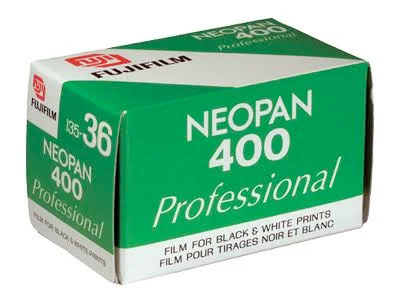 On a sunny morning I loaded my Canon A-1 with a roll of expired, 13 year-old Fujifilm Neopan 400 Professional film that some people consider “one of the greatest and most distinctive black and white emulsions ever produced” and headed out for a PhotoWalk. My goal was to have a casual stroll in downtown Parker, Colorado to test the camera with a newly acquired Canon FD 50mm f/3.5 macro lens.
The Canon A-1 SLR
The Canon A-1 is a 35mm film SLR that was manufactured in Japan from 1978 to 1985 and uses the company’s FD-series of lenses. According to Canon’s date code (inside the camera’s back where the film cassette sits) my camera was produced in June, 1983. When I got this camera I already owned an AE-1 and AE-1 Program and thought this was an A-series trifecta but soon discovered there were three more cameras in the A-series: the AT-1, AV-1 and the sorta autofocus AL-1 that was launched in 1982. Because I tend to be obsessive about things, Mary bought me the first two as Christmas presents and I acquired an AL-1 for the novelty of its focus confirmation system.
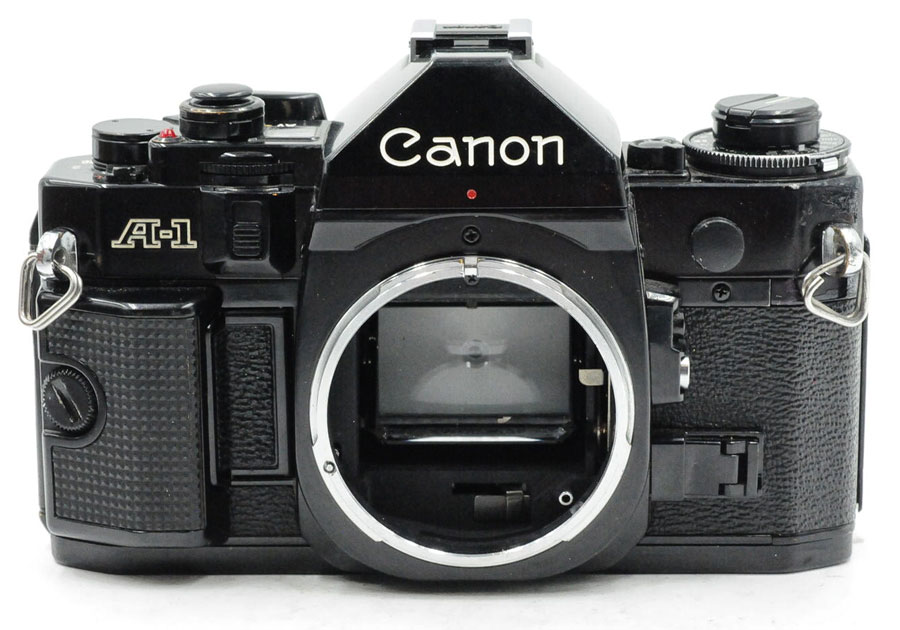 The A-1 was the first SLR to offer an electronically controlled programmed auto exposure mode. The camera uses a horizontal cloth focal-plane shutter that has a range from 30 to 1/1000 sec plus bulb with flash sync at a less than ideal 1/60 sec. It measures a handy 3.6 x 5.6 x 1.9 inches (9 x 14 x 4.8 cm) in size and weighs 22 oz (0.6 kg.) Unlike the other A-series cameras, the A-1 was only available in a black finish.
The introductory price for the camera body with FD 50 mm f/1.4 SSC lens was $625; the camera body generally sold for around $400 during a time when the NY camera stores offered real discounts. In today’s dollars that amounts to $1,350 and I paid $100 for a Near Mint (more Mint than Near) body that also included a Power Winder A that adds 6.4 oz (,18 kg) to the package, plus the weight of four AA batteries.
I hear complaints from new photographers about how modern DSLRs or mirrorless cameras are complicated. Depending on model, Canon’s A-series SLR’s are often festooned with tiny buttons, levers and knobs and that’s especially true with the A-1, which is one reason why I love it. Surrounding the A-1’s battery test button, for example, is a collared switch that also turns the LED display on in the viewfinder, which on my camera is bright and sharp. The A-1 can shoot three automatic exposure modes (Tv, Av and Program) as well as Manual.
 There are divided opinions among the Internet experts and pundits about the FD 50mm f/3.5 macro lens. Some people seem to love it, saying it’s one of Canon’s sharpest lenses, while others say it’s not. Part of this confusion is that there are two versions of the lens. You can tell the difference because older 50mm f/3.5 macro lenses use a 55mm filter thread while the newer ones use 52mm, as is the case with my won 50mm macro lens. But… Nobody agrees which one is better. The lens has a magnification ratio of 1:2 but when using Canon’s 25mm Extension Tube, it’s able to reach 1:1. My macro lens cost $75 on eBay and came with both caps, a lens hood and Canon’s FD25 extension tube. The lens is in true Mint condition making it a good buy because it also included a 1984 LA Olympics lens cap that’s worth twenty bucks all by itself.
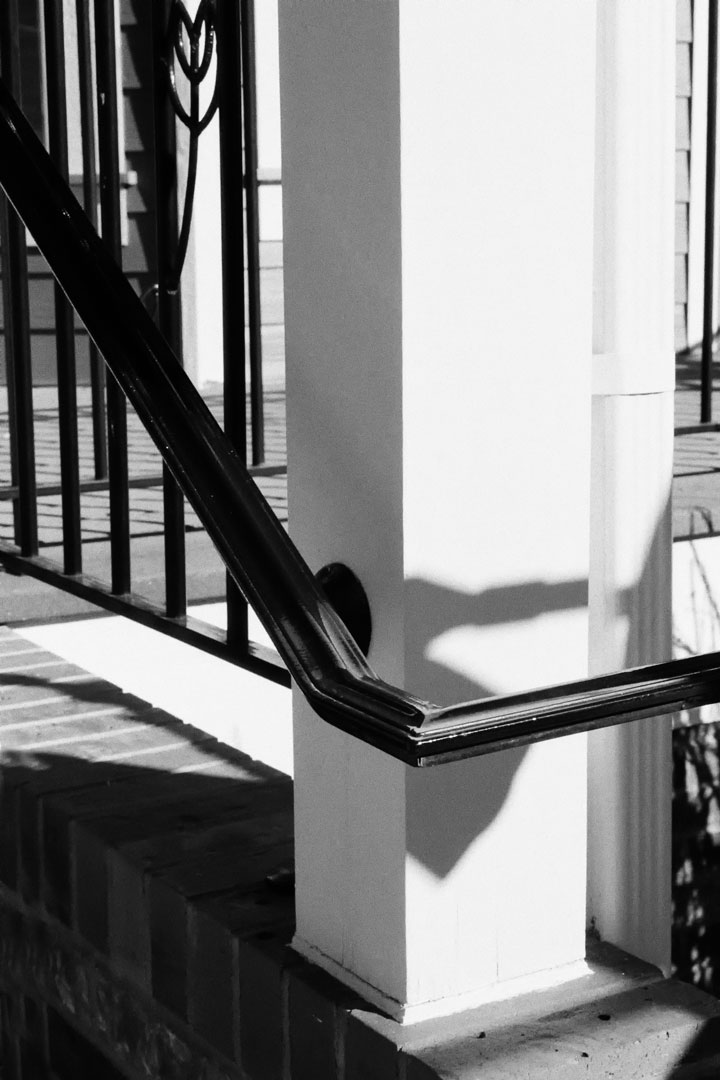
So how did the camera and lens perform? In operation they were both picture perfect but ultimately it came down to how does the film look? I sent the exposed film to The Darkroom for processing and scanning and, as usual, the film was properly processed—I made no exposure adjustments for its age—and scanned. You can see the results at right. The film looked great and the lens performed wonderfully. It’s sharp but has much more throw from left to right than my FD 50mm f/1.8 lens but that’s to be expected since it focuses much closer. I plan to shoot it with the extension tube real soon now to do some (color) macro shots, maybe some flowers.
Postscript: Some readers asked why I’m shooting film when it’s so expensive. (See my posts “Film Prices: Now I get it” for another take on this subject.) Here’s my out-of-pocket costs for today’s post: The camera cost $100.99, the lens was $75, and the film? I don’t remember what it cost; I bought it in 2008. Processing and scanning the film was $21.54 The full frame Nikon Z9 body is $5,199.95 plus lens and a CFexpress Type B / XQD memory card. Processing costs? While you can always use an old version of Photoshop, like I do, an Adobe Photoshop subscription can cost $19.99 a month for the rest of your life. So you can just do the math? Me, I don’t know? It makes my head hurt but shooting film is just fun for me.
If you enjoyed today’s post and would like to support this blog so I can to increase the coverage of film photography, please consider making a monthly contribution via Patreon. Memberships start at just $1.25 a month, with other levels of support at $2.50 and $5 that include special benefits.