
Film Friday is on a temporary hiatus as I make the time to shoot some of the different black & white and color film emulsions I picked up over the winter. In the meantime, here’s my take on one of our reader’s favorite topics–exposure–and how I used it for creating an outdoor glamour portrait with the incredible Anna Lieb.
Today’s Post by Joe Farace
Glamour to me is about remaining graceful and understated. —Kate Winslet
 The term Lighting Ratio refers to a comparison of the key or main light to the fill light. The ratio can be determined in relation to f/stops since each increase in f-stop is equal to double the amount of light: The higher the lighting ratio is in a portrait, the higher the contrast will be. Conversely, the lower the ratio, the lower the contrast. This is easier to control in the studio but can be more of a challenge when working outdoors with (mostly) available light.
It’s All Abut the Lighting
First some exposure basics: If you take a meter reading for a subject and and set a Manual mode exposure of 1/500 sec at f/11 and ISO 200 and want to use a slower shutter speed and choose 1/125 sec you will have to adjust the aperture (make it smaller) so the same (equivalent) amount of light falls onto the sensor or film. By selecting your camera’s Aperture (Av) or Shutter (Tv) priority exposure modes, it should be able calculate the equivalent exposure for you, eliminating any guesswork. But to tell the truth, sometimes when working under fast changing lighting conditions, I’ll use Program mode.
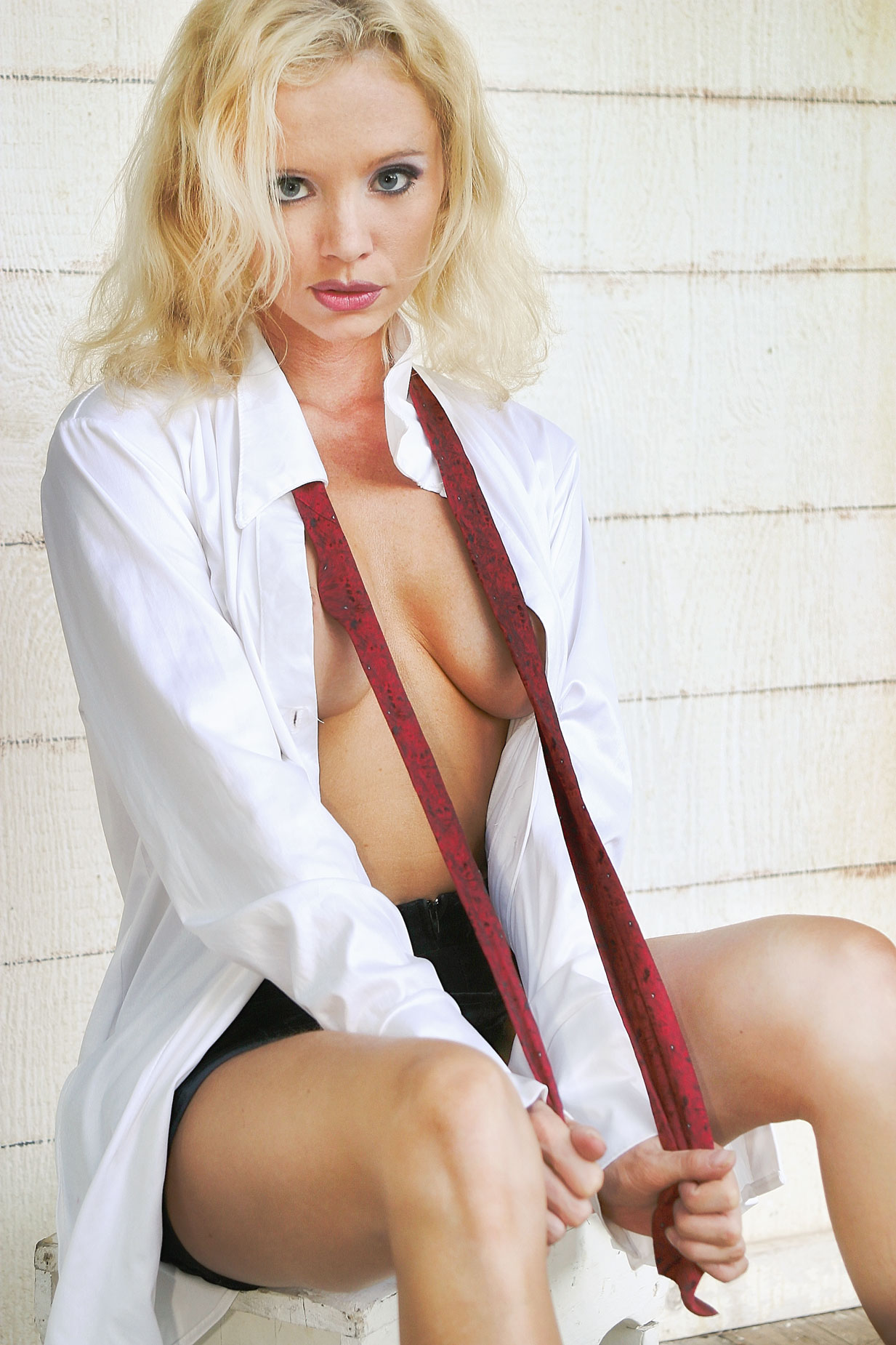
How I made this portrait: I made this outdoor portrait of the always amazing model Ann Lieb while she was sitting on the porch of a movie set in Phoenix, Arizona. This available light portrait was made using a Canon EOS 10D with an EF 28-105mm f/3.5-4.5 II USM lens with an exposure of 1/80 sec at f/4 and ISO 200 with a plus two-thirds stop exposure compensation. A Canon Speedlite 420EX with Sto-fen Omni Bounce diffuser attached was used for fill creating a relatively flat lighting ratio.The useful EF 28-105mm f/3.5-4.5 II USM lens has been discontinued but you can pick up a used one from KEH or MPG for around. $150. as I write this.
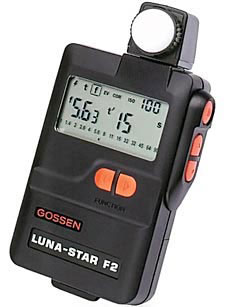 In a previous post entitles Light Metering: The Darkest Object, I looked at the opposite kind pf lighting conditions when creating portraits (sorta) outdoors using available light. For the look at a different method…
Another approach is the Brightness Range exposure method that suggests you take two different readings from the scene you’re about to photograph. The first one is a reading off the highlight area where you want to make sure that detail is held. The second reading it taken from the shadow area of the scene, again where you want the detail held. Your camera’s exposure setting will be based on taking an average of the two readings and that should be close enough to give you the exposure you want, although to be absolutely sure you might want to bracket your exposure.The danger of bracketing when shooting portraits is that the subject’s expression might be different in the different exposures. For me, that’s when I use my Cut & Paste Portrait technique.
In our most recent Pixels, Grain & Cookies podcast, Barry Staver and I take a look at light meters and how we like to use them, You can see that podcast on my YourTube channel Joe Farace’s Video by clicking here.
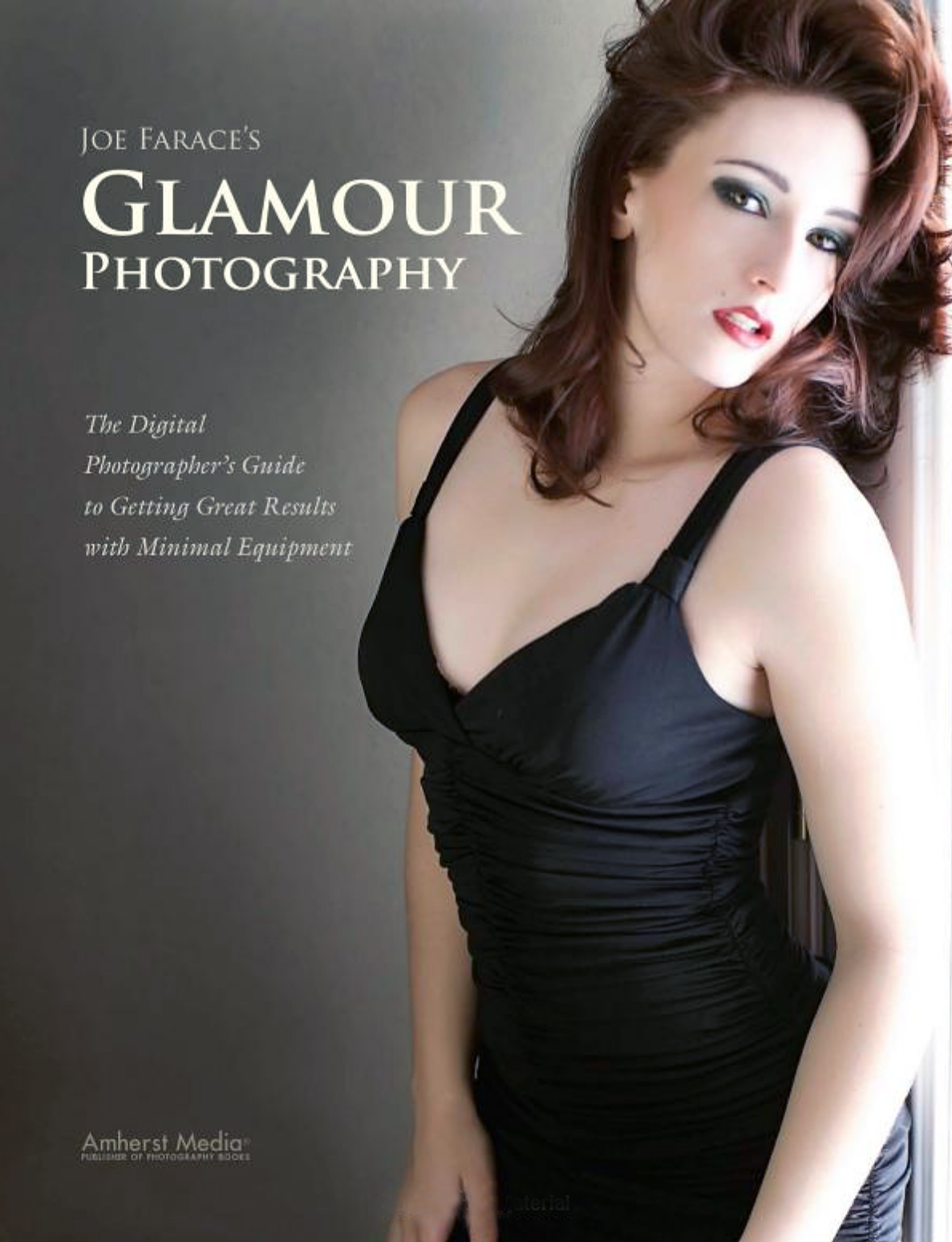
My book Joe Farace’s Glamour Photography is full of tips, tools and techniques for glamour and boudoir photography and includes information on all of the cameras used as well as the complete exposure data for each image. Used copies are $34.73. as I write this. The Kindle version is $19.99 for those preferring a digital forma