
Today’s Post by Joe Farace
I started modeling at 28. I’m 5-feet-7 1/2, and I never went on a diet. I followed what my doctor told me: ‘It’s good to have a little bit of fat. Your weight is fine. Don’t go any lighter.’—Isabella Rossellini
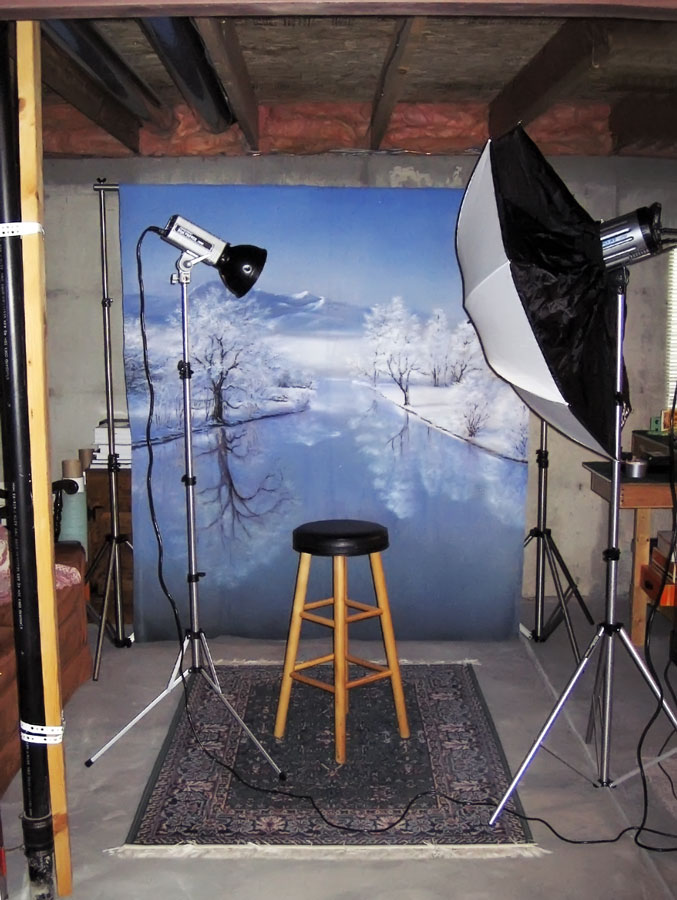 Before I moved to Daisy Hill and set up my home studio most of my portrait and glamour photography was done on location, either around my home or outdoors. But living in Colorado sometimes the models and the photographer too aren’t in the mood for stomping around in the cold weather and snow.
A home studio is handy
Some photographers prefer the kind of environment that’s only possible when they have complete control over the lighting. Instead of the hassle and cost of renting a studio, why not create your own using a room in the home you’re living in now,
Keep in mint that when creating a studio from existing space, you need to be inventive and flexible. The main thing you need for a home studio is space. You don’t need much space but more is always better than less. You can locate the studio in a basement, garage, spare bedroom or even your living room as Mary and I did when we were getting started. Here’s how it went:
We would set up the lighting and background. do the shoot and then knock it all down and pack it away. That’s not the most convenient way to shoot portraits but it worked for us until we moved the operation out of our condo. Shooting in a garage typically offers higher ceilings providing flexibility in lighting set-ups but may not be an option, especially if it’s unheated. In more temperate climates, this might be an ideal solution, if your cars don’t mind being outside.
 The real secret, if there is any, of making portraits in limited spaces is having the right equipment and that gear doesn’t have to be expensive. In the portraits I made in an 8×9-foot (2.4 x 2.7m) space in the unfinished basement (above right) of my former home, lighting was provided by two inexpensive monolights. You could even accomplish the same kind of lighting using speedlights. The only amenity this basement studio offered was a stool and a 4×5-foot (1.2 x 1.5m) rug from Target. That’s not a real posing stool but one that I sat on to run my model trains. This set-up wasn’t fancy but it, I think anyway, worked as you can see in the image at left.
Nowadays, having a home studio means the lighting gear can remain set up, saving time when getting ready for the next shoot. There’s no time spent setting up, because it’s still there from the last time I used it.
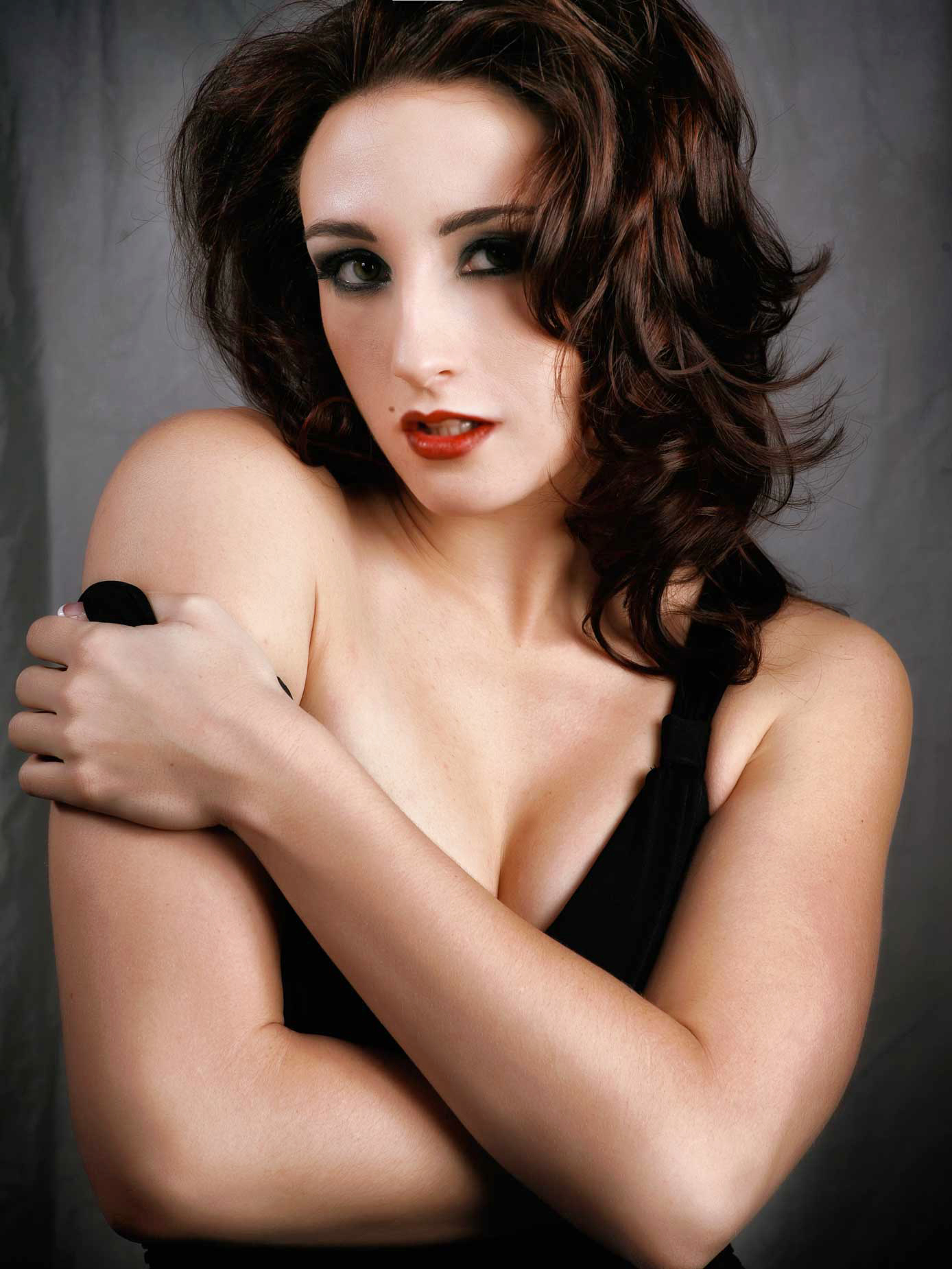
How I made this photograph: This portrait of Kelsie was made in that original home studio space, if you want to call it that, in my basement. It was shot using a Canon EOS 5D Mark I and an EF 85mm f/1.8 lens. The exposure was 1/60 sec at f/8 and ISO 100. The background (not the one shown in the setup photo) was a cheap muslin backdrop hanging on my old JTL background stands.
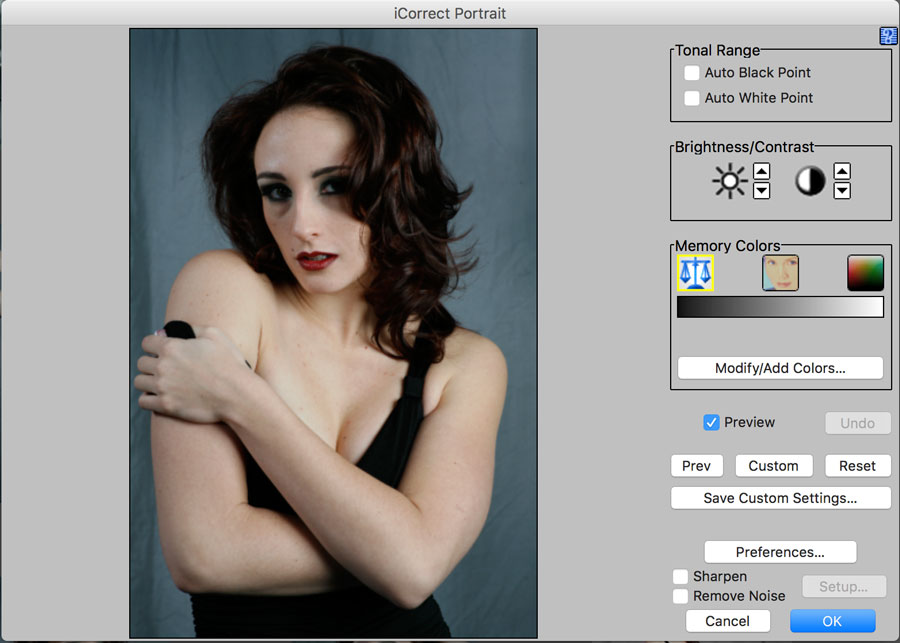
The lighting for the portrait was provided by a two, inexpensive monolights with the one at camera right having a 45-inch Westcott Halo Mono Soft box attached and placed at camera right with a reflector located at camera left as fill. The image was originally captured as a JPEG file but the overall color was too cool. After some slight cropping using a 4:3 aspect ratio, I used PictoColor’s iCorrect Portrait to correct skin tone and make the background look more neutral. These days I would have used my preferred RAW+JPEG approach. Shooting RAW+JPEG gives me options, whwile shooting a JPEG limits these options. You live and you learn.
 Another related item is the color of the space itself. In the 11×15-foot basement studio in my current home, the walls were originally model home white and while that color can work in your favor it also introduces lots of reflective surfaces that you may or may not be able to control. After my basement flooded and repairs were made I took the opportunity to paint the walls a more-or-less 18% grey. If repainting is not an option, you might consider using a Westcott’s Scrim Jim Cine covered in Black Block fabric and strategically place it to avoid unwanted reflections caused by light bouncing off white walls.
PS: Today’s featured image was from the one and only shoot I did with Kelsie but while it was a TF shoot, she did get a magazine article and a book cover out of the deal.
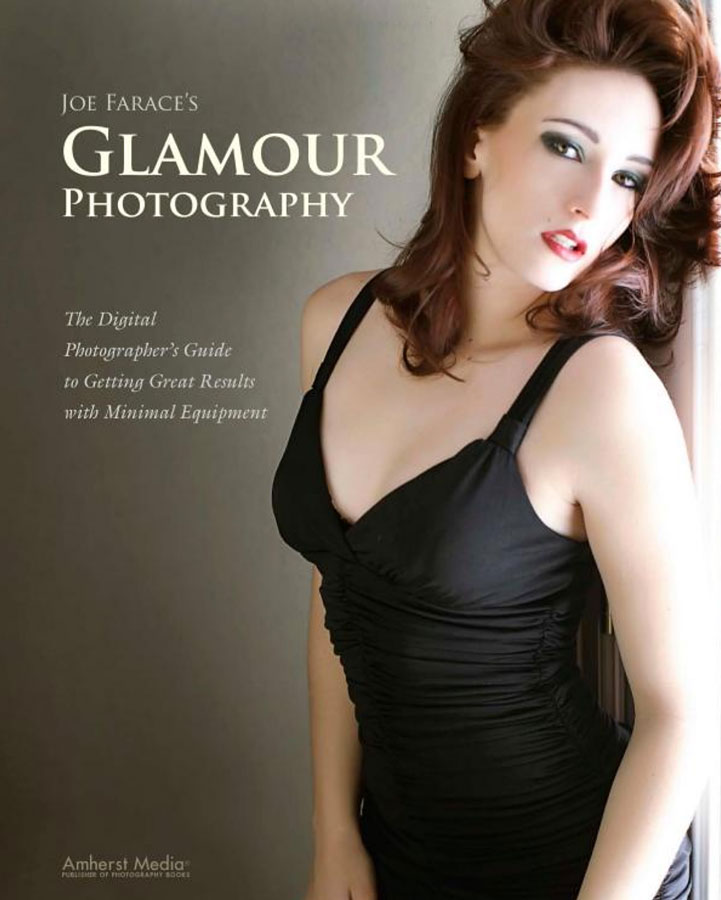
Kelsie appears on the cover and in some of the pages of my book Joe Farace’s Glamour Photography. The book contains tips, tools and techniques for glamour and boudoir photography and includes information on the cameras and lenses that I used as well as complete exposure data for every image. New copies are available from Amazon for $24.71 with used copies starting around ten bucks, as I write this. The Kindle version is $19.99 for those readers preferring a digital format.