
My Sunday Series on Available Light Portraiture continues today with a outdoor portrait of Tasha, who has a real interesting back story on how I met her, She was one of the sweetest, nicest models I ever worked with. We had just a few shoots together and i would love to be able photograph her again.
Some thoughts from Joe Farace
“I love to talk about nothing. It’s the only thing I know anything about.” ―
 When I was a young photographer I asked my mentor, what was the worst thing I could do during a portrait shoot. I thoiught he would tell me not to make some kind of technical mistake but to my surprise he said, “not talking to the people.” That’s why I strongly believe that if you don’t talk to the models you’re photographing you are never, ever going to make good images.
If you’ve ever participated in a group model shoot, you know what I mean. Shooters use their longest focal length lenses blasting away with smoking memory cards and occasionally, somebody will holler, “hey you, look here!” Of such posing directions, masterpieces are truly created. Or you could try another approach that might produce more successful images.
Glamour In the Outdoors
Even during a group model shoot , if they’re holding these kinds of events anymore, you should introduce yourself to the model and be sure to use her name when photographing her. I can’t emphasize how important that is. Models relate to photographers who care about them and will trust them to make good photographs and will play to you before other photographers in the group that haven’t made the same effort.
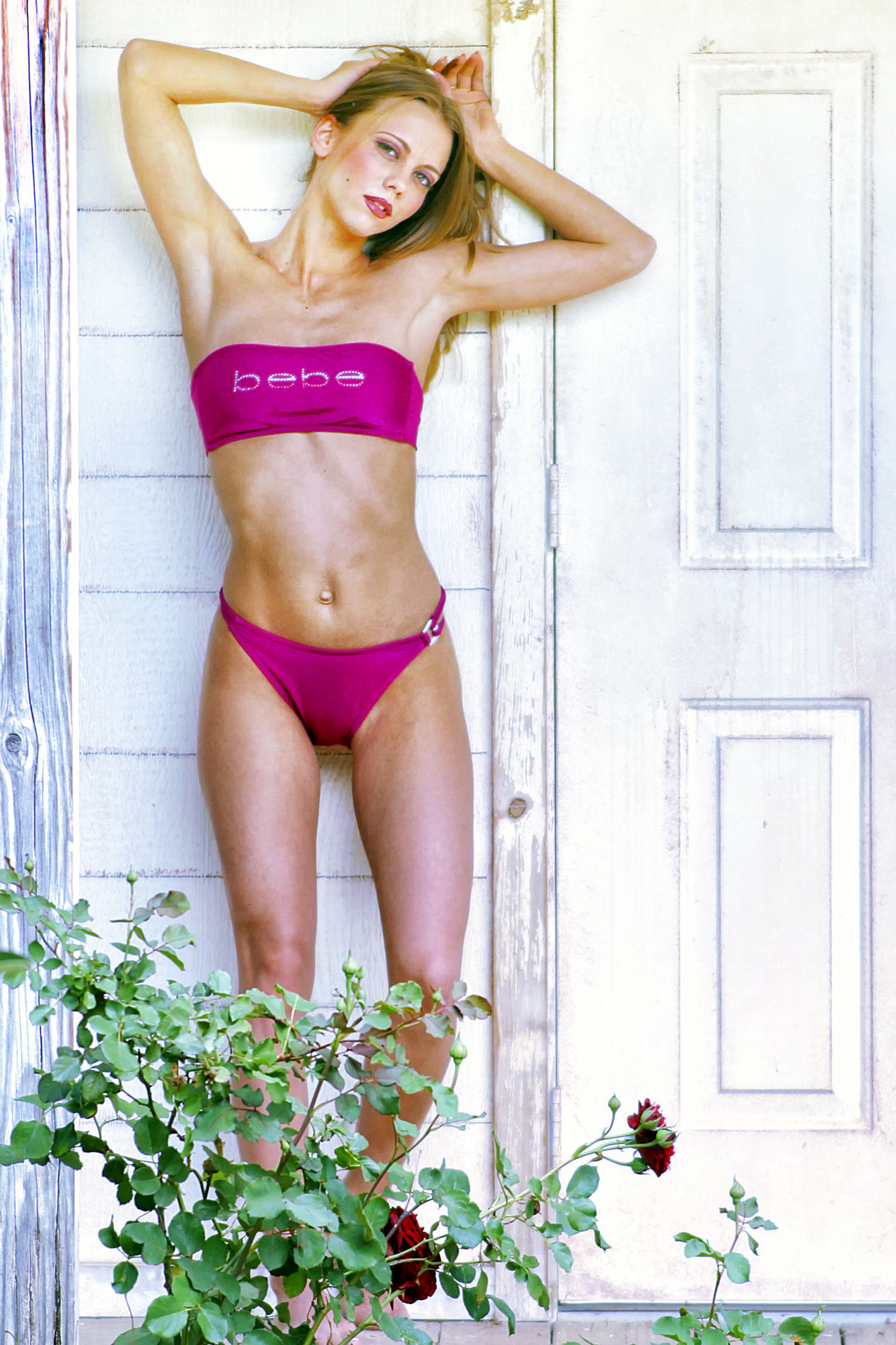 Tip: To show a model how to stand or place her hands, I put myself in the pose but let her give me her own interpretation, which is always better. From camera position, I refine the pose, after explaining when I say, “look left” or “look up” what I mean is to move her face gradually and slowly in that direction.
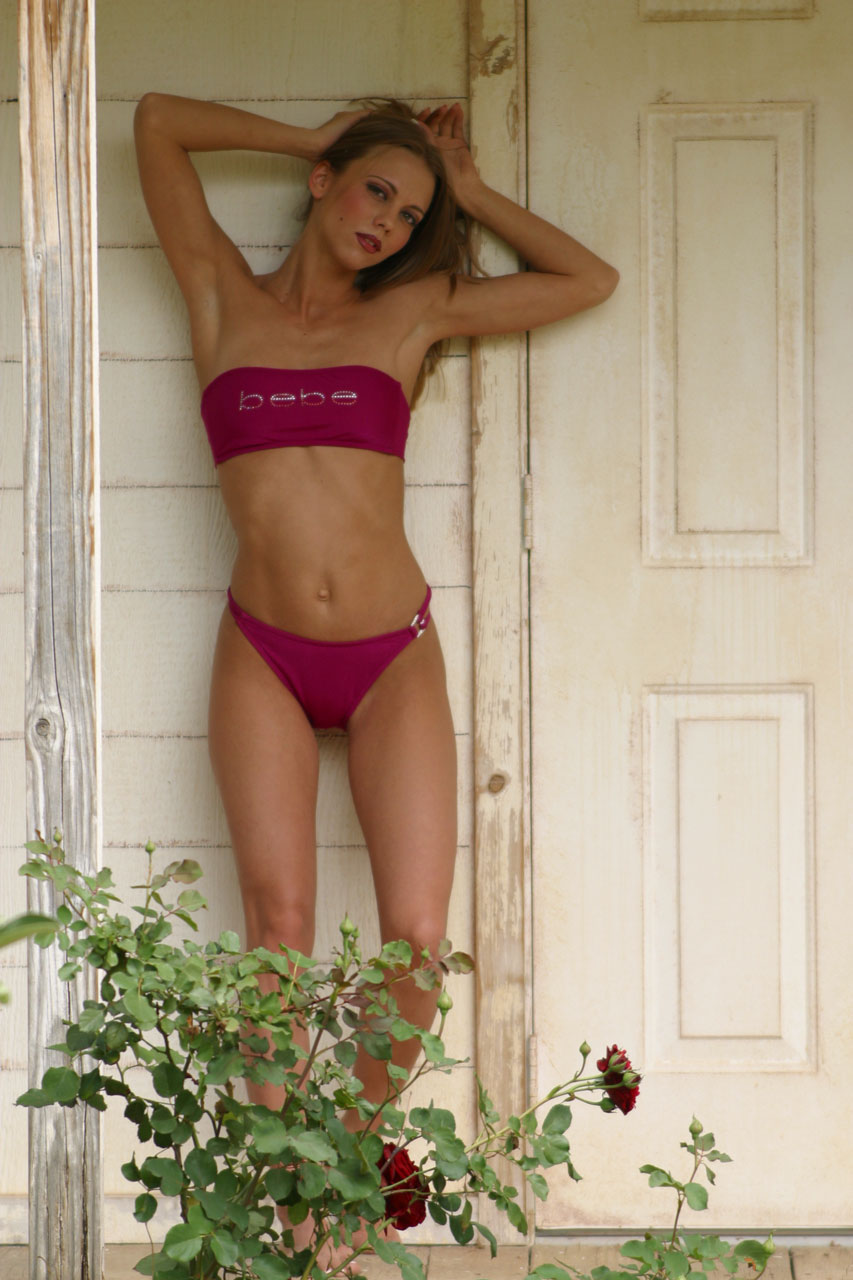
How I made this portrait: I photographed Tasha at a group model shoot in Phoenix, Arizona. I made two similar shots; One with her eyes closed and this one, which I prefer, with her eyes open. There was a logo across her swimsuit top, which I retouched, because I felt it distracted from her face.
The portrait was made with a Canon EOS D60 with the EF 135mm f/2.8 SF lens that is now discontinued. For this portrait, the soft focus setting on the lens was zero. The exposure was 1/400 sec at f/5.0 and ISO 200 with a plus two-thirds stop exposure compensation, which, as you can tell by the original JPEG image file above right, was underexposed. To correct it I used a variation of the technique I explain here, but instead of using layers that cover the entire frame I used the partial dodging layers that are part of PhotoKit 2. Then I used Define to mitigate any noise, which was followed by layers of Tonal Contrast and Pro Contrast from Color Efex.
Mea Culpa: Yes, all this post processing would have been made easier and I’m sure produce a better final result. If I had made this image in RAW or RAW+JPEG or even used flash for fill as I often do for outdoor portraits, tis would have simplified my post processing efforts. But this image was made before I adopted this kind of protocol and, as I’ve mentioned in a recent post, “you live and you learn.”

My book Joe Farace’s Glamour Photography is full of tips, tools and techniques for glamour photography and includes information on all of the cameras I used as well as complete lighting and exposure data for each image. Used books are available from Amazon for $45.08, as I write this. The Kindle version is $19.99 for those preferring a digital format.