
Today’s Post by Joe Farace
Noise, like film grain before it, must be avoided at all costs because it degrades the images.—said somebody, once upon a time
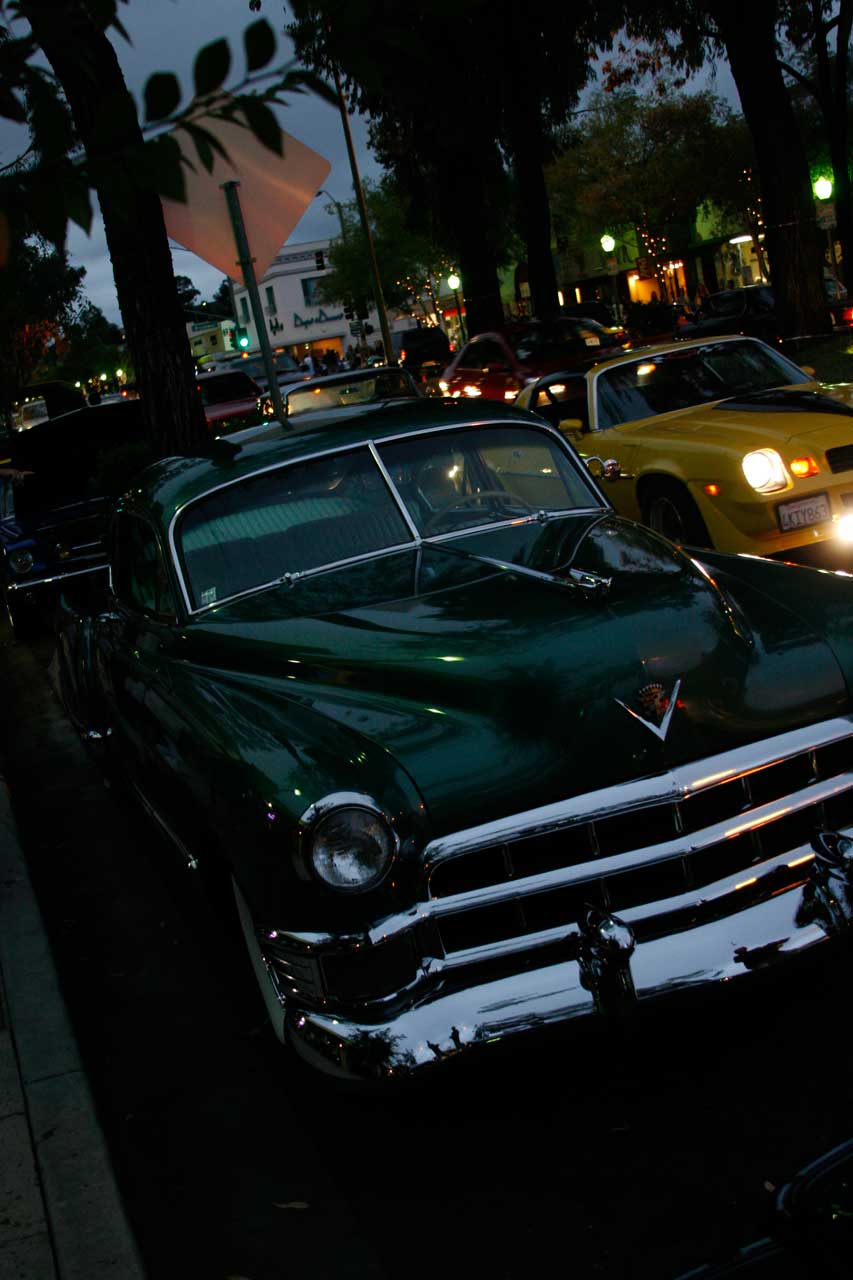 Noise in digital photographs is the visual equivalent of the static you sometimes hear in AM radio signals and most digital cameras add some level of noise to every captured images. Digital camera noise is spread across the frequency spectrum and includes fine and coarse components.
In traditional photography the nearest equivalent is film grain and, like grain, digital noise is noticeable in images that are shot at higher ISO settings and are visible in areas of uniform color, such as skies and shadows. Digital sensor noise may also be increased when long exposures are made under low-light conditions, such as night photography, and noise is always more obvious in areas of underexposure as in the case of this original JPEG image at right.
How It All Works
Noise varies with color and brightness and it is different for every camera but blue-channel noise is usually higher than in other color channels and shadow noise is obviously higher than it appears in brighter areas. Digital cameras with physically larger (not just megapixels) sensors tend to produce less noise than those with (physically) smaller sensors because the size of the chip allows larger pixels to absorb more light.
Image files with too much image compression produces an effect that appears to be noise but is really a manifestation of JPEG artifacts, which is an entirely different problem. Artifacts are a distortion of digital media that’s caused by the application of lossy compression. Lossy data compression discards some of an image’s data so it becomes compact enough to be stored in the desired media. If the compressed version cannot store enough data, the result is a loss of quality and/or introduction of artifacts.
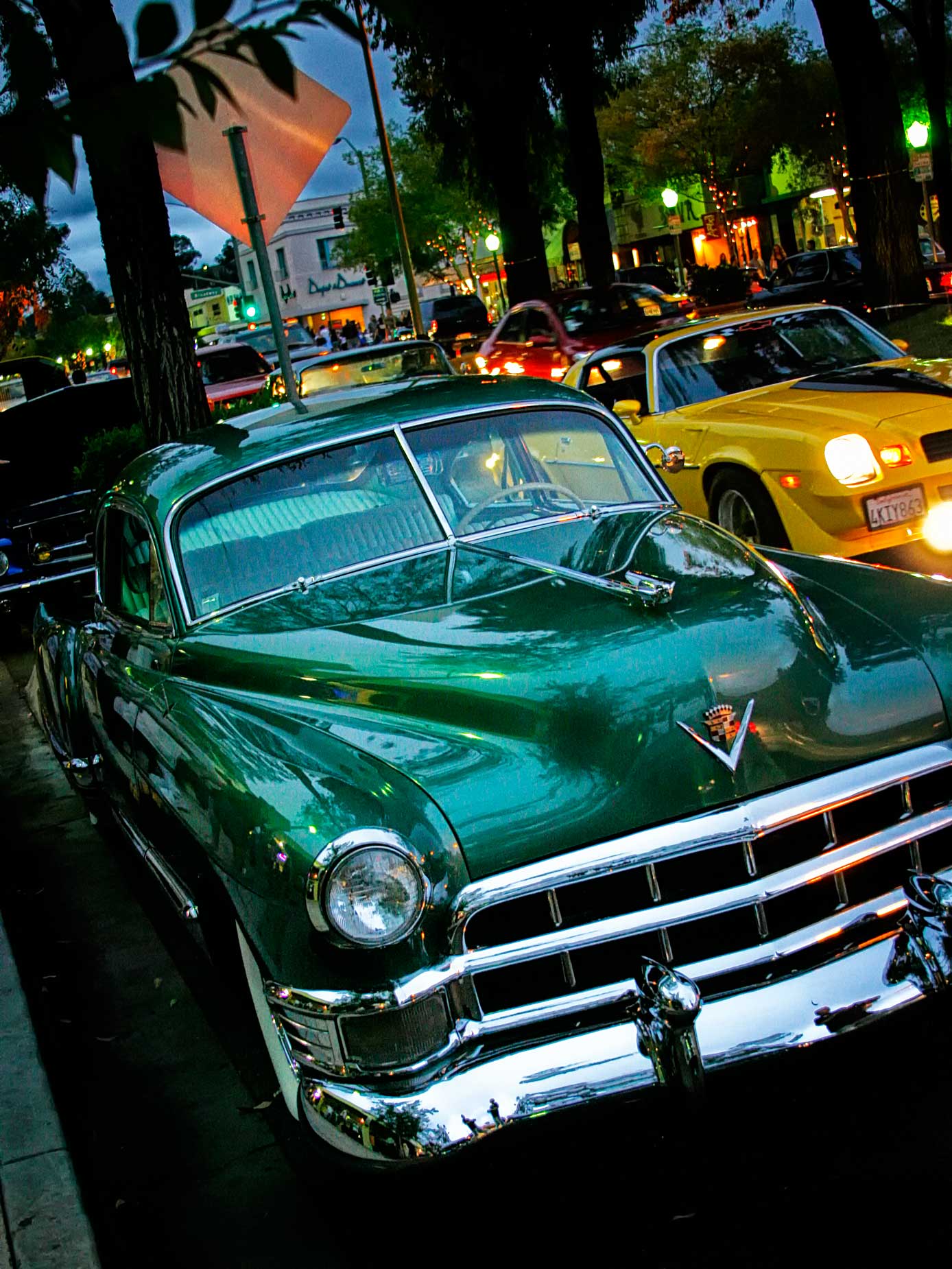 How I Made this Photograph: I captured a JPEG file of this classic Cadillac during Cruise Night in Escondido, California using a Canon EOS 30D and EF28-135mm f/3.5-5.6 IS USM lens at 28mm. The Program mode exposure was 1/30 sec at f/3.5 and ISO 800 with a plus one-third stop exposure compensation, although it obviously could have used a little more.
To produce the image at left, I cropped the original image using the 4:3 ratio with Photoshop’s Cropping tool. Next, I applied a variation of a technique I use for underexposed portraits applying dodging layers but some burning from PhotoKit 2. Then I used Tonal Contrast from Color Efex filters topped off with Define noise reduction software but there wasn’t as much noise present in the original file as I expected.
Even More Noise
Like film grain, digital noise has many causes: Dark noise is produced by heat that’s created in the camera’s sensor during image capture. That dark current generated is collected along with image data from light passing through the lens. Random noise is created by fluctuations in the camera’s circuitry or even electromagnetic waves from outside the camera like a proximity to battery packs. Signal noise is caused by fluctuations in the distribution of how light strikes an image sensor. You’ll sometimes hear the term signal-to-noise-ratio ratio, which is a measure of signal strength relative to background noise. Amplified noise is caused by selecting high ISO speeds and is the digital equivalent of chemically pushing film in order to achieve greater light sensitivity. Then there’s accumulative noise, which is caused by shooting with slower shutter speeds.
If noise is the problem, digital noise reduction software is one of the solutions. Most of today’s noise reduction software relies on wavelet theory, which is a mathematical method that allows it to identify and suppress noise at different frequencies, locations and color channels. There are lots of different noise reduction products available for macOS and Windows computers. Keep in mind that your camera and the kind of images you make may be different than mine, so download a demo version of any product that sounds interesting and give them a try.
 If you enjoyed today’s blog post and would like to treat Joe to a cup of Earl Grey tea ($3.50), click here. And if you do, many thanks.
Along with photographer Barry Staver, I’m co-author of Better Available Light Digital Photography that’s available from Amazon with new copies available for $24.50 and used copies starting around seventeen bucks, as I write this.