
In July 1899, Giovanni Agnelli was one of the founding members of FIAT, Fabbrica Italiana Automobili Torino. The first Fiat automotive plant opened in 1900 with 35 staff who produced 24 cars. Known from the beginning for the engineering staff’s creativity, by 1903 Fiat finally made a small profit and produced 135 cars; this number grew to 1,149 cars by 1906. The company then went public selling shares via the Milan stock exchange.
Today’s Post by Joe Farace
If you agree that lighting is one of the key elements that differentiates a good photograph from a snapshot, it helps to understand how to achieve proper exposure.
There was a time when cameras didn’t have built-in light meters, let alone automatic exposure. My first SLR was a used Minolta SR-1 that had an optional light meter that sat atop it’s shutter speed dial! In those film-based days, photographers often used a hand-held exposure meter; Back then, my choice was a Weston Master V or alternatively you relied on the data sheet Kodak (or whoever) packed with each roll of film. These little sheets of paper provided processing directions as well as basic exposure guidelines for taking photographs in bright sun, hazy sun or cloudy conditions. Then there was the Sunny 16 Rule.
Here’s how it works
 To take a photograph in bright sunlight, you set the lens’s aperture at f/16 and the shutter speed is set at a number that’s whatever is closest to the film (or sensor’s) ISO. For instance, if you were using an ISO 200 film, a sunlight exposure would be f/16 and 1/200 sec or the closest speed, like 1/250 sec. This rule seems to work equally as well when shooting with a digital camera. You can dig into the concept more in my post Remembering the Sunny 16 Rule which has some examples of the “rule” in action with a digital camera.
The ability of today’s sophisticated DSLR’s or mirrorless cameras to tweak exposure can make or break your image’s quality and content. Yet, I’m always surprised at the number of people who don’t care about correct exposure, saying, “I’ll fix it later in Photoshop.” When exposure is concerned there’s only a partial truth to this statement. Adobe Photoshop can easily become a crutch for sloppy camera work but you still need to be careful in the arena of exposure. Digital images that are too far over or underexposed cannot be completely saved with image editing software. Ask me how I know.
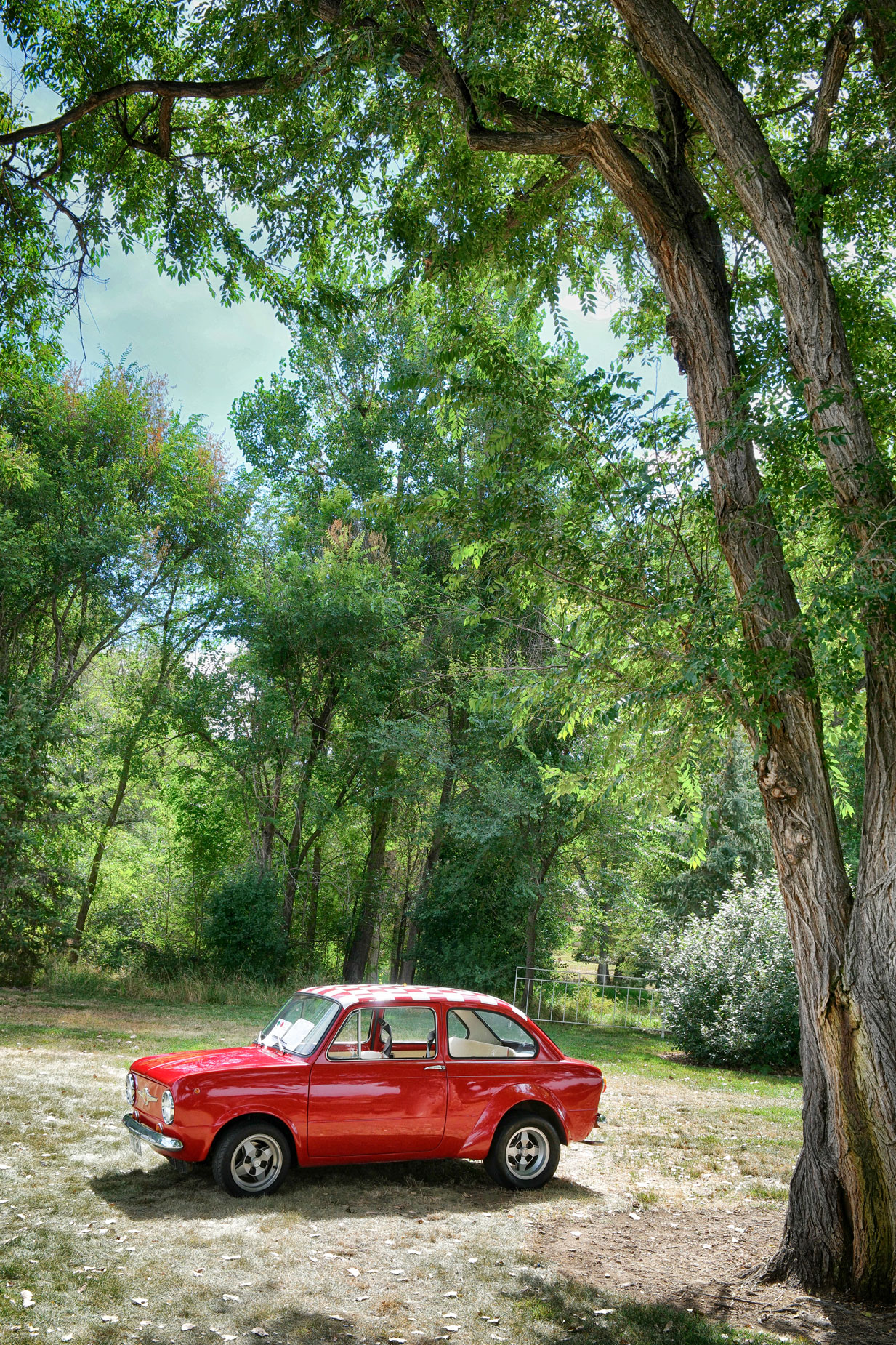
How I made this photo: I have always had a thing”for Fiat automobiles. In 1968, I bought a brand new red Fiat 850 Coupe; paying $1,666.67 for it. It was a wonderfully trouble-free car so I decided to upgrade to a pumpkin-colored 1970 Fiat 850 Spyder; it broke down on the way home from the dealer. And it never got better than that. So naturally I couldn’t resist photographing this little Fiat 850 sedan. And to make the experience even more memorable it was made with the wonderful (but they killed it) mirrorless Samsung NX1 and NX 16-50mm f/2-2.8 S lens. The exposure was 1/640 sec at f/6.3 and IO 400.
Other Exposure Options
Using the aperture-based f/16 aka the “Sunny 16” rule is just as valid today as it was back when I was shooting with that Minolta SR-1. You can also make adjustments to automatic exposure settings while shooting, including using the any of the different metering patterns that a camera may offer. My favorite tool for tweaking exposure is exposure compensation allowing you to shift exposure to satisfy your creative needs to slightly over or underexposing the image. You might want to take a look at the Histogram from time to time. It’s not a perfect way to determine exposure but it’ll get you in the ballpark.
There are as many ways of achieving a “proper exposure” as there are camera models, so give one of these methods a try the next time you’re out shooting. Don’t just accept the camera’s automatic exposure (and then complain about it later,) instead use exposure compensation to make it more than just another snapshot.
If you enjoyed today’s blog post and would like to buy Joe a cup of Earl Grey tea ($3.50), click here.
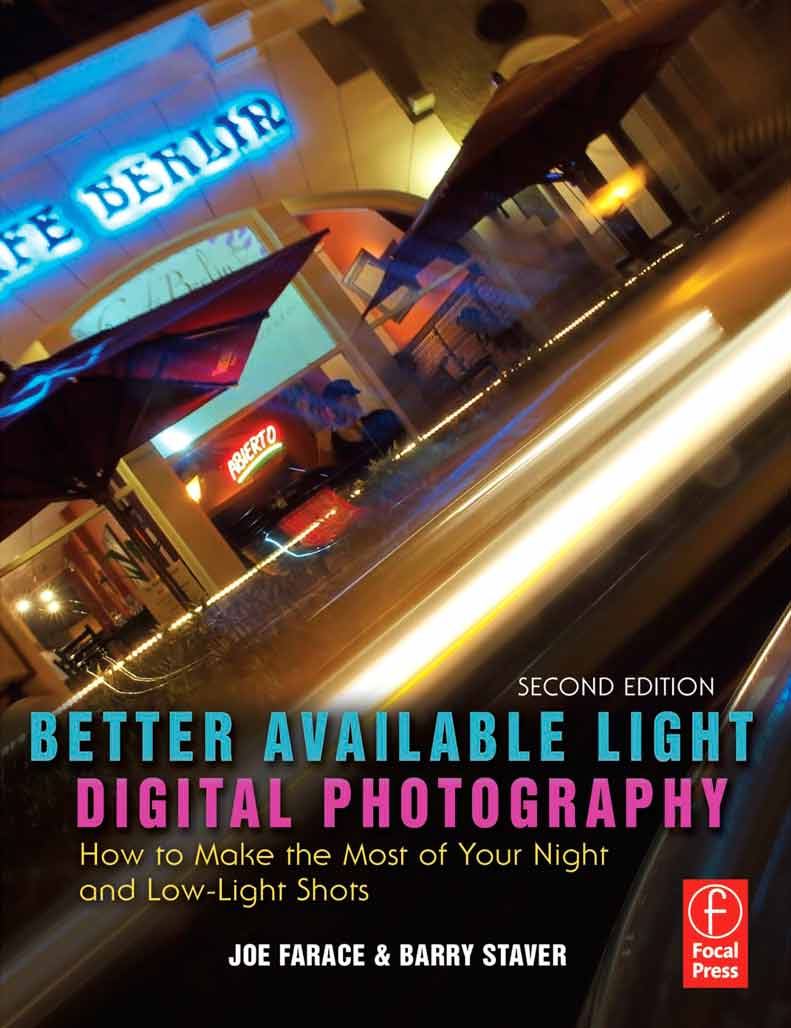
Along with photographer Barry Staver, Joe is co-author of Better Available Light Digital Photography with new copies are available from Amazon for $24.50 and used copies starting around sixteen bucks.