
Flashback: My wife and I were having lunch the other day and I told her I was having trouble coming up with this coming Tuesday’s, i.e, today’s post and she suggested the theme of “Tricky Tuesday” as a way to share some of the different tricks, tips and techniques that I’ve used over the years. Here’s my first try at it…
Today’s Post by Joe Farace
When the track’s muddy, and you’re trying to get even, never walk away from a long shot. —Burke’s Law, 1963
Before the Dot Com bust, I was Contributing Editor for several computer magazines In addition to writing for photography magazines.”It was,” as Dickens partially said, “was the best of times…”
 During that period, I came up with the idea to interject a series of “Farace’s Laws of the Computing Universe” into my work that would occasionally appear in articles or product reviews I was writing. I figured that if Murphy could have a law and TV’s Amos Burke (my inspiration for the idea) there might as well be Farace’s Laws. When I exclusively started writing about photography, I brought the idea for those laws along with me and they still show up from time to time in my blog posts and books.
There’s an old computer adage that goes: “Garbage in, Garbage out” that’s been attributed, if not literally, to computer pioneer Charles Babbage. I think the same thing’s true for photography.
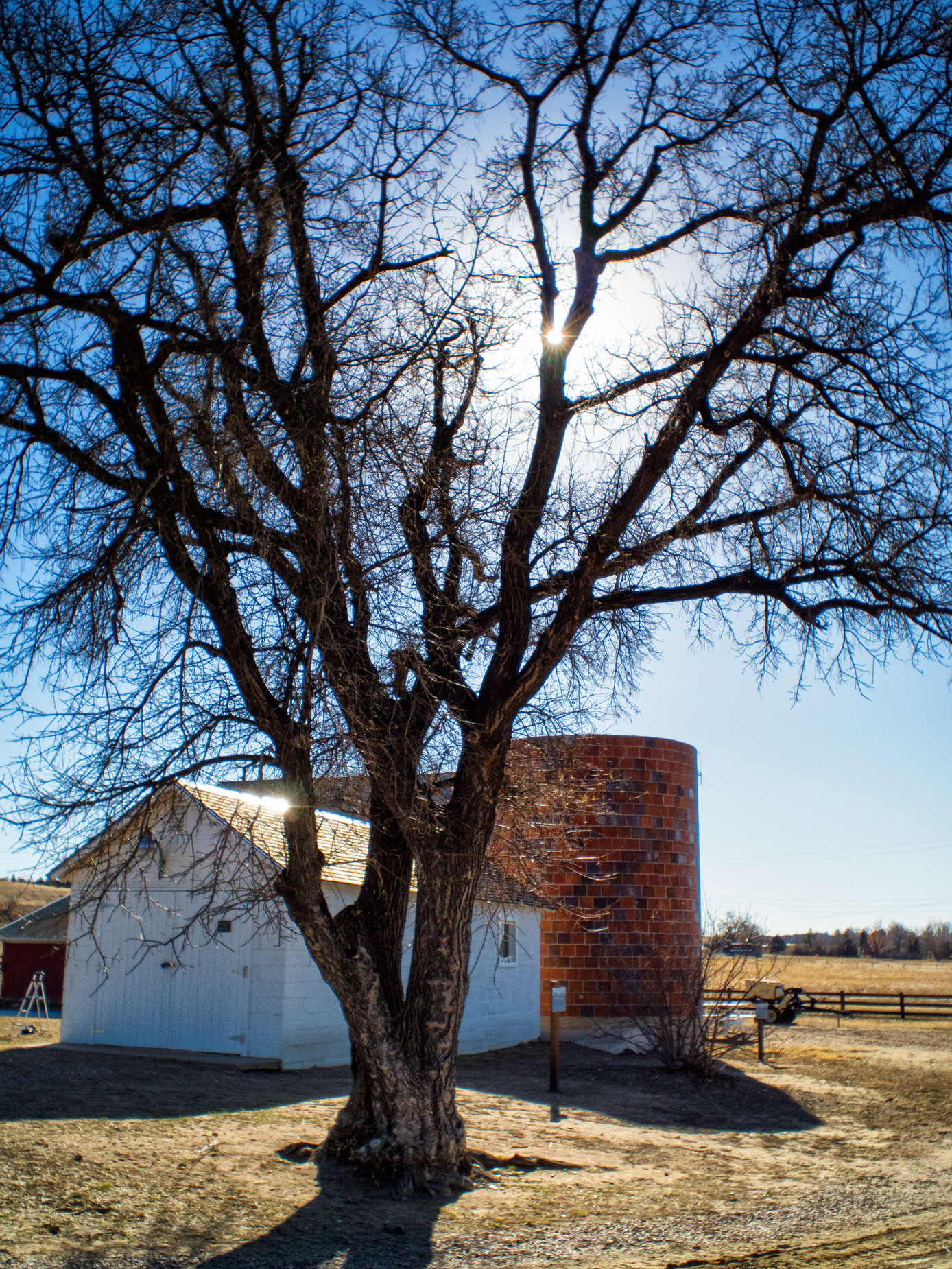
How I Made this Photograph: I made the image at left at 17 Mile House near Parker, Colorado. This is part of a 70-acre open space that includes an 1860’s “mile house,” barn, windmills and silo that’s located along the historic Smoky Hill/Cherokee Trail route. The term “mile house” refers of it’s distance—by stagecoach—from the city of Denver, The farmhouse you see in this post was originally a log cabin and some portions of it can still be seen when looking at the current structure.
The camera I used for this photograph was my 20.3-megapixel Olympus Pen F—will OM System ever make their version of this camera?—along with the “worst ever” Micro Four-thirds lens, the Olympus 15mm f/8 lens cap lens. While I don’t believe this is the worst lens (read my thoughts in the linked post) it may produce the worst sunstars ever, The exposure for this image was 1/1250 sec at f/8 and ISO 400.
Meet One of Farace’s Laws
One of Farace’s Laws is that “A properly exposed image file makes the best photograph.” How do you accomplish that? Your DSLR or mirrorless camera typically has a Histogram feature that you can use to home in on the best exposure while you’re shooting. Take advantage of this feature to adjust your exposure to create the final look that you want to achieve. (This post has some information on histograms; If you’re interested in that topic, check it out.) You could also use the camera’s auto bracket control or for what you think might be an important photograph, put the camera in Manual mode. If, you happen miss the mark, i have some tips for working with slightly underexposed portraits, but even Adobe Camera Raw’s controls can’t rescue a helplessly under or overexposed image file but you can make some adjustments to get you close. Take for instance…
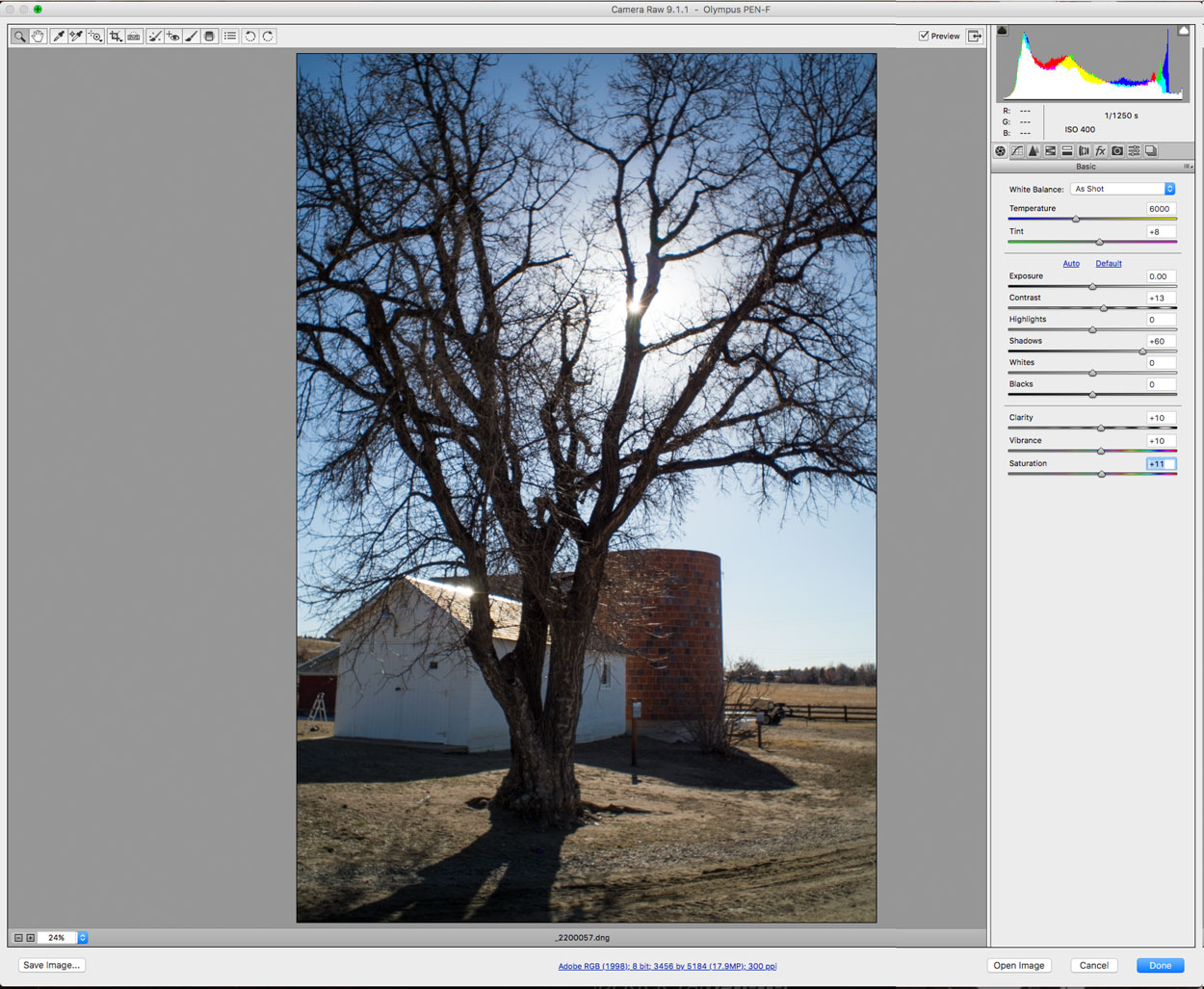 …the Exposure slider in Adobe Camera Raw—the Photoshop CS6 version is shown at right—lets you adjust an image’s brightness or darkness. Moving the slider to the left darkens the image, while moving the slider to the right brightens the image. The values are in increments equivalent to f-stops. A +1.50 adjustment is like increasing the exposure 1 1/2 stops. A –1.50 adjustment is like reducing the exposure by 1 1/2 stops.
Tip: Holding the Alt (Windows) or Option (Mac OS) key while moving the Exposure slider gives a preview showing where the highlights become completely white with no detail. You can adjust the slider until the highlights (not specular highlights) are clipped and then back off the adjustment. Black indicates areas that aren’t clipped and color indicates areas that are being clipped in only one or two channels.
There’s lots more tricks about exposure—a subject many people ask about—all over this blog. Just click the Magnifying Glass icon in the upper right hand side of the post and type “Exposure.” If you have a really specific question, just click CONTACT and I’ll answer every question personally.

Along with Pulitzer Prize-winning photographer Barry Staver, I’m co-author of Better Available Light Digital Photography that’s available from Amazon for $21.50 with used copies selling for around ten bucks, as I write this. The Kindle version varies in price, for some reason/