
When I told me wife that I couldn’t come up with a new theme for Tuesdays, she suggested “Tricky Tuesday” as a way to share some of the tricks, tips and techniques I’ve used over the years when shooting portraits in the studio. This Tuesday’s post features Kat, a young model who I only was able to photograph once.
Today’s Post by Joe Farace
“Style is a way to say who you are without having to speak…”—Rachel Zoe
In my book Studio Lighting Anywhere I quote the late Richard Avedon who once said, “I think all art is about control—the encounter between control and the uncontrollable.” I think that’s what a dedicated studio, no matter what size it may be or where it may be located, can offer a portrait photographer.
In the Studio
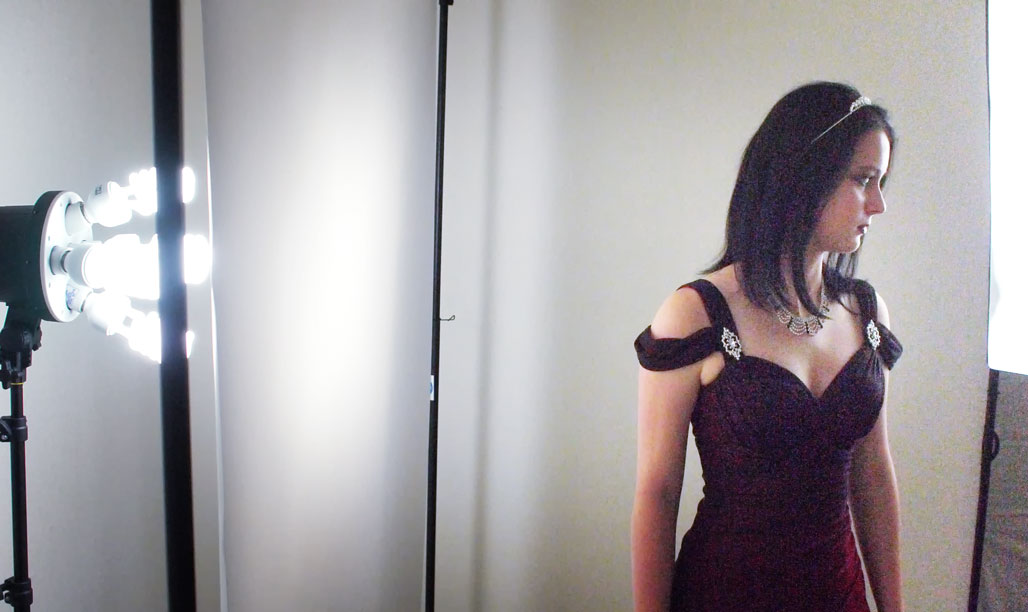 Your own dedicated shooting space becomes a safe haven from the real world where, to paraphrase the Outer Limits voice, you can control the lighting, the background and subject. Even my small 11×15-foot in-home studio, where many of my recent portrait and glamour images, including today’s, were made is a retreat for creativity and, I think, is the best place to help you develop your own unique portrait style.
When working in this environment, I get to control everything from the subject’s pose, clothing choices and make-up with the resulting photographs tending to be as much a portrait of myself as they are of my subjects. Or as my friend Rick Sammon likes to say, “the camera points both ways.” And what often emerges from that all of that control is a style.
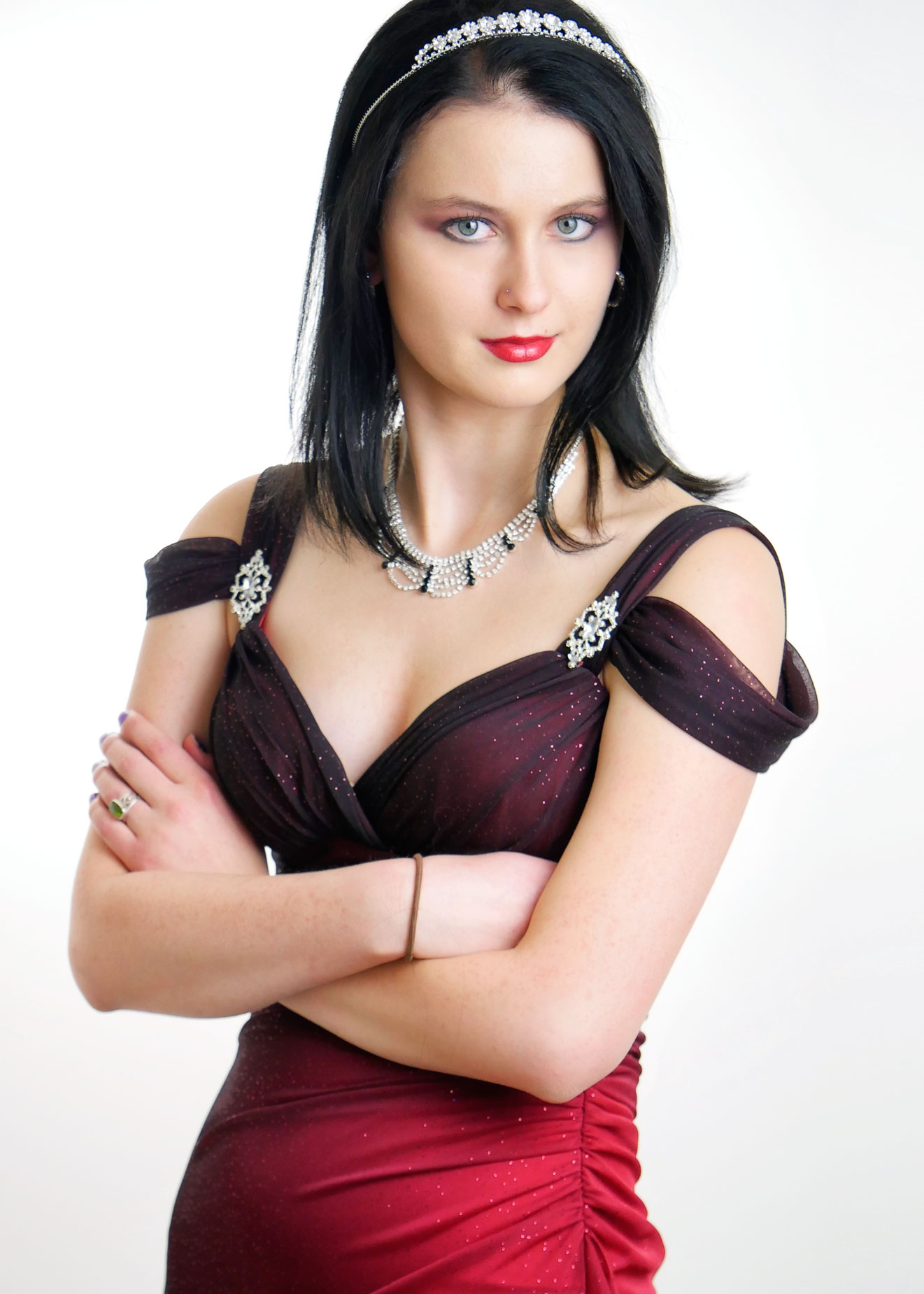 How I made this portrait: I photographed Kat while she was a high school senior; Her mother attended the session. The setup I used featured the Westcott D5 fluorescent lighting head with all of its bulbs illuminated. Although CFL bulbs may be safely recycled, they have fallen out of ecological fashion and lighting systems, like the D5, are no longer available. That lighting system was replaced by the company’s uLite LED 2-Light Collapsible Softbox Kit that I do not currently own.
A D5 light head was placed directly behind a Savage Translum background and aimed toward the subject, while a second D5 head with soft box attached was placed at camera right with three lamps turned on. The final exposure required a higher than normal ISO that the linked post explains; the same explanation is true for some other continuous light sources, i.e. LED.
The portrait of Kat wearing red against the Translum backdrop is not high key, although the background and lighting could work that way if she was wearing white or paste; colored clothing. The camera used was a Panasonic Lumix GH4 with Leica DG Macro-Elmarit 45mm f/2.8 lens with an exposure of 1/125 sec at f/2.8 and ISO 800 with two stops of exposure compensation to keep the background white,
It’s All About Style
When shooting portraits, having a personal photographic style is not something I’m conscious about but the truth is that over time we all develop a signature way of shooting. The danger, of course, is that we keep shooting that same way or different versions of the same shot for the rest of our lives and I’m as guilty of doing that as anybody. So any style you develop must grow and change as you learn more about the art of lighting that will enable you to make better portraits both creatively and business-wise.
 If you enjoyed today’s blog post and would like to treat me to a cup of Earl Grey tea ($2.50), please click here. And if you do, thanks so much.
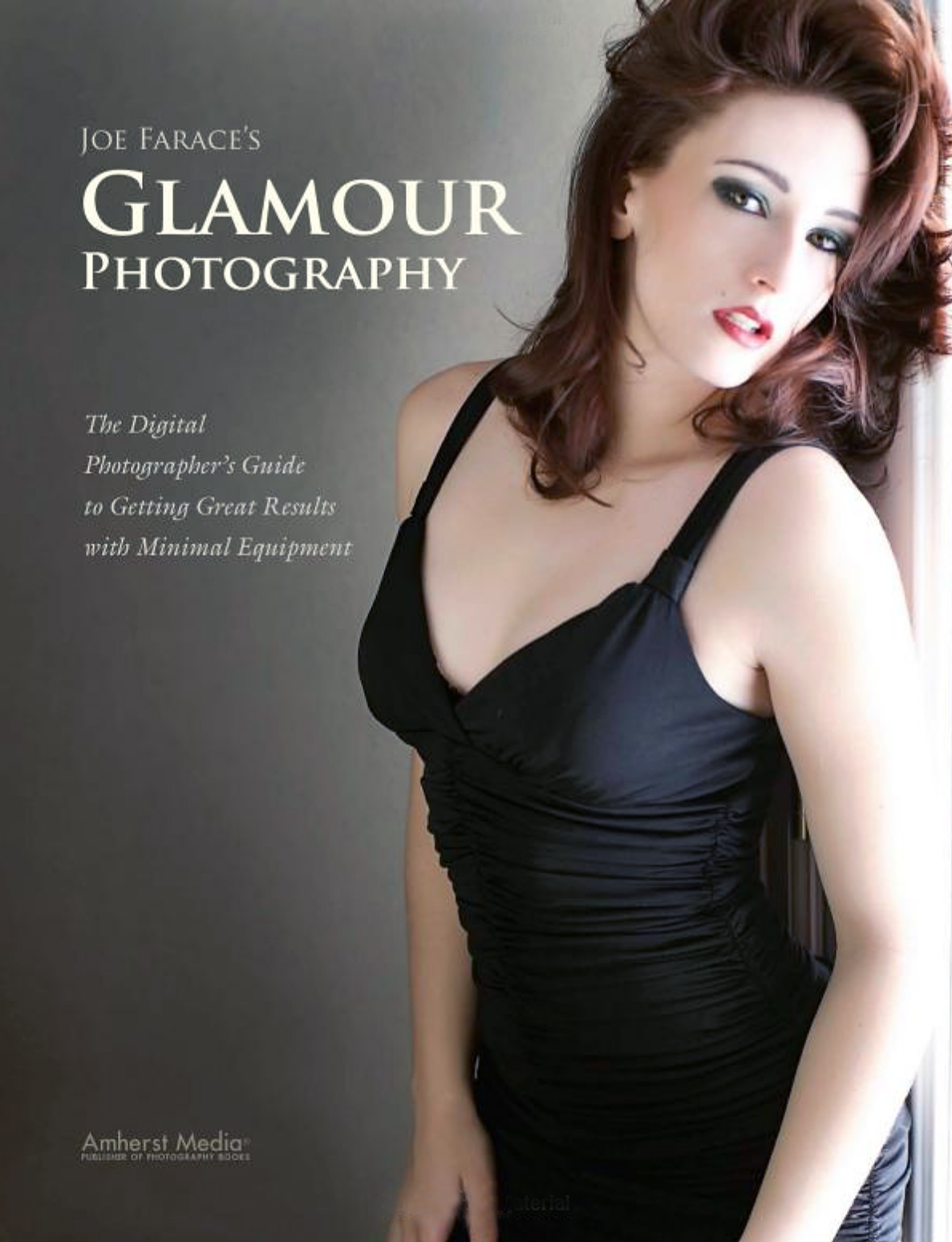
My book Joe Farace’s Glamour Photography is full of tips, tools and techniques for glamour and boudoir photography and includes information on all of the cameras used as well as the complete exposure data for each image. New books are available from Amazon for $35.32 with used books starting around thirteen bucks.as I write this. The Kindle version is $19.99 for those preferring a digital format.