
My wife suggested “Tricky Tuesday” as a way to share some of the different tricks, tips and techniques I’ve used over the years when shooting portrait and glamour images in the studio. Here’s another try at this new theme…
Today’s Post by Joe Farace
Your aim as a photographer is to get a picture of that person that means something. Portraits aren’t fantasies; they need to tell a truth.—Tim Walker
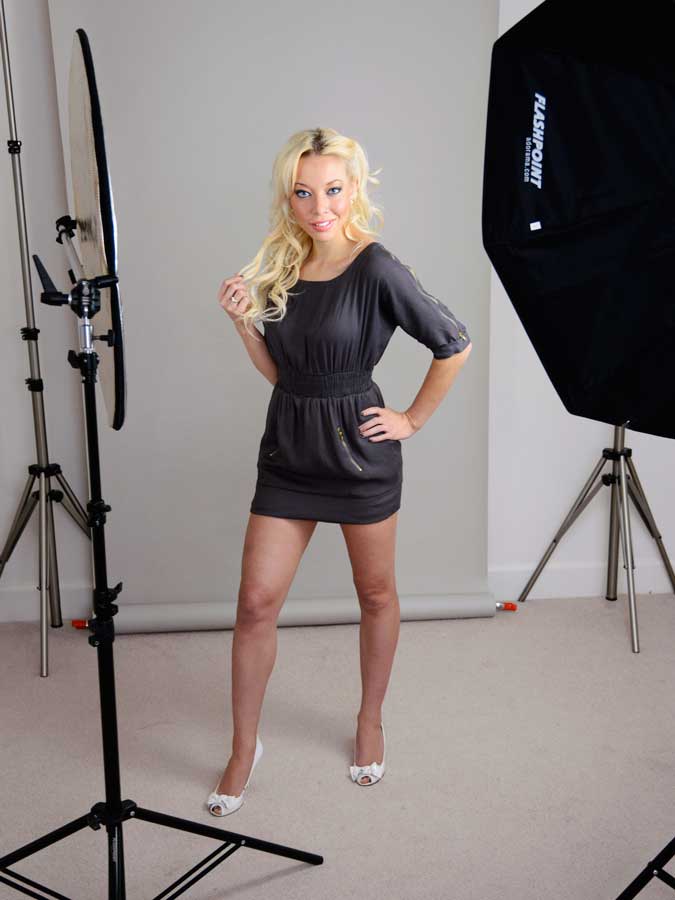 Whether shooting headshots with speedlights, pack & head systems or monolights, one of the best ways to improve the quality of their output is to attach an umbrella or soft box.
Each of these light modifiers has their own advantages and disadvantages and the choice of which one is best for your style— or your subject— should be governed by one important lighting rule: The closer a light is to the subject the softer it is; the further away a light source is the harder it becomes. So, let’s look at the options.
It’s Your Choice
Umbrellas provide a round, broad and soft source of lighting that could, for simplicity’s sake, be considered to emulate natural outdoor lighting. Softboxes, on the other hand,can be rectangular, square or even octagonal and mimic the kind of soft, directional lighting produced by windows. (I have an octagonal window in my home’s master bedroom.)
 Because umbrellas create broad lighting, they’re easy to use. You just point an umbrella at a portrait subject and bang, zoom nice soft lighting! If you use two umbrellas, you’ll think you’re a lighting genius. Because rain and sun versions of these devices have been around for 4,000 years, umbrellas are simple to construct and less expensive to purchase making them perfect for photographers new to portrait lighting. As I write this, you can buy an umbrella, like the 45-inch Westcott Optical White Satin Umbrella, for 26 bucks. So they’re cheap, easy to use and produce nice-looking light.
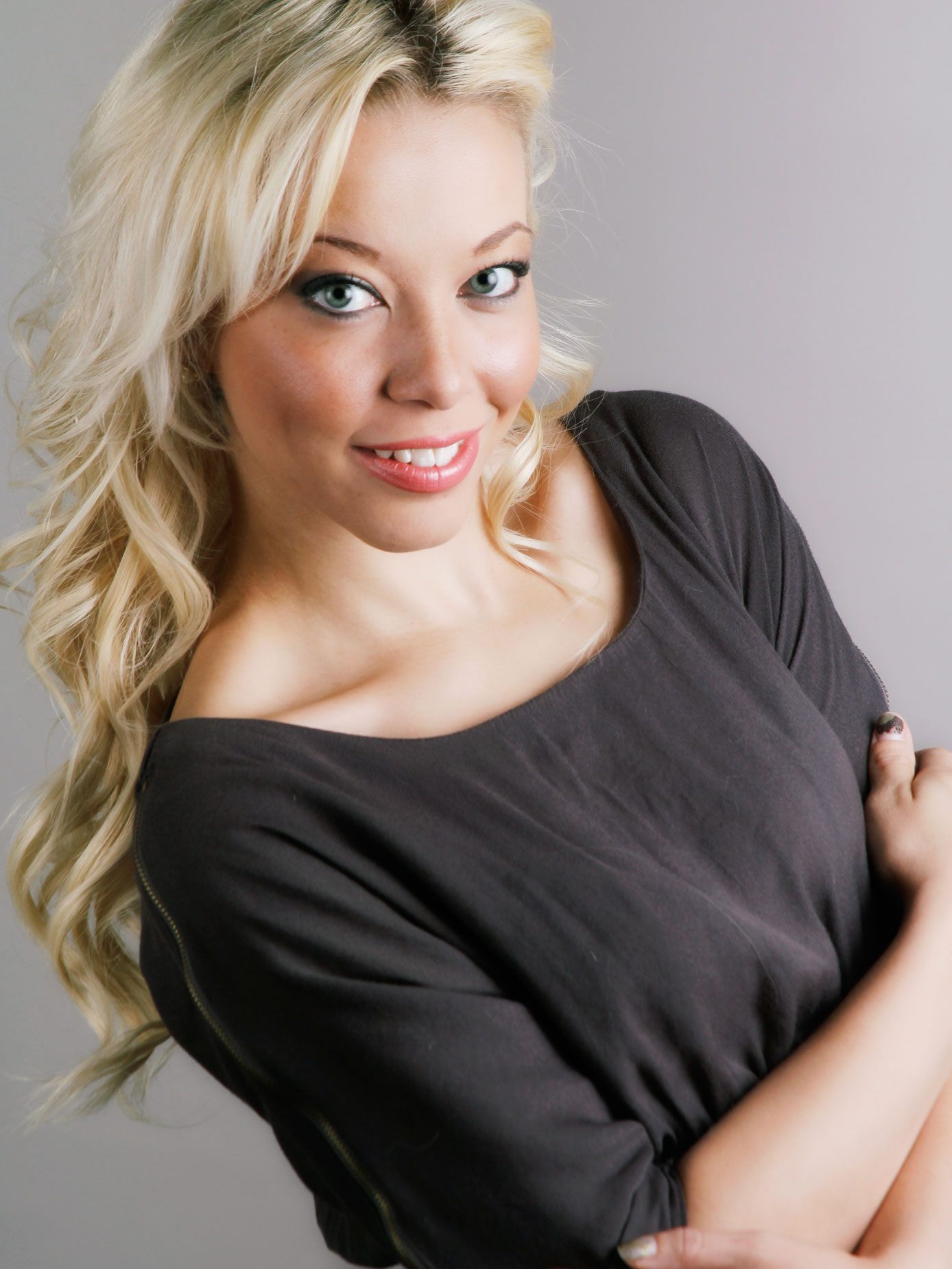
How I made this Portrait: For this headshot of Misa Lynn, the camera used was a Canon EOS 60D with EF 85mm f/1.8 USM lens attached. Lighting was provided by a monolight with a 36 x 36-inch (90x90cm) octagonal soft box that was located at camera right with fill provided by a 32-inch (80cm) round reflector that was located at camera left. The exposure was 1/125 sec at f/10 and ISO 100. The background was Savage’s seamless background paper (#57 Gray)—before I painted the studio walls grey—and was mounted on JTL background stands.
Soft boxes are available in different sizes and are more directional, making them more controllable. When placed close to a subject. a soft box produces soft, yet directional light. There are also lots of accessories available to use with soft boxes, including grids or louvers, that make lighting even across the plane of light. What’s the downside? Typically softboxes are more expensive than umbrellas, although I found a 32-inch Neewer octagonal soft box for $42.99, as I write this. Unlike umbrellas that are forgiving, soft boxes may requite balancing the main versus fill light (that might even come from an umbrella) that’s often expressed as a lighting ratio.
Whether it’s lighting ratios or light modifiers there is, ultimately, no “one size fits all” solution to portrait lighting. Just as you need to select the appropriate lens and ISO setting for a natural light photograph, when it comes to working with artificial light you also need to select the right lighting tool for the subject.
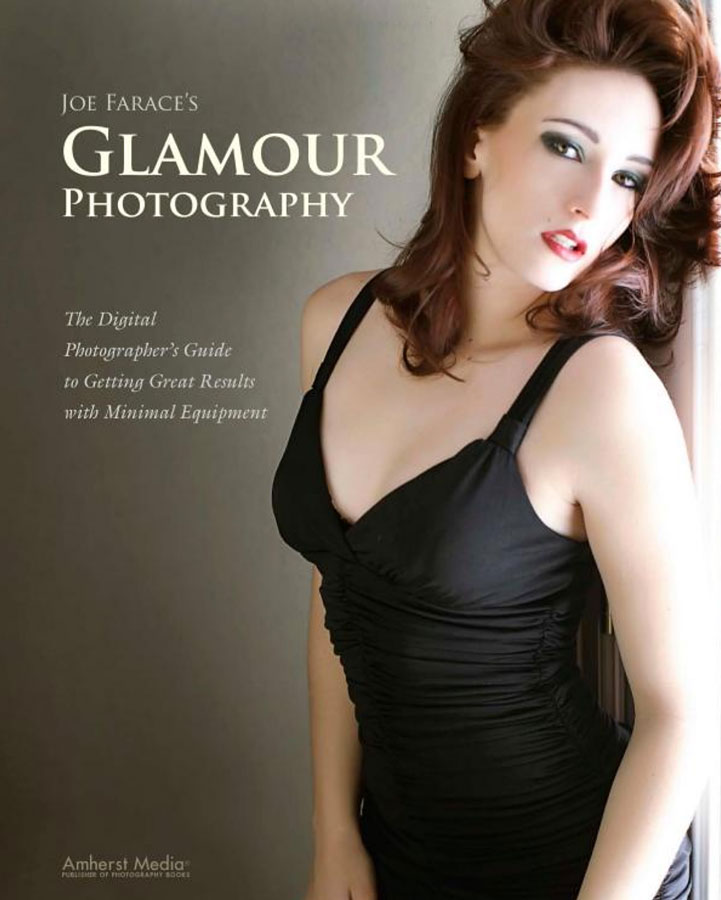
My book, Joe Farace’s Glamour Photography, is full of tips, tools and techniques for glamour and boudoir photography and includes information on the cameras and lenses used as well as the complete exposure data for each image. New copies are available from Amazon for $25.86 with used copies starting around ten bucks as I write this. The Kindle version is $19.99 for those preferring a digital forma