
Today’s Post by Joe Farace
So choose to keep your focus on that which is truly magnificent, beautiful, uplifting and joyful.–Ralph Marston
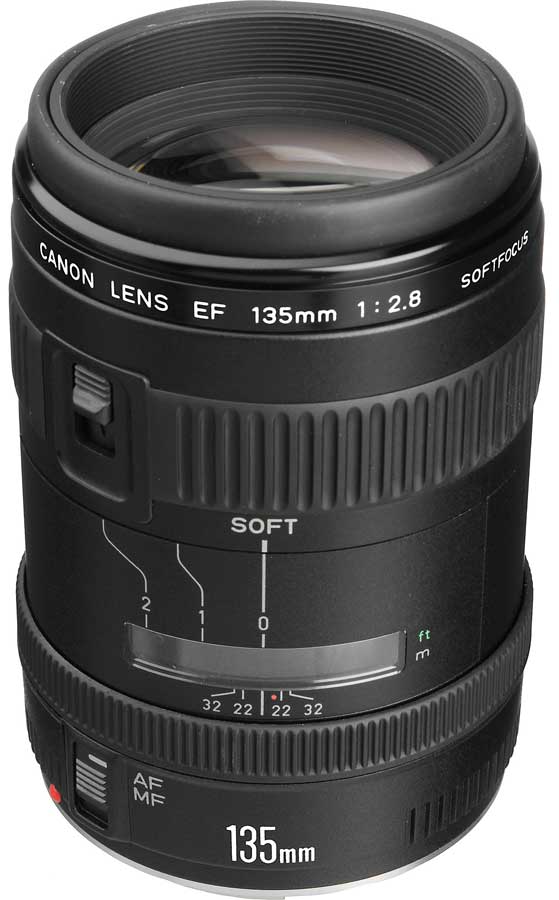
One of my favorite lenses to use for portraiture is Canon’s EF 135mm f/2.8 SF that has, sadly, been discontinued but I’m sure they made many of them so if you’re interested you can pick a nice used one up from KEH or MPB for less than $200. You can read about the fun and misadventures I’ve had with this lens elsewhere, including the first installment of my Stupid Photographer’s Tricks series.
 The easiest way to deal with any kind of minor visual flaws in a portrait subject is by using make-up that can be provided either by the model themselves or a qualified make-up artist. Having a MUA available during a shoot also makes female subjects feel special and perhaps she’ll go into the session with a better attitude. The best possible make-up can make a subject more confident and that confidence can transfer into how she interacts with you during the portrait session. Or you could also…
Use Soft Focus
Next, you might consider adding soft focus which can be done in post after the shoot using software and there are two ways of accomplishing this in-camera: The first is by using a soft focus filter.
- The classic and best soft focus filter is the Zeiss Softar that uses tiny lens-shaped structures on the filter surface to produce the effect. Despite softening highlights, the focus remains sharp to the edges, making focusing easier. You’ll have to manually focus through this filter because the camera’s AF will probably go crazy. The Hasselblad and B+W versions of these filters are no longer available but you can look for used ones in all the usual places.
- One filter that is available in different sizes and strengths is Tiffen’s Black Pro-Mist. Unlike traditional diffusion or soft focus filters, Pro-Mist filters provide little loss of detail. The 1/4 density filter provides more contrast and highlight reduction than the 1/8 model, but less than the 1/2 version, while still allowing for a soft, pastel quality.
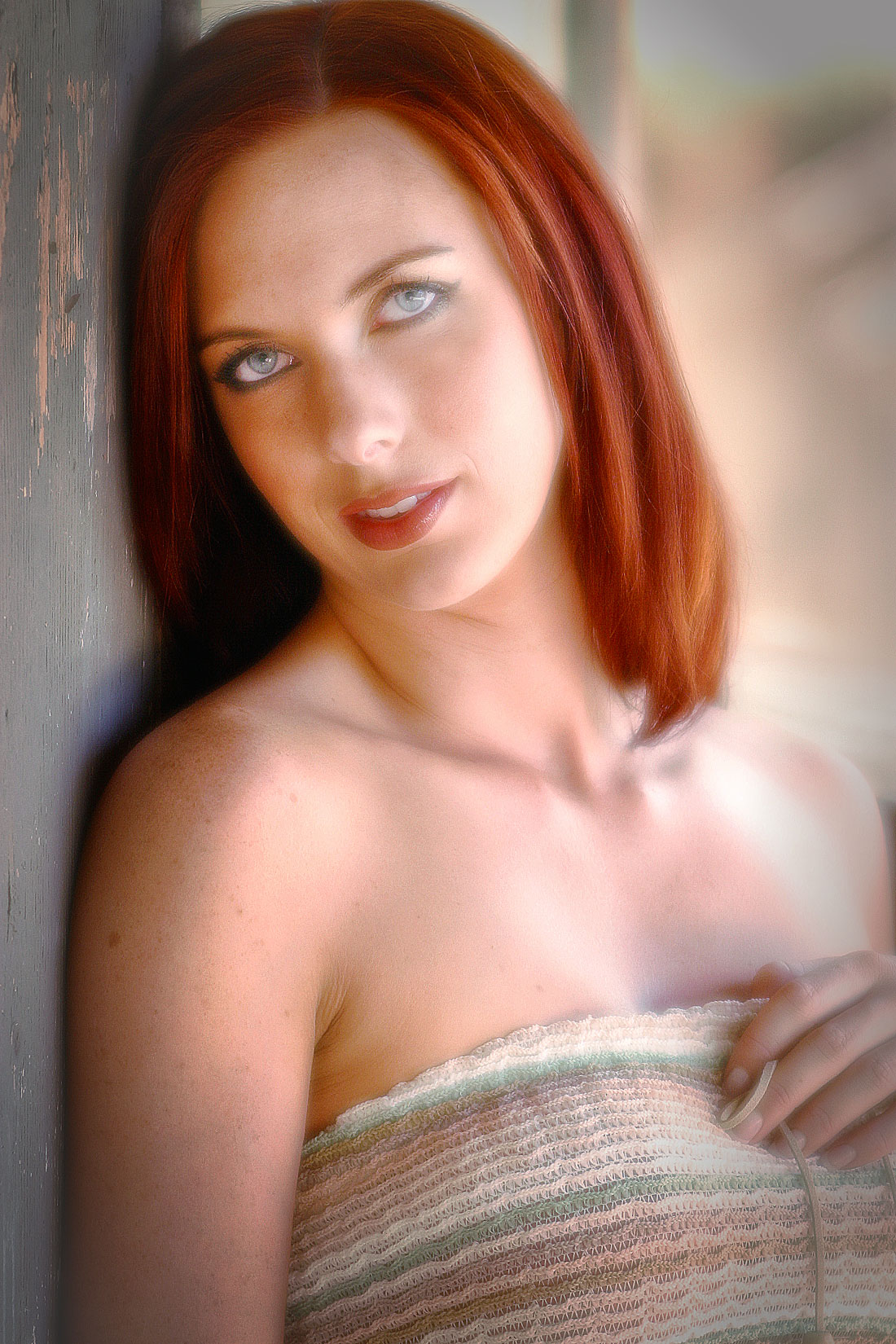
 How I made the image at right: This available light portrait of Shea was shot on location in Phoenix, Arizona using a Canon EOS D60 with EF 135mm f/2.8 SF lens (at the #1 setting) with an exposure of 1/160 sec at f/3.2, for near maximum softness, and ISO 200 with a plus two-thirds stop exposure compensation.
The second method for achieving soft focus in camera and my favorite is to use a soft focus lens such as Canon’s EF 135mm f/2.8 SF lens. These can be found at all of the usual used lens sources. In 1978, Minolta introduced its Varisoft Rokkor-X 85mm f/2.8 soft focus lens in MD Mount. Minolta MD mount lenses fit all Minolta manual-focus 35mm SLR film cameras made from 1959 to the mid-1980s but with adapters can be used with modern mirrorless cameras. It was discontinued in 1994 but In 1995, Minolta introduced an AF 100mm f/2.8 Soft Focus lens for its A-mount cameras
Soft focus lenses have several advantages over using filters to create soft focus including the ability to also be able produce sharp images using their zero (no soft focus) setting. You have a choice of different softness settings and each is affected by the selected aperture, so a minimum but still noticeable effect will be achieved at one setting when using a small aperture. As long as I own Canon DSLRs, I’m never selling my EF 135mm f/2.8 SF lens.
Special Note: Every time I feature an image of the beautiful Shea I get email from photographers wanting to contact her. Please know that I don’t have any of this information and was lucky to work with her twice in the past.
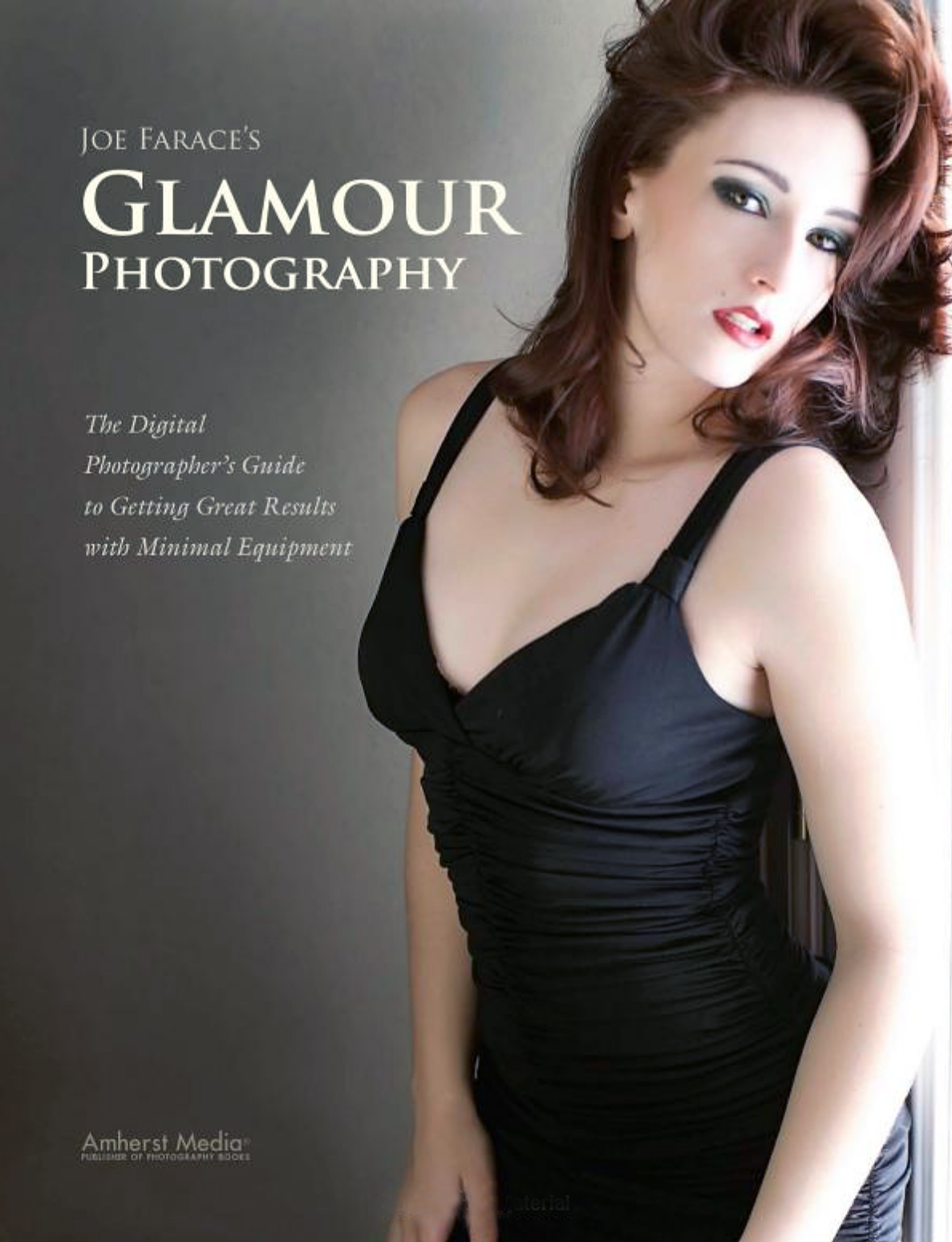
My book Joe Farace’s Glamour Photography is full of tips, tools and techniques for glamour and boudoir photography and includes information on all of the cameras used as well as the complete exposure data for each image. New copies are $34.95 with used copies starting at similar prices, .as I write this. The Kindle version is $19.99 for those preferring a digital format.