
When I told = my wife that I was having trouble coming up with a new theme for Tuesdays, she suggested “Tricky Tuesday” as a way or me to share some of the tricks, tips and techniques I’ve used over the years when shooting glamour images in the studio. Today’s post features the gorgeous and sexy Erin Valakari aka Vala the Artist.
Today’s Post by Joe Farace
Red is the ultimate cure for sadness. —Bill Blass
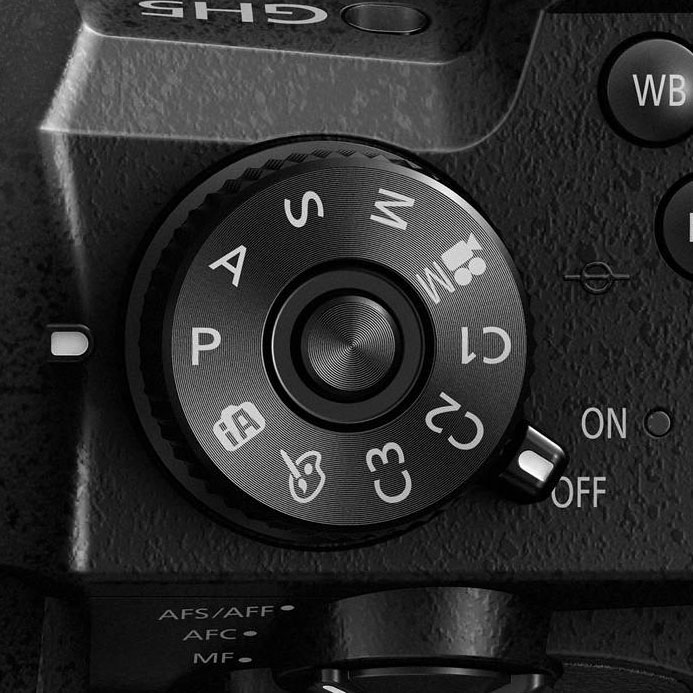 I was scrolling through an on-line modeling site when I saw one model’s profiles that stated she would only work with photographers who were using DSLR’s—sorry, mirrorless camera and film SLR shooters—who would only photograph her in manual mode.
A few years ago I was teaching a class in Travel Photography at the Palm Beach Photographic Centre and one of the students asked why I wasn’t shooting in Manual mode. I told them that I preferred using the exposure mode that best fit the subject I was trying to capture. An instructor at a different workshop that they attended told them she only shoots in Manual mode because that was the purist form of photography. I’m not a purist, I just take pictures.
Shifting Into Manual Mode
To be sure, capturing an accurate exposure begins with correctly choosing a combination of lens aperture, shutter speed and ISO settings. DSLR’s and mirrorless cameras will let you set that exposure manually or let the camera do it for you. To measure the exposure you can use a hand-held light meter or the metering system built into the camera. How accurate is that camera meter? My experience is that for 90% of photographs that you’ll make, any one of the camera’s automatic modes will do a good job producing correct exposures but its those last 10% that may be a challenge.
 It’s these 10% of cases where you may have to shift into manual mode, Which cases? Typically it will be when the light is at the extreme ends of brightness or darkness. These are the kind of lighting situations that will sometimes confuse the most sophisticated automatic exposure systems. Manual exposure is also helpful when dealing with high contrast and strong backlight or when creating a specific mood is desired. Using manual mode is not for creating the current Instagram trend of underexposing portraits to create a low key look; that approach doesn’t really work, instead it produces muddy, murky images.
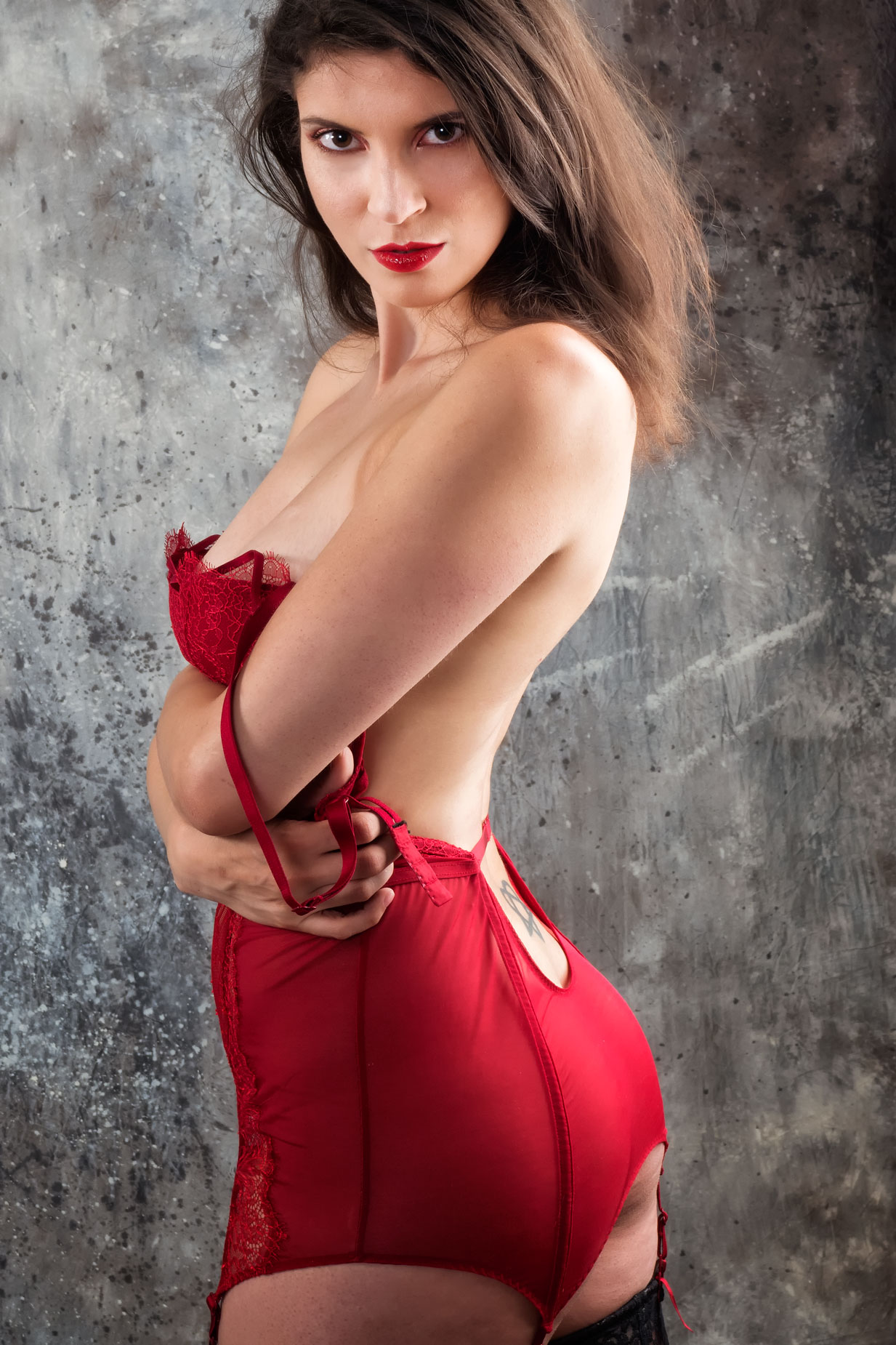
How I Made This Portrait: While purists claim manual exposure mode is the only one to use, outdoors I tend to use all of the letters on the dial. When shooting in the studio, I always use manual mode when using electronic flash. The only exception is when photographing using continuous lighting systems such as hot lights or LED. In those situations I’ll almost always use one of the camera’s automatic modes because it lets me work fast to capture a model’s shifting expressions and poses. That also includes uding Program mode. which most times works surprisingly well.
For this portrait of the dynamic Erin Valakari I used manual exposure mode with my studio’s Paul C. Buff monolights shooting with a Panasonic Lumix GH4 with the image stabilized Lumix G Vario 14-45mm f/3.5-5.6 lens at 40mm (80mm equivalent.) The exposure was 1/200 sec at f/11 and ISO 400. Lighting was from a DigiBee 800 with 52x38x14-inch Plume Wafer Hexoval soft box attached that was placed at camera right. At the back of my studio and at camera left, I placed another DigiBee 800 with the 48-inch Dynalite Quad Square black/silver umbrella. The muslin backdrop was from Silverlake Photo Accessories and is supported by JTL background stands.
Note for my Patreon Subscribers. As a member of the second and third tier of my Patreon, members may be able see uncensored images of Erin from this session in a one of my Password Protected posts. If you are interested in seeing some of these images, click CONTACT and let me know. If you are not currently a Patreon subscriber—it’s surprisingly inexpensive—details on how to sign up can be found here.