
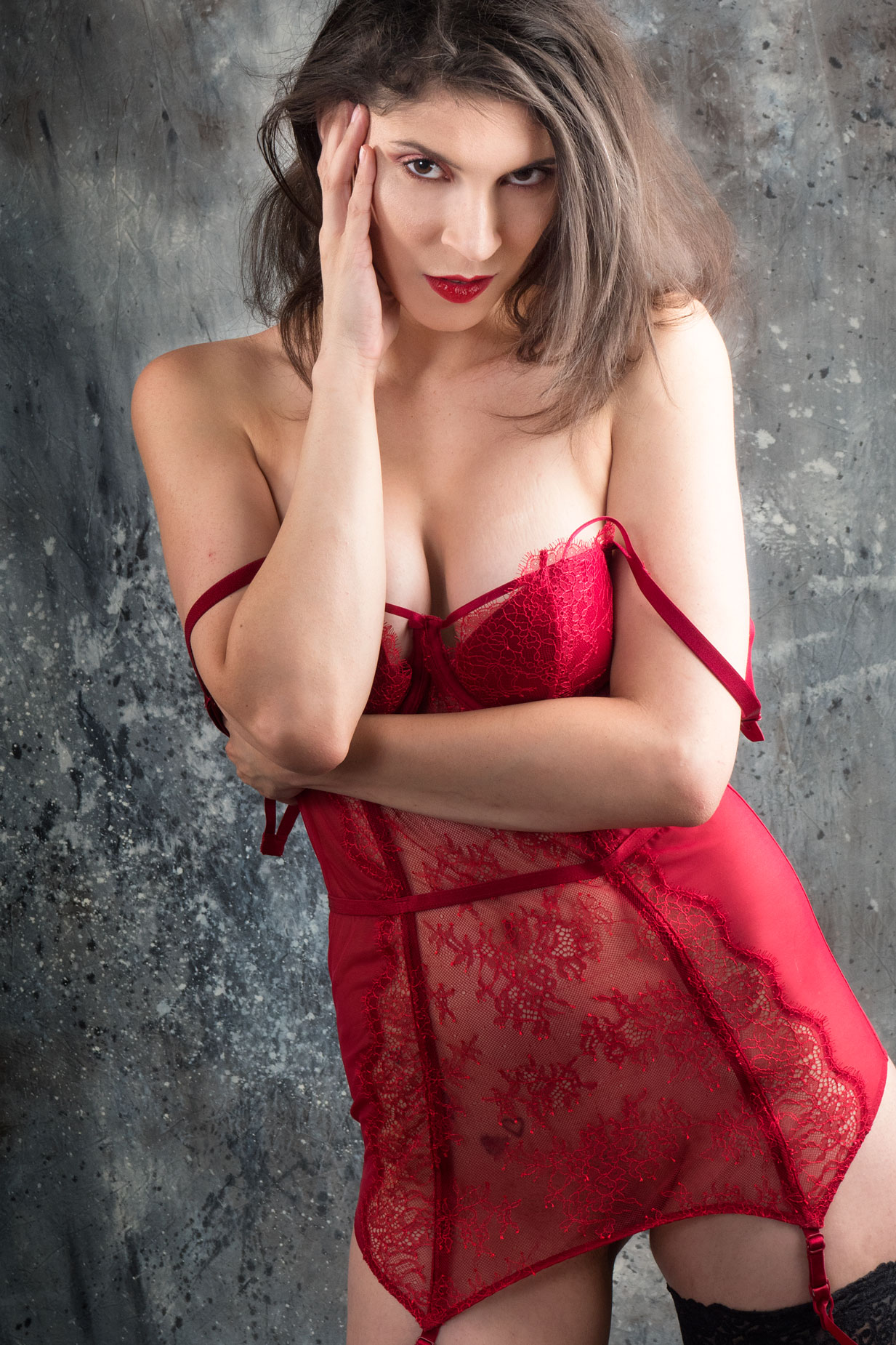
It’s National Plant a Flower Day and each year this day is dedicated to the planting of flowers while looking forward to spring. It’s also #anythingcanhappenday and today’s featured portrait showcases the talents of Erin Valakari aka Vala the Artist.
Today’s Post by Joe Farace
“Experiment. Don’t go out with preconceptions of what a picture will look like. That will block you from being receptive to something new and exciting.“— Mason Resnick
My friend Mason Resnick is not just a philosopher, he’s also a great street photographer. You should follow him on Instagram (@mason_resnick.) Which brings me to today’s topic: Creating new and exciting images, especially portraits because that’s exactly what your portrait subjects want. They want a portrait of themselves or a loved one that looks different from the last portrait you made and maybe even one that captures that subject’s individuality.
Lighting is Important too
 The same goes with your lighting styles. Let me tell you a story. I once helped a friend who was sick by photographing several of his clients for their high school senior portraits. His assistant showed me the studio’s lighting system that included strings that were attached to his Photogenic lights and it had different knots representing different subject-to-light distances, which were used to maintain a consistent lighting ratio. All his subjects got the same consistent lighting that made retouching the negatives easier and faster in the production world of high volume portraiture. All of his portraits had the same style of lighting but that’s not what your subjects or clients want.
There are all kinds of ways to improve or simply learn new lighting techniques. If you’re just getting started one of the best ways is through learning the various program speakers who present studio lighting techniques at conventions or at seminars sponsored by lighting equipment companies. I also happen to believe that the absolute Best Way to Learn Studio Lighting is by Doing It. You can learn more about this idea from the linked post. But it all boils down to what I’ve said here many time before: Practice. And remember as Vince Lombardi once said, “Perfect practice makes perfect.”
How I made this portrait: For this portrait of the incredible Erin Valakari, the lighting setup consisted of one AlienBee 800 and two Paul C Buff DigiBee 800’s monolights. The main DigiBee 800 was placed at camera right had a 37.5 x 27.5 by 12-inch Plume Ltd. Wafer soft box attached. An AlienBee 800 with an 16 x 30-inch Westcott Apollo strip light was located at camera left. Another DigiBee 800 with a 48-inch Dynalite Quad Square black/silver umbrella was located at camera left and placed neat the back of my home studio. The background was a hand painted Carbonite muslin from Silverlake Photo Accessories supported on JTL background stands.
The camera used was a Olympus Pen F with Oly’s 14-42mm f3.5-5.6 II kit lens. The exposure was 1/200 sec at f/11 and ISO 400. The original RAW file was converted to a DNG file using the free Adobe DNG Converter software that converted the Olympus ORF’s into portable DNG files that could use with my old version of Photoshop. The Glamour Glow filter from Color Efex Pro was added for a slight soft focus effect.
*The latest version of Adobe DNG Converter won’t run on my 5K iMac and its OS. My workaround was to install the newer version of the software on my 23-inch iMac that has a later operating system then transferring the image file to the 5K iMac. The entire process is awkward. But what’s a poor hippo to do?
If you enjoyed today’s blog post and would like to buy Joe a cup of Earl Grey tea ($3.50), click here. And if you do, thank you very much.
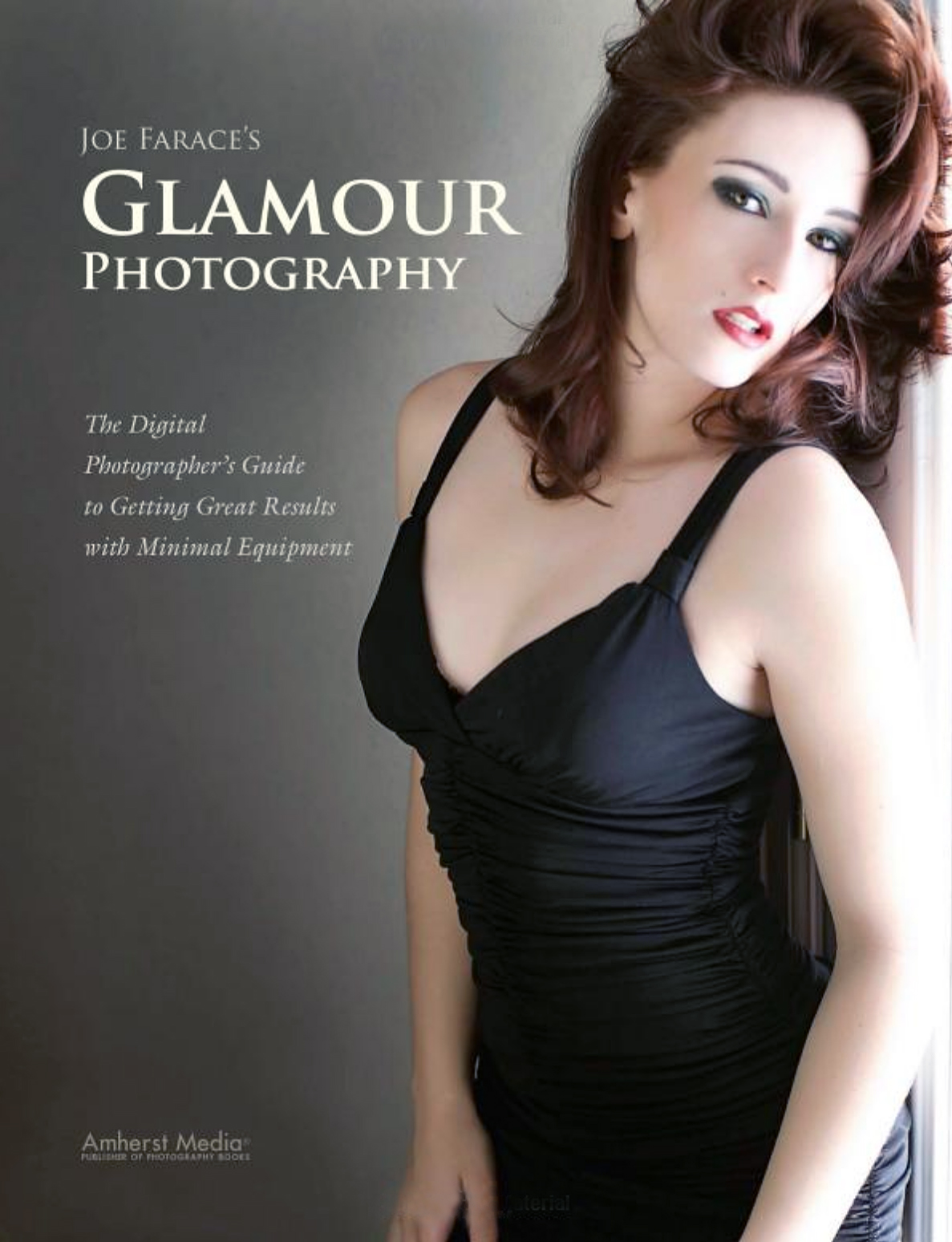
My book Joe Farace’s Glamour Photography is full of tips, tools and techniques for glamour and boudoir photography with new copies available from Amazon for $36.30, as I write this. Used copies are starting at the hard-to-beat price price around thirteen bucks and the Kindle version is $19.99 for those who prefer a digital format.