
It’s “Tricky Tuesday,” a way for me to share some of the tricks, tips and techniques I’ve used over the years when shooting portraits in the studio, in this case, featuring Amber who has, so far, only appeared here on this site a few times.
Today’s Post by Joe Farace
If you feel glamorous, you definitely look glamorous.—Scarlett Johansson
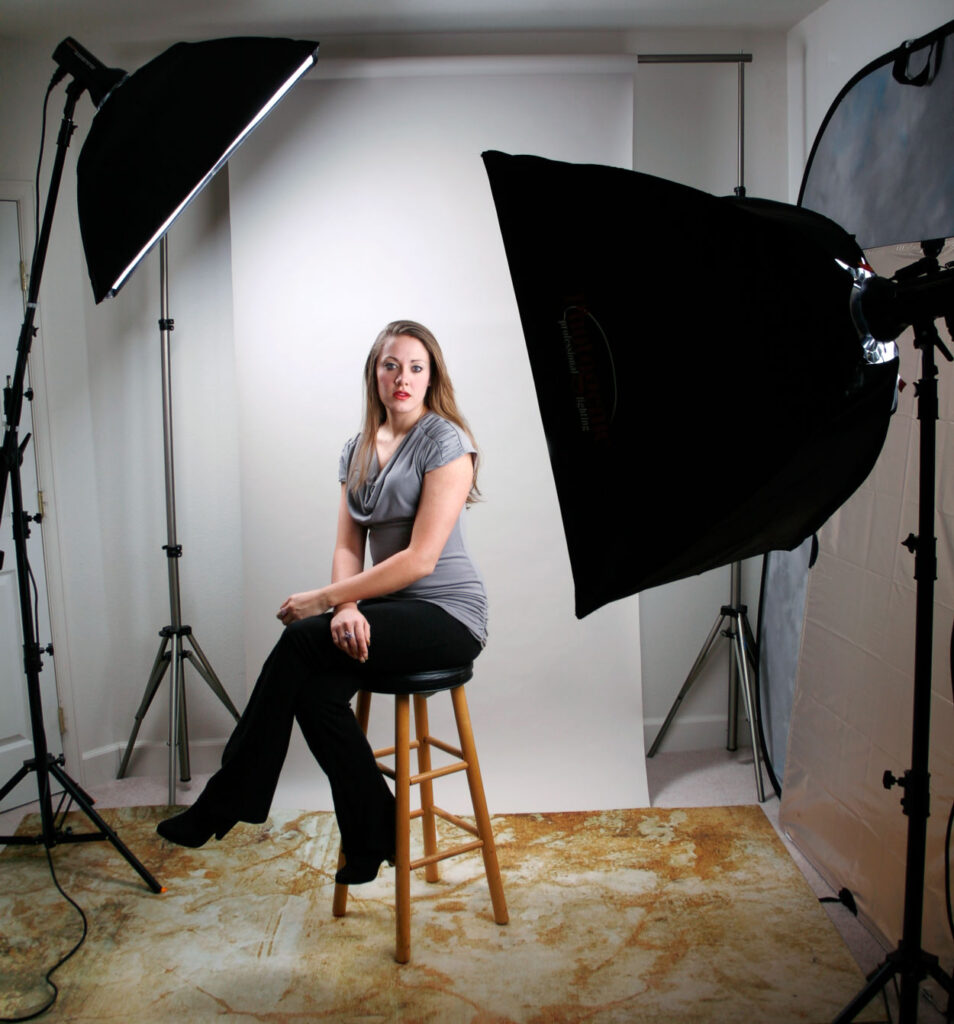 About my home studio: If you’re a regular reader of this blog or follow me on Instagram (please do at @joefarace because it’s the only social media I’m currently on) you may know that several years ago, my basement was flooded during an intense thunderstorm causing damage to my in-home studio/ All of that that has long been repaired but the process was intense and expensive because insurance did not cover anything..
In the Studio
My basement studio measures approximately 11×15-feet and at one end there’s a window well and that’s where flood waters came in. The rest came through a similar window well in the family room on the other side of the studio wall. The wall opposite that window is where I place my backgrounds but it has an angle corner cut for a door that you can occasionally see in the some of the setup photos that appear in posts for this blog. While architecturally interesting, this feature makes setting up any kind of wide background diffiuclt. That’s one reason my wife came up with her “three-layer” background concept.
Considerations: There are lots of things to think about when setting up a home studio beginning with exploiting all of the possibilities of the space that’s available. It’s that space that will also determine the kind of lenses and focal lengths you’ll be able to use, which is invariably why I use zooms in my relatively small shooting space. There are, however, some exceptions.
 What about your subject? You’ll need to work with them in the space you’ve set aside and place them in poses that will help them achieve the best possible photographs. Posing is highly subjective but I’ve written about this subject many times, including in a book (below,) and posts found here and in many other posts. Since I get lots of e-mail asking for posts on this subject, I expect it will continue to be a theme for the future. Don’t forget, you also need a dedicated and private place for models to change and put on make-up.
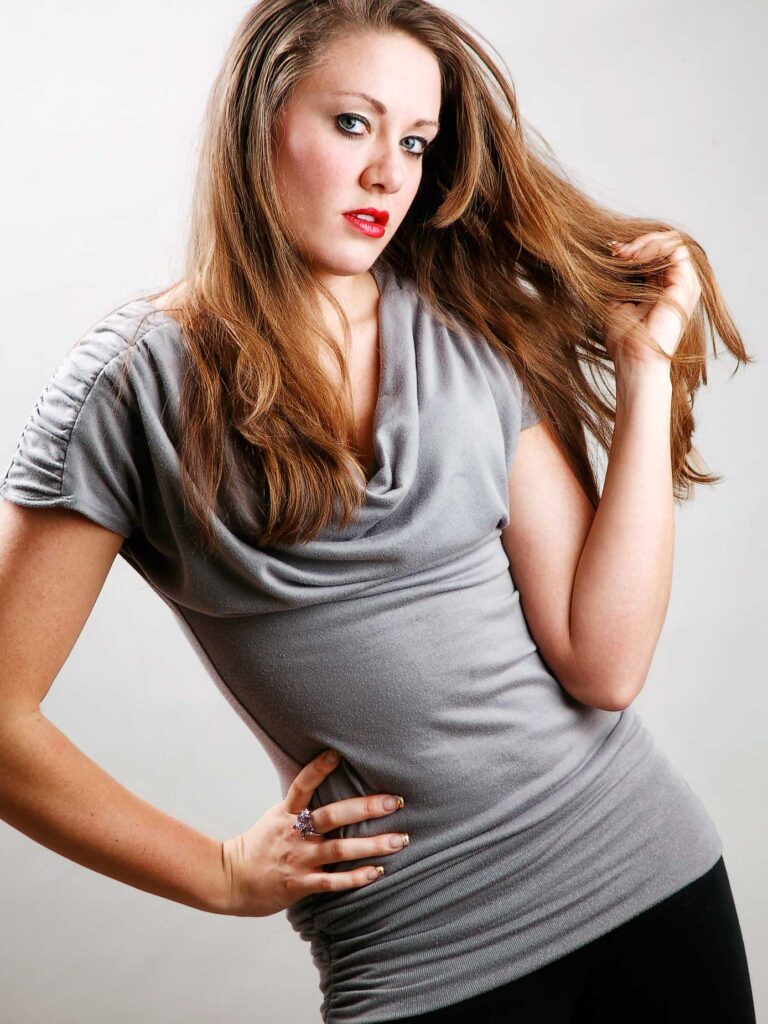
How I made this photograph: In this slighting setup for Amber, I used a 320 Watt-second Photogenic StudioMax III monolight that was placed at camera right with a strip light located at camera left and raised near the ceiling (eight and one-half-feet.) The main light was set between one-quarter and one half power, while the hair/background light was set at three-quarters power.
Shooting with a Canon EOS 5D Mark I and EF 28-135mm f/3.5-5.6 IS lens (at 135mm) produced an exposure of 1/125 sec at f/13 at ISO 100. My model posing usually reflects something I saw them doing naturally and I just make slight changes to what they were actually doing to arrive at a final pose. My initial pose with Amber was with her seated (see set-up shot in the upper right) but when she started playing with her hair it evolved into the pose you see here. I made five shots of this basic pose and what you see here is frame number 2, all of which folds into my “shoot though a pose” technique.
 If you enjoyed today’s post and would like to support this blog, you can help by joining my Patreon, where memberships start at just $1.25 a month, with additional levels of support at $2.50 and $5 that include special benefits. If you do, I would like to thank you for your support.
If you’re interested in learning how I use cameras, lenses and lighting in my in-home studio and on location, please pick up a copy of Studio Lighting Anywhere which is available used from Amazon.com for around eleven bucks, as I write this. The Kindle version is $19.99 for those preferring a digital format.