
It’s “Tricky Tuesday,” a way for me to share some of the tricks, tips and techniques that I’ve used over the years when shooting portrait and glamour images in the studio, Today’s post features the always amazing Pam Simpson.
Today’s Post by Joe Farace
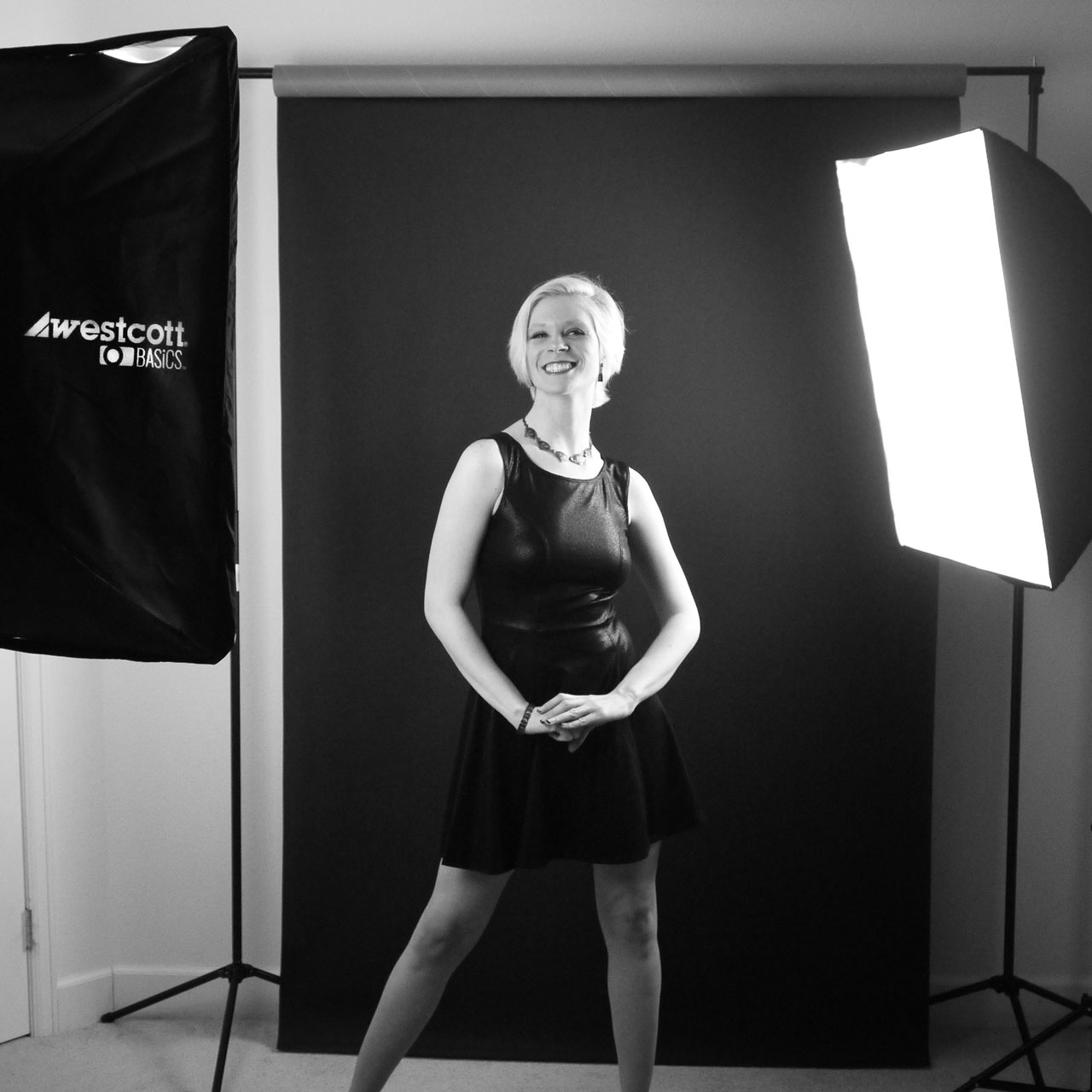 For many years photographers have used photoflood, tungsten, quartz and other kinds of continuous light sources that fell under the general category of “hot lights.” One of the problems associated with working with traditional, continuous “hot lights” is that they are, well, hot and are not all that comfortable to work under for subject and photographer alike. If you would prefer to work with somethings cooler, in more ways than you might think: Welcome to a world of continuous light sources powered by LED or fluorescent bulbs.
Using Continuous Lighting
I know what you’re thinking, won’t fluorescent lights produce horrible green light? Fluorescent-based lights that are used for photography are daylight-balanced and their RGB output closely matches the receptive RGB spikes of a digital camera’s imaging chip. That chip is least sensitive in its blue channel and, by comparison, tungsten light has the least output in the blue and when combined with its infrared (heat) output it can overcome a chip’s spectral response.
 Westcott’s (no longer available) Two-Light Daylight D5 Softbox kit that I used to make this portrait included two D5 light heads, two 24×32-inch Basic soft boxes, ten 27 Watt daylight balanced FLD lamps and two 6.5 ft lightstands. The soft boxes have a silver reflective lining to maximize output along with heat resistant rods that mount on receptacles on the D5 head. The kit comes in a 10x12x29-inch box that since it has a handle could double as a carrying case, if you don’t have something more suitable and photographically oriented.
Although CFL bulbs may be safely recycled, they have fallen out of ecological fashion and lighting systems, like Westcott’s D5, are no longer available new although there may be some systems available out there in used condition. That lighting system was replaced by the company’s uLite LED 2-Light Collapsible Softbox Kit that I do not currently own
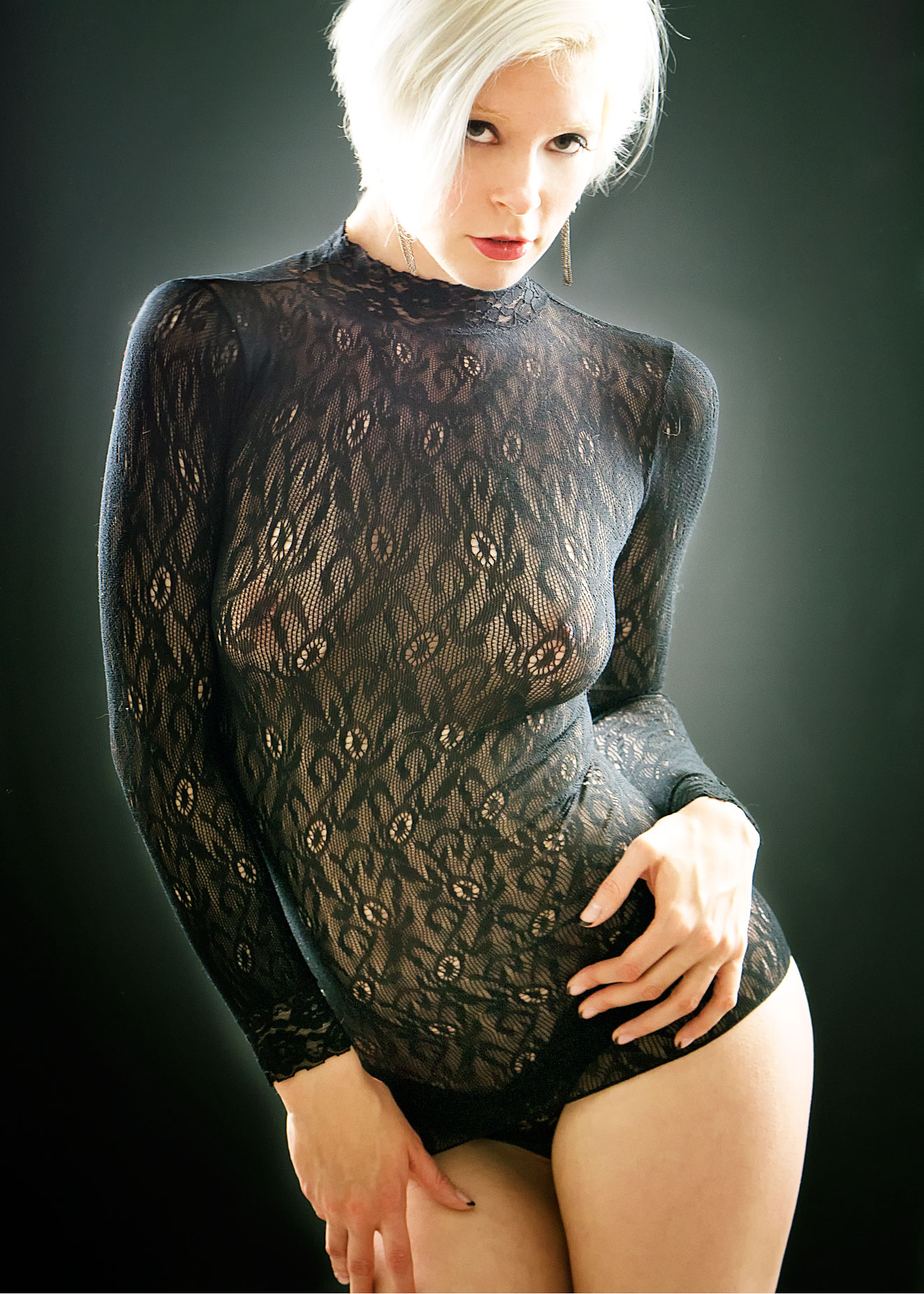
How I made this portrait: The above image of Pamela Simpson was made in my home studio using a Panasonic Lumix GH4 with 45mm f/2.8 Leica DG Macro-Elmarit lens with an exposure of 1/30 sec at f/4 and ISO 640, with a minus one and one-third stop exposure compensation to maintain the low key look. The background is a 5×7-foot Savage Black Infinity vinyl background that was hung on my falling apart JTL background stand.
The RAW image file that I captured was originally converted to monochrome using Silver Efex. When posting glamour portraits on social media, that was my original approach because I was afraid of Internet censors and nanny software. In more recent months, I have stopped being worrying about it and have been posting images that were a little more honest, so this post features the color version.
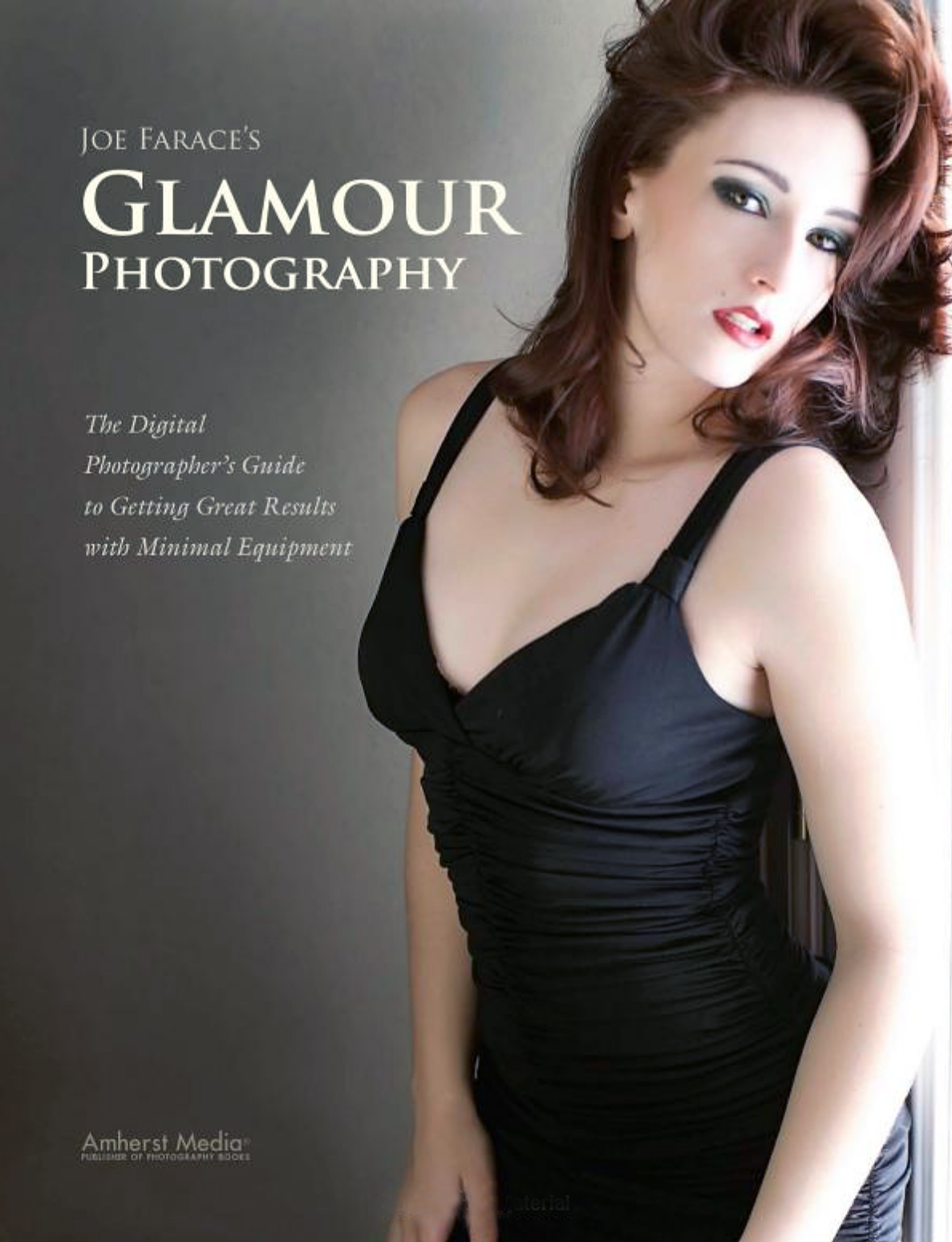
My book Joe Farace’s Glamour Photography is full of tips, tools and techniques for glamour and boudoir photography and includes information on all of the cameras used as well as the complete exposure data for each image. New copies are $34.95 with used copies starting at similar prices, .as I write this. The Kindle version is $19.99 for those preferring a digital format.