
Today’s Post by Joe Farace
“Color tends to corrupt photography and absolute color corrupts it absolutely… consider the fact that in a black and white photograph a statement is a statement – anything properly and carefully arranged is as good as a disciplined installation in a gallery.” – Walker Evans
 When I find myself wondering, “what do I shoot next?” or start to thinking that “there’s nothing to photograph,” I like to make some digital images in direct monochrome mode. Or maybe for my film photography. I’ll load up a roll of Kodak Tri-X.
When shooting digital images, It doesn’t even have to be all of the images I make during a particular photo session; maybe it’s just a few to, you know, see what happens. But what if at some later date you change your mind and really really want that original to be in color ?
The RAW+JPEG Option
Most digital SLRs and mirrorless cameras offer a RAW+JPEG option so all you have to do is put the camera in monochrome mode; set RAW+JPEG as your capture option and you will capture a monochrome (JPEG) and color (RAW) file at the same time. Some cameras that have dual-memory card slots will let you simultaneously save each file type onto a different card. When shooting portraits, as I often do, this approach lets you use the JPEG file as a black & white digital proof that you can show the subject but still have a color RAW file that you can retouch and later process into black and white.
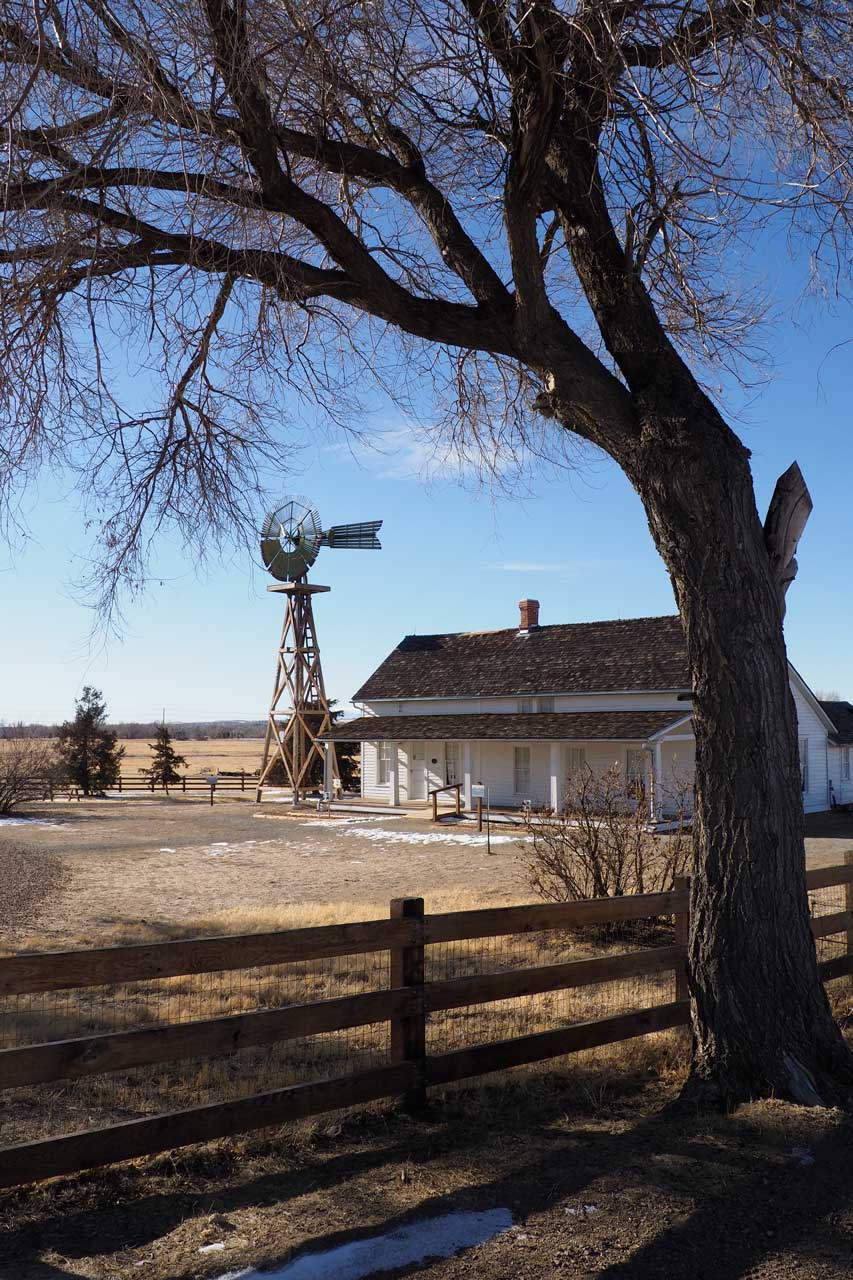
When considering making an image in black and white, here’s so something you might not have though about before: Some people think removing color forces the brain to look past surface hues and feel the raw emotion that’s inside of a scene. Really? Take a look at this pastoral scene. Does it have more emotion that if had been shot in color? You can see the same scene SOOC above right. Does the monochrome image (below left) have more drama, does there seem to be more of a story behind it than the color version? It certainly has a completely different mood.
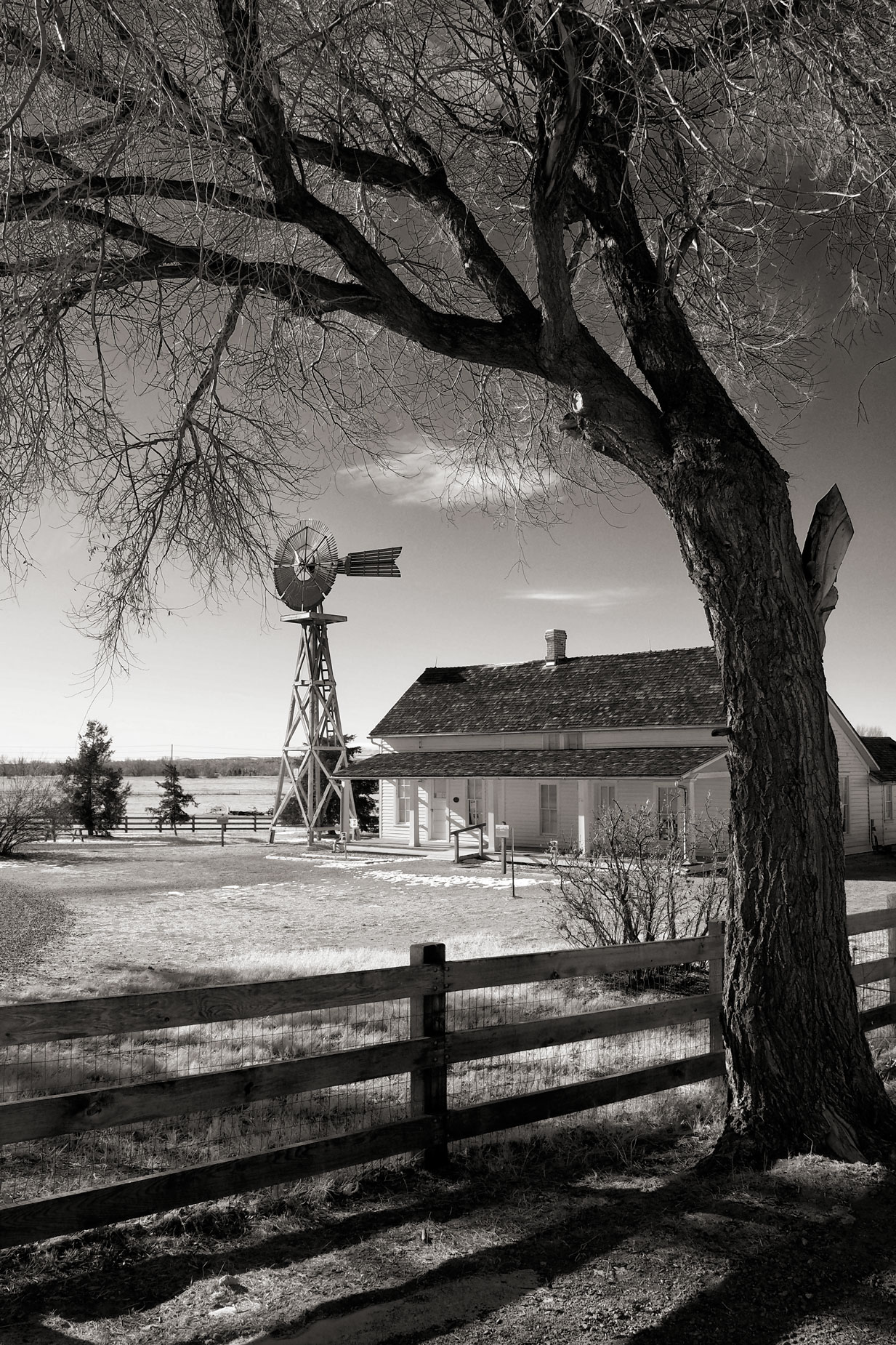 How I made this shot: I made this image at 17-Mile House near Parker, Colorado. This is part of a 70-acre open space that includes an 1860’s “mile house,” a barn, two windmills and a silo and is located along the historic Smoky Hill/Cherokee Trail route to Denver. The farmhouse was originally a log cabin and some portions of the original structure can still be seen. The camera used to make this photograph was an Olympus EM-1 Mark II with Olympus M.14-42mm f/3.5-5.6 II R lens at 14mm. The exposure was 1/500 sec at f/10 and ISO 400.
The original image file was converted into monochrome with Silver Efex using their default preset and tweaked sightly by applying the Red filter. Then the image had the Platinum toning effect from PhotoKit applied to finish it off.
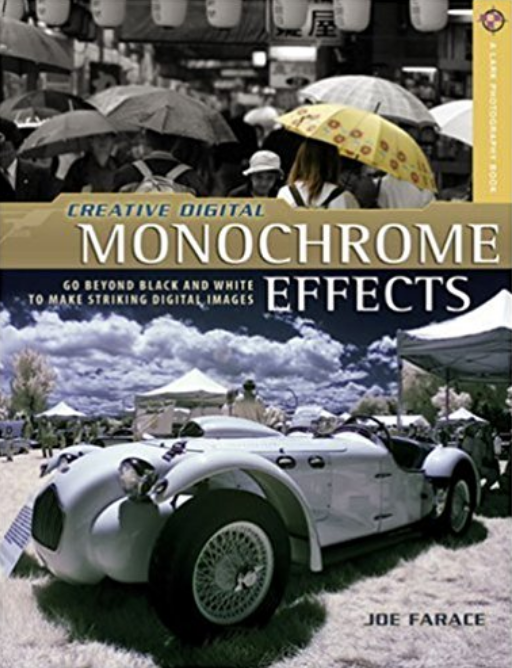
New copies of my book Creative Digital Monochrome Effects is available from Amazon with new copies selling for $13.78 and used copies starting at less that seven bucks, way less than a grande Pumpkin Spice Frappuccino at your local Starbucks drive-through. No Kindle version of the book are available