
Today’s Post by Joe Farace
Everything in life is somewhere else, and you get there in a car.—E. B. White
 These days most DSLRs and mirrorless cameras not only have direct monochrome capture options but also let you apply digital filters to produce the same effect as if you had placed a traditional colored filter in front of your lens. If you’re new to the world of camera filters for black and white photography, here’s a quick primer on how your choices can affect your images.
Using Digital Filters
- A yellow filter slightly darkens the sky, emphasizing clouds and is primarily used for landscape photography or when shooting in snow. It can also be used to produce dynamic textures.
- An orange filter produces effects similar to a yellow filter but skies are darker and clouds more defined. An orange filter can also be used for outdoor glamour photography or to produce smooth skin tones when shot under incandescent light sources.
- The red filter produces dramatic landscapes with black skies and maximum contrast but in portrait or glamour images a subject’s lips may seem washed out. This filter can almost eliminate freckles and blemishes, if that’s a concern.
- A green filter lightens vegetation in landscape photography but doesn’t darken the sky as much as a red filter. With some portrait subjects, skin tones may be more pleasing but freckles and blemishes become more visible. I use this filter a lot for my glamour photography because it bumps up the contrast for more drama.
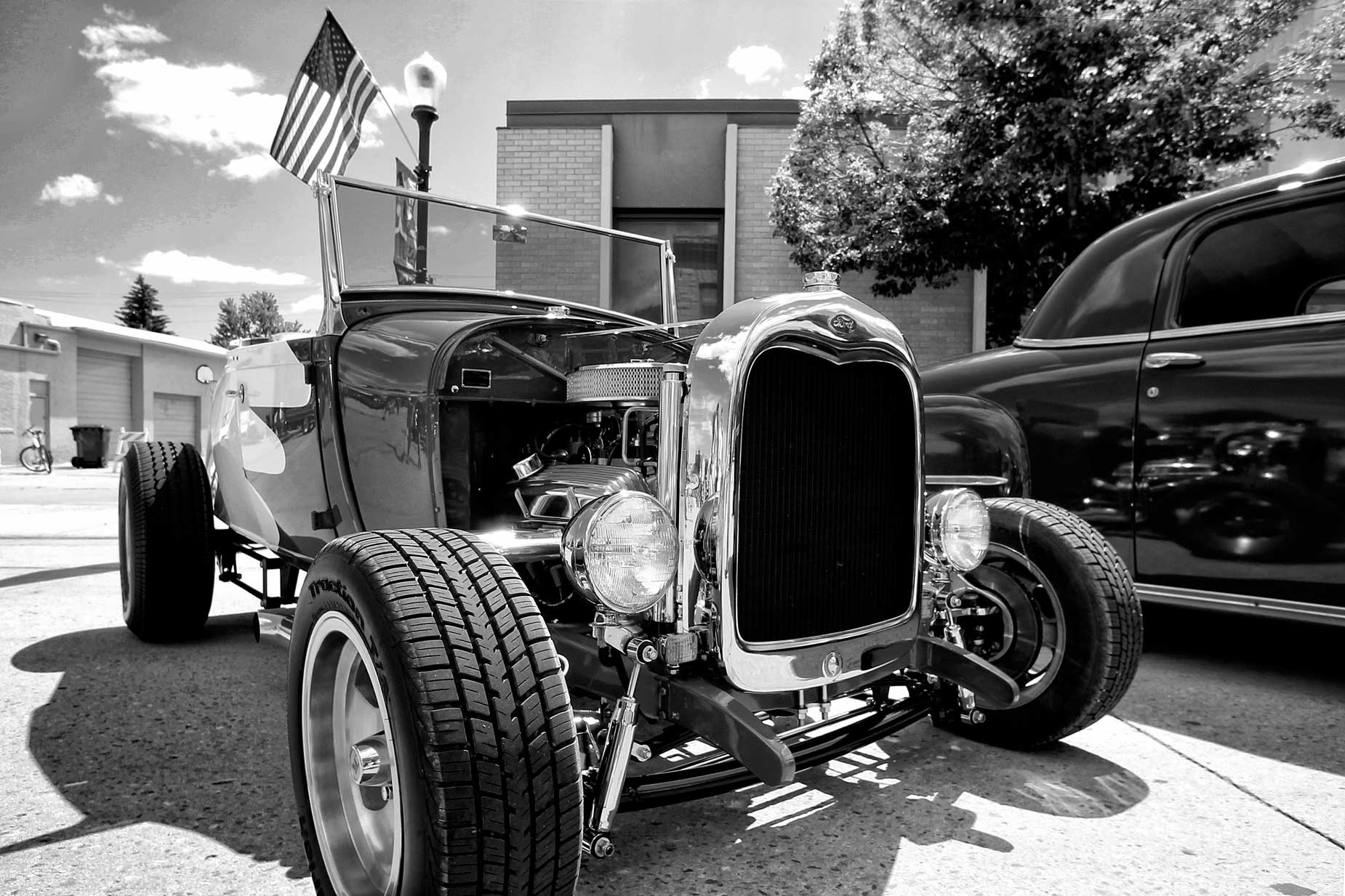
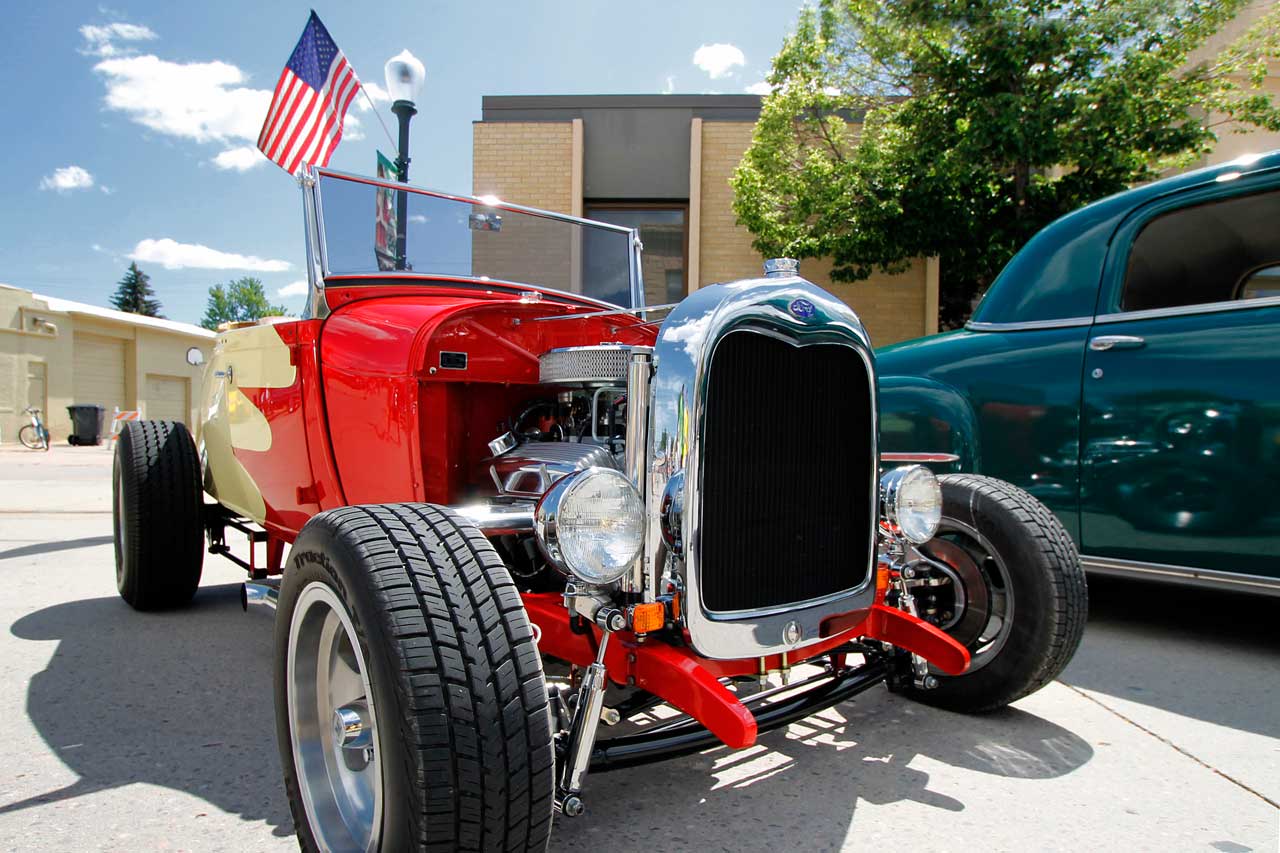
How I Made this Photo: I made this image of a hot rod at the annual Father’s Day car show in Castle Rock, Colorado. The camera used was a Canon EOS Rebel T3 with a Tamron 11-18mm f/4.5-5.6 Di-II lens at 18mm. The original, as captured, color image is shown above right, The exposure was 1/250 sec at f/8 and ISO 200. The monochrome version was created using Silver Efex with the yellow filter selected. I tried all the filter options within the plug-in and the classic yellow filter seemed to produce the most natural looking image and seems to add timeless look to an image that could have easily been made in the fifties,
While you could always use real color filters on your camera’s lens to achieve the same or similar effects there are some distinct advantages to using digital filters: While in-camera metering systems automatically take filter factors (see below) into consideration, you still have to look through and compose through a densely colored filter. A pure digital solution is an easier one to live with because the viewing experience for “no filter” will be identical to one made with a red digital filter.
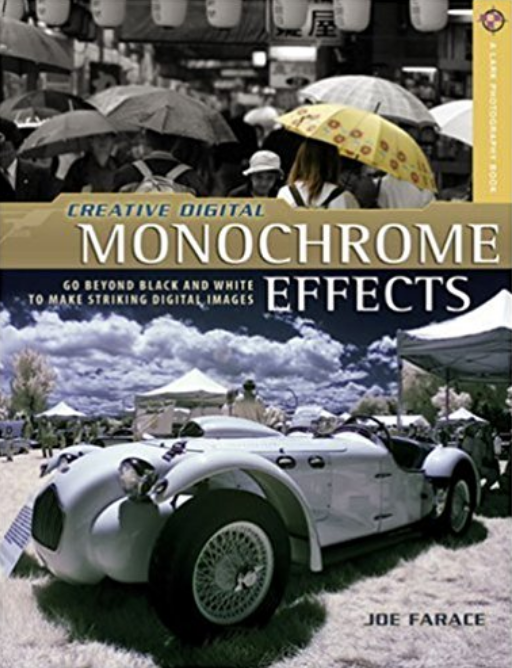
Copies of my book Creative Digital Monochrome Effects is available from Amazon with new copies selling for $23.68 and used copies starting around seven bucks, less than a grande Pumpkin Spice Frappuccino at your local Starbucks drive-through. No Kindle version of the book was ever available, sorry