
It’s Amerigo Vespucci Day. On March 2, 1959, New York Governor Nelson A. Rockefeller declared this day be set aside to commemorate the anniversary of Amerigo Vespucci’s birth. Vespucci gave his name to America’s two continents and was one of the first Europeans to travel to the Western Hemisphere.
Today’s Post by Joe Farace
“Life is in color, but black and white is more realistic.” – Samuel Fuller
I recently noticed a trend here on my photography how-to Blog. Even though only some of each month’s posts were about or featured black and white photographs, it turned out that these were also some of the most popular ones. And I think I can understand why.
It’s All Black and White to Me
Sometimes color in an image can distract a viewer removing focus from the photograph’s actual subject, which can be especially true in portraiture or glamour photography. I also think some black and white images, such as cityscapes, have more drama when seen in monochrome. Without a blue sky to distract a viewer clouds the architecture can “pop” creating a more interesting look particularly in infrared landscape photography. Just look at Josef Sudek’s images of Prague; You cant imagine them in color.
There are many ways that you can create black and white digital images: You can capture photographs in color the same way you do now and then convert the image file to monochrome later using software such as Silver Efex or Exposure Software’s Exposure. You can also shoot black and white images directly in-camera. Almost all DSLRs and mirrorless cameras offer JPEG monochrome modes and some let you add toning effects allowing you to shoot in monochrome variations and see how it looks while making the image. Here’s a tip: When choosing the monochrome option from the camera’s menu, shoot in RAW+JPEG mode so you also get a color RAW file in case you change your mind later.
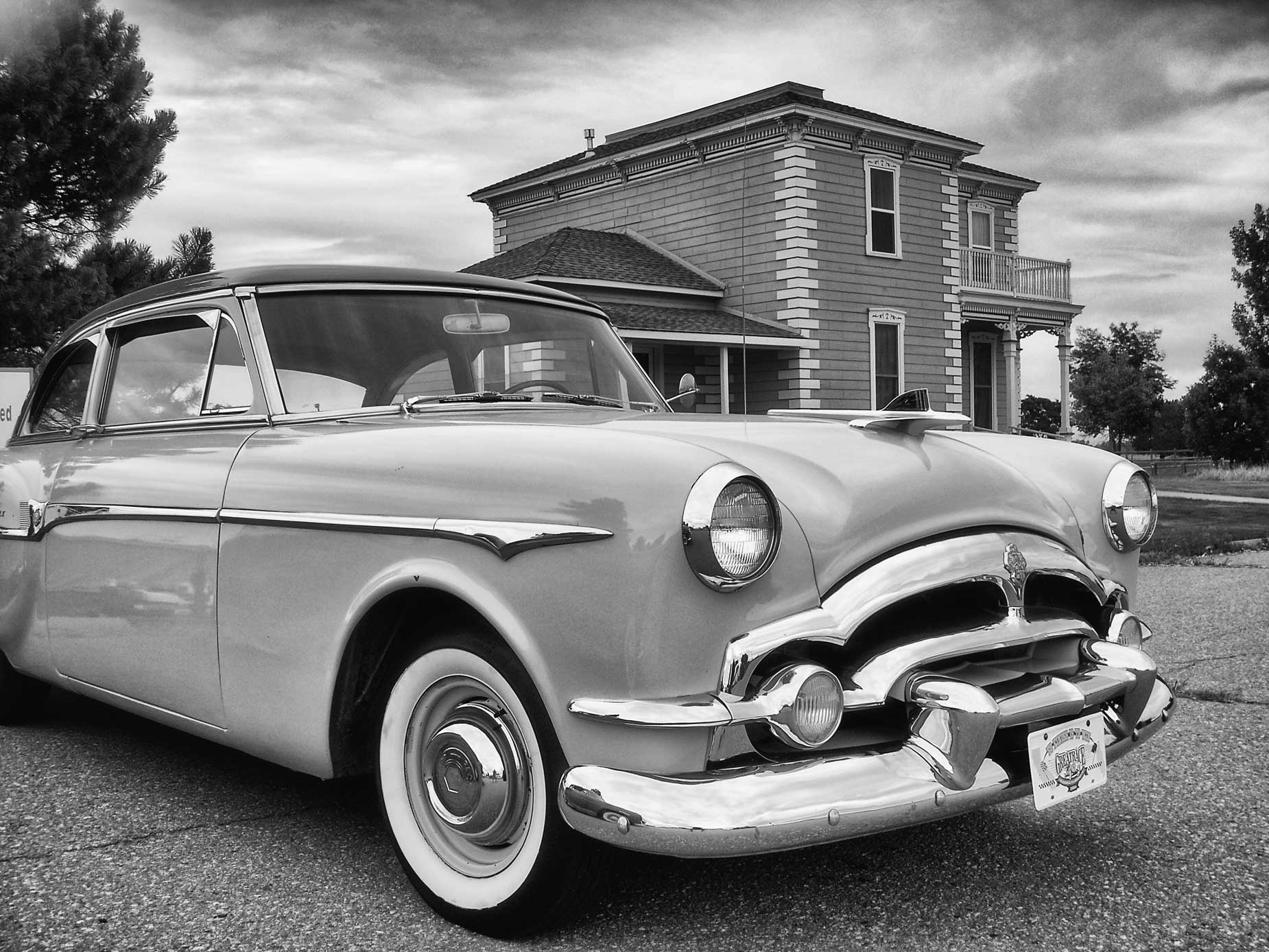
 How I made this photograph: I photographed my1953 Packard Clipper Club Sedan at a classic car show at the Adams County Historical Society’s outdoor museum near Brighton Colorado. (I still miss that car, my wife does not.) The camera used to make the photo was a Konica Minolta X1 point-and-shoot camera with a Program mode exposure of 1/200 sec at f/3.5 and ISO 50.
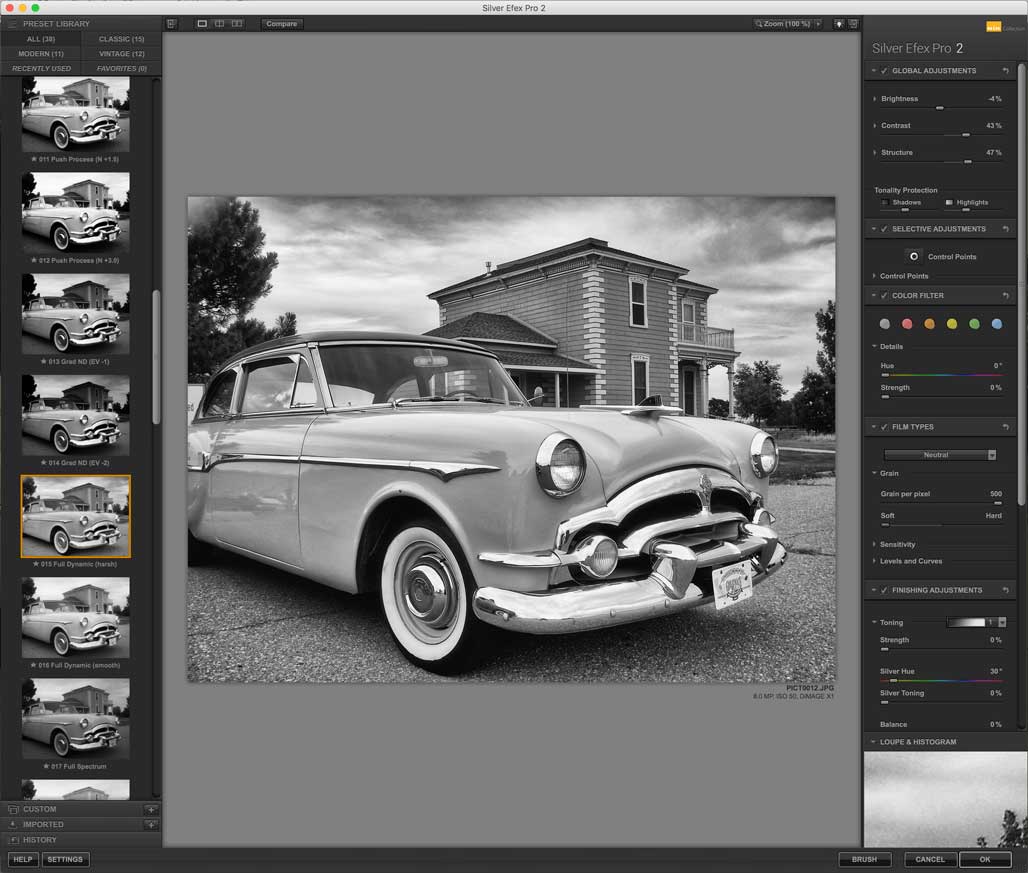
The image was originally captured in the camera’s direct monochrome mode in sepia but the X1’s sepia style seemed especially tepid so I decided on a more traditional black and white look. I used Silver Efex to convert the already monochrome image into another monochrome style using the plug-in’s High Structure (harsh) preset with just a mild tweaking of the sliders. Typically with Silver Efex I turn the Grain per Pixel all the way to the right to minimize the grain effect and then move the Grain: Soft/Hard slider, all the way to the left or the maximum soft setting for the same reason. For this image, I used PhotoKit 2’s Burn options to burn in the sky to show the kind of cloudy, overcast day it really was.
Black and White photography is the main topic of the Friday the 13th edition of the Pixels, Grain & Cookies podcast, where Barry Staver and I come to a startling and perhaps erroneous conclusion about monochrome photography. Barry, particularly, has some interesting comments about black and white wedding photography and what clients like and will pay for. You can find the podcast on my YouTube channel now.
If you enjoyed today’s blog post and would like to buy Joe a cup of Earl Grey tea ($2.50), click here. And if you do, thanks so much.
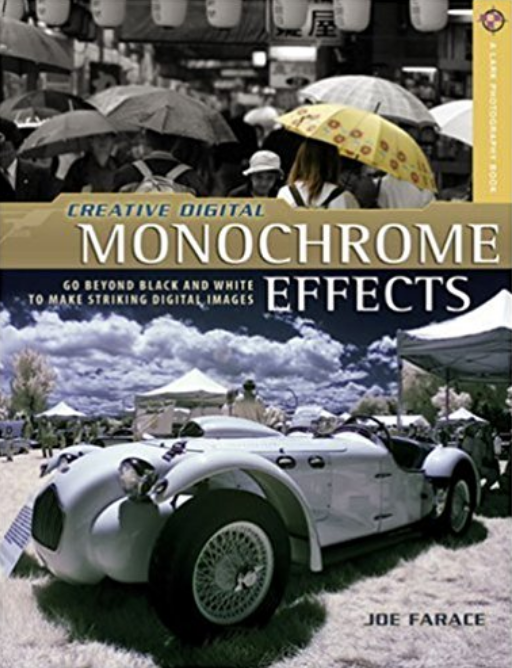
Joe is the author of Creative Digital Monochrome Effects with new copies selling for $11.46 from Amazon with used copies starting around seven bucks, which seems like a good deal to me. No Kindle versions available at this time.