
Today’s Post by Joe Farace
“Black and white photography erases time from the equation.” – Jason Peterson
 I once wrote a post about how to deal with color balance problems when working under challenging lighting conditions. Well, here’s another way to make all of those challenges disappear: Shoot it in black and white.
The Monochrome Advantage
There are (at least) two different ways to go monochrome: First, most DSLRs and mirrorless cameras offer a direct monochrome capture mode or second, you can convert an original color file to black and white after the fact using monochrome conversion software, such as Silver Efex. Here are a few reasons why, in some cases, direct capture might be the best option:
- Aesthetics: Too much color can sometimes confuses a viewer by distracting them from the photograph’s real subject. For the photographer, shooting directly in black and white impacts how you see when capturing new images providing instant feedback that can help focus your vision.
 Workflow: Capturing the file in black and white saves time. There are many ways to produce black and white images from color files after capturing them but when you want to make fast prints, you can do it on-location using a PictBridge-based printer or drop your memory cards off at a local Walgreens.for printing.
- Quality: Sometimes the quality of a camera’s black and white conversion can match or maybe even exceed the options built into Photoshop, such as when using Channel Mixer or the Black & White (Image > Adjustments > Black & White) commands.
Is in-camera monochrome capture that perfect capture solution? No. In some recent posts, including yesterday, I’ve given a few reasons why color capture and conversion later in the digital darkroom can be a better option. In the meantime, this post offers a few other things to think about.
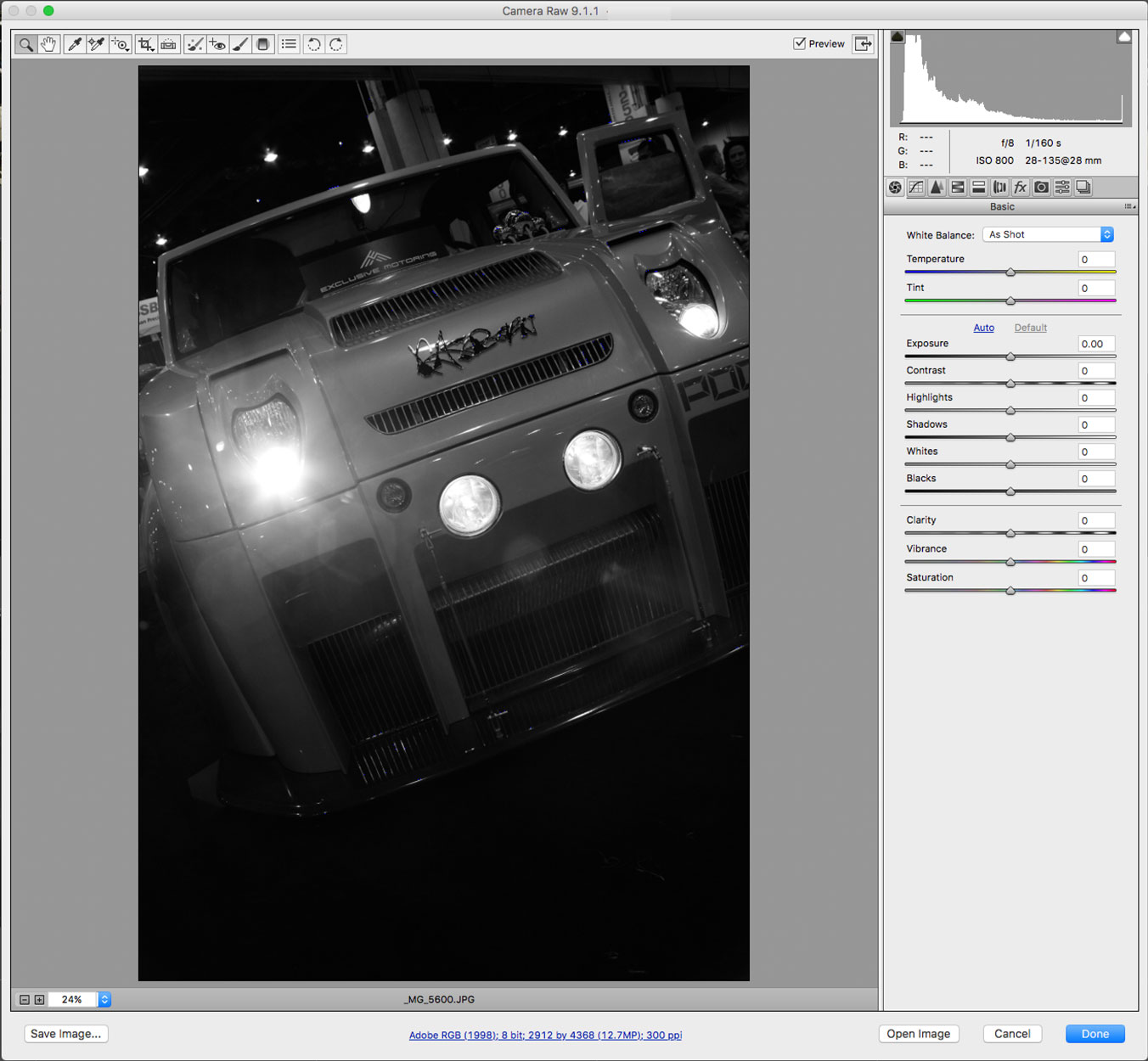
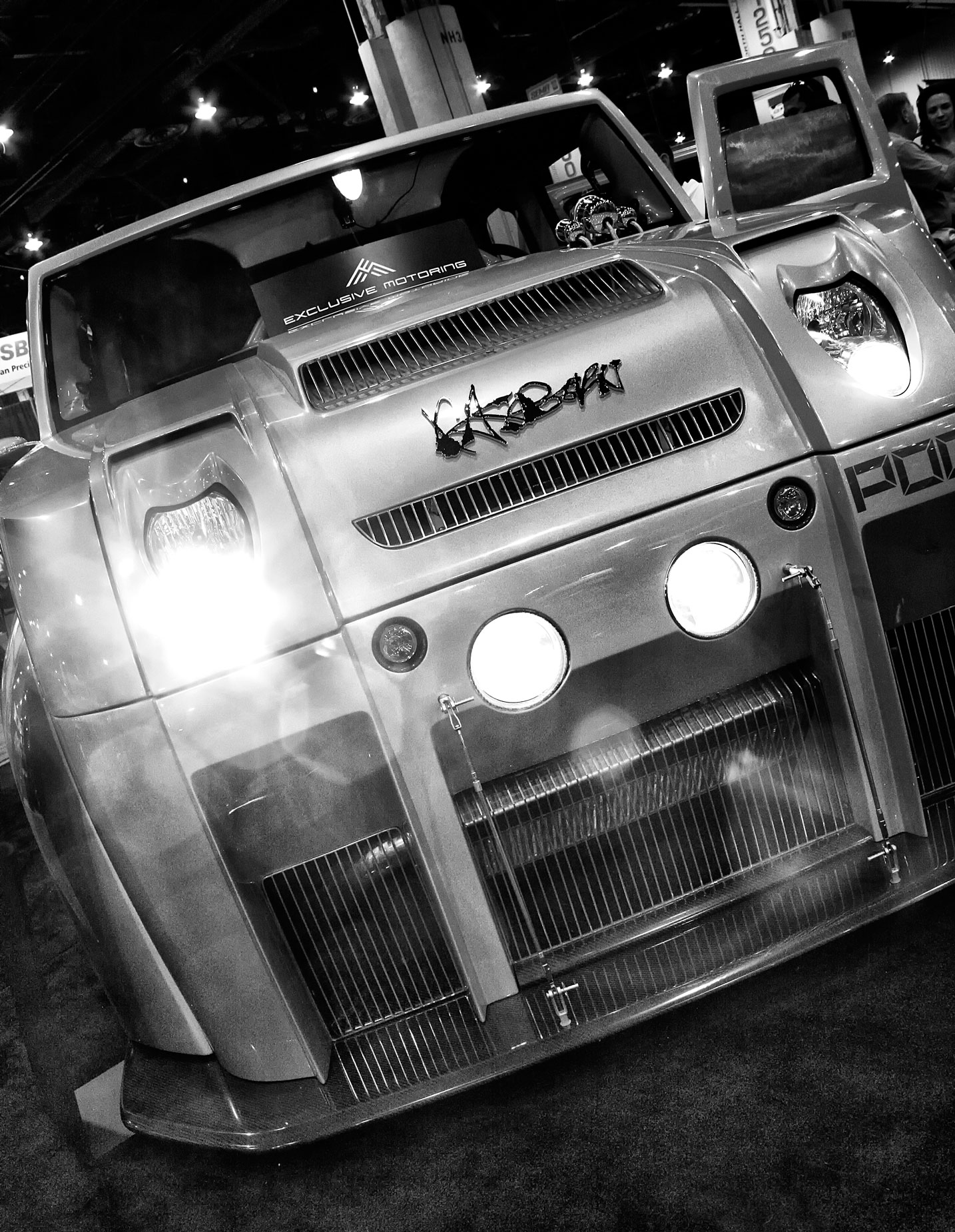
How I made this photograph: Does anybody know what marque this car is? Please let me know; it looks French. I photographed the car at a previous SEMA show using direct monochrome capture. Why not color? The original car color was grey, so there’s that. It was made using a Canon EOS 5D Mark I and a EF28-135mm f/3.5-5.6 IS USM (at 28mm.) The exposure was 1/160 sec at f/8 and ISO 800 with a plus one and two thirds stop exposure compensation, but evidently (see image above right) not quite enough. The underexposure was corrected using techniques I typically use for underexposed portraits and that are explained here.
Direct monochrome capture is just another tool that’s at your disposal for creating black and white images. I think you should select whatever method works best for any given shoot, so ultimately it’s your call.
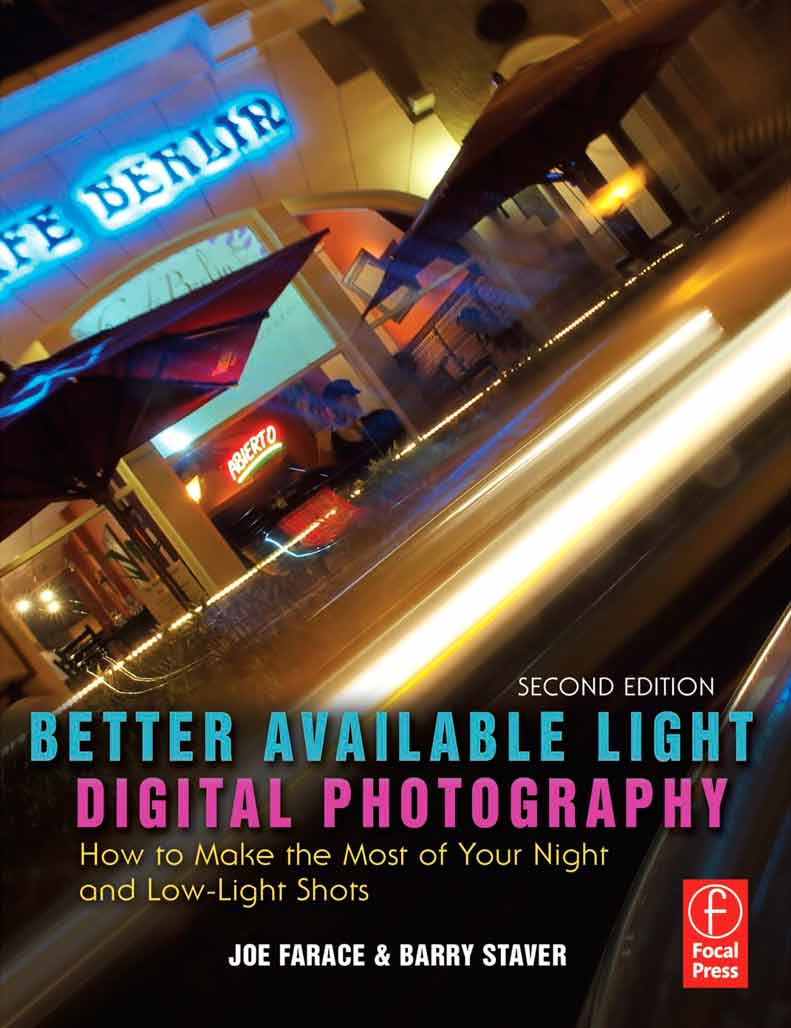
Along with photographer Barry Staver, Joe is co-author of Better Available Light Digital Photograph with used copies available from Amazon starting around $17.12. For some reason,(not Barry or I) the hardback and Kindle prices are really high.