
It’s “Tricky Tuesday,” a way for me to share some of the tricks, tips and techniques that I’ve used over the years when shooting portraits in the studio, in this case, featuring Laura May Bachmayer who has appeared several time on this site. It’s also National Tea Day, the date was chosen because it’s the birthday of late Queen Elizabeth. I’ll be having a cup of Fortnum & Mason’s Royal Blend this morning in her honor.
Today’s Post by Joe Farace
“Nothing can dim the light that shines from within.” — Maya Angelo
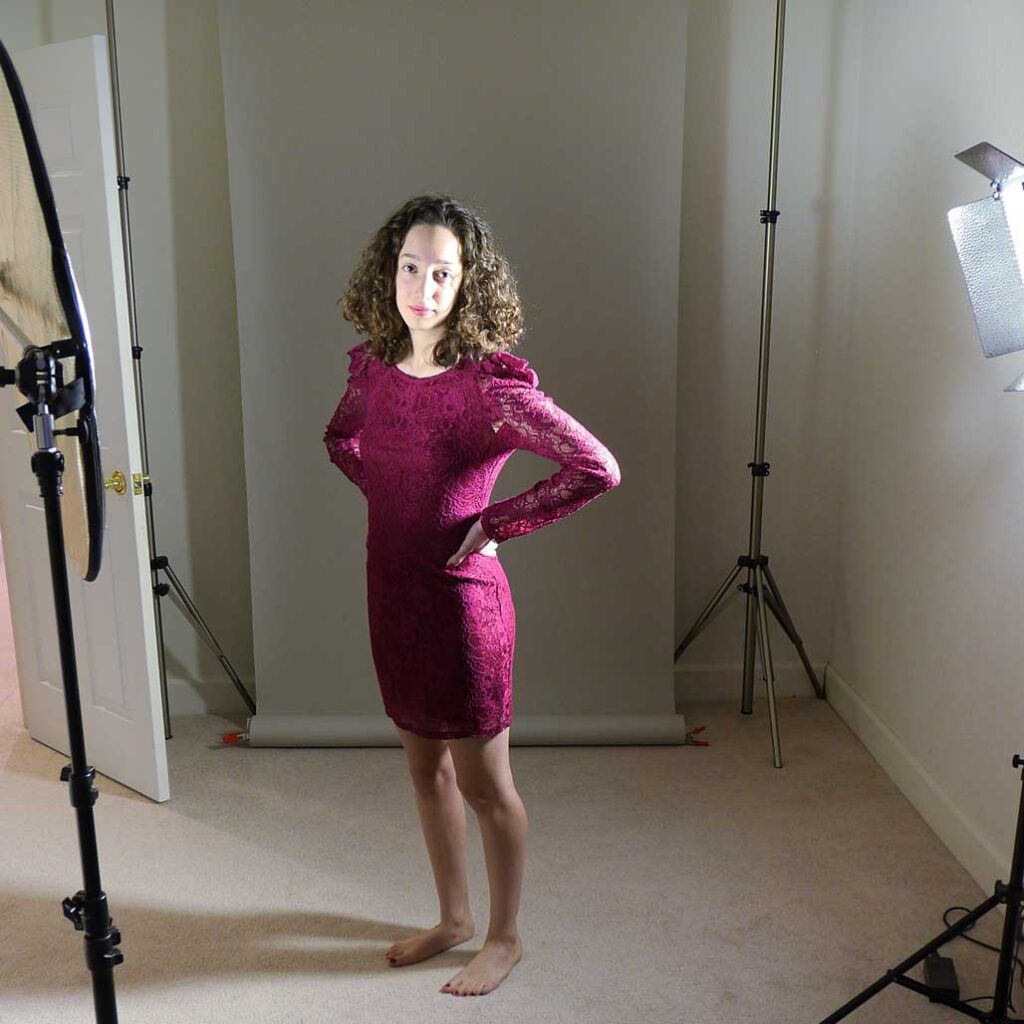 Using LED light for portraiture may represent the future of studio lighting but a some of the currently available options come with a caveat or two especially for the new professional portrait photographer or aspiring pro. If you’re shopping for LED lights you’ll find that some solutions might be affordable but may be too physically small and not bright enough for use in a studio or they may be large enough but too expensive for a photographer who just wants to dip their toes into the LED waters.
LED: Today’s Lighting Option
The inexpensive Flashpoint LED light that I used to make today’s featured portrait of Ms. Bachmayer had a power output of 42W producing a real word output of 5250 lux at two feet, 1350 lux at four feet and 530 lux at six feet. (For a look at Lux, foot-candles and even Watt-seconds, you might want to take a look at this post, keeping in mind that when it comes to light more is better.) Yet, it produced a broad enough light that it can be used for full-length shots that I didn’t show here. The light’s color temperature range was rated at between 5300-5900 K. One way to test the true color temperature of any LED light is by using the (expensive at $1599) Sekonic C-800-U SpectroMaster Spectrometer but I’ve seen rental prices at a little over $100 a day. This meter i8 capable of reading all kinds of light sources whether they’re LED, flash, incandescent, HMI, fluorescent and even the natural light spectrum.
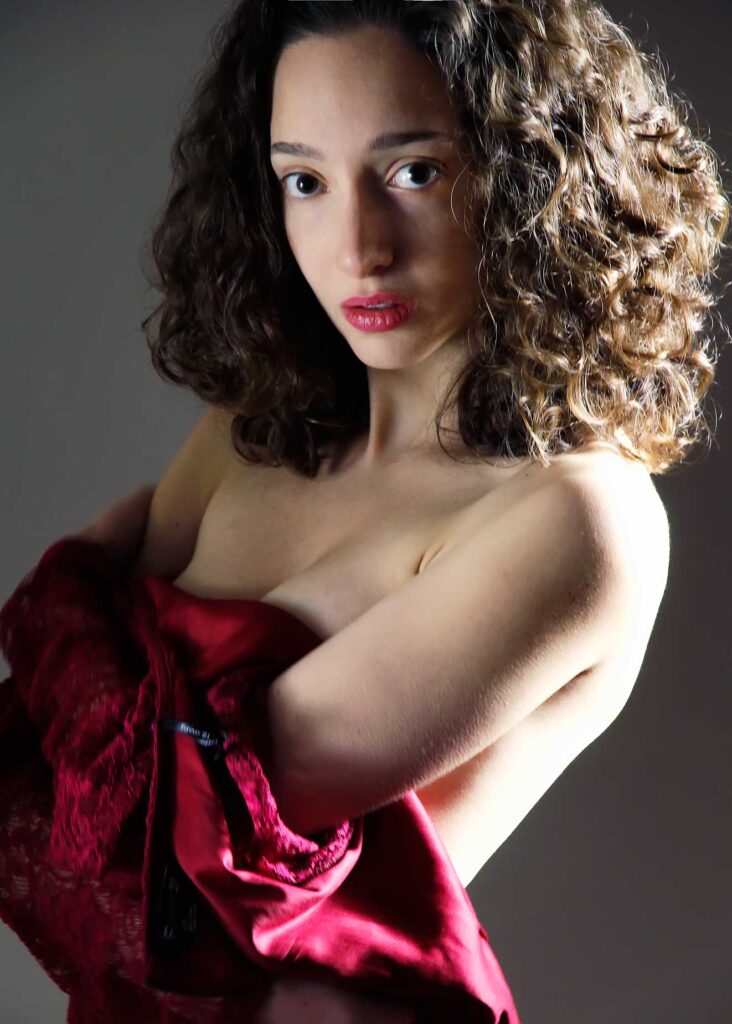 How I made this portrait: Today’s image of Ms. Bachmayer was made during our first of seven portrait sessions together. She was photographed in my 11×15 foot home studio against a 5×7-foot Savage Black Infinity vinyl background that was supported by JTL background stand.
Lighting for the portrait was provided by a single, inexpensive LED light with barn doors attached and placed at camera right. Closing down the barn doors on most continuous lights or studio flash with the modeling lights turned on can generate lots of heat. This (no longer available) LED light, on the other hand, remained cool. The Godox LF308BI looks similar and seems to be a better all around light but I have not, as of yet, tested it. A 30-inch Westcott 5-in-1 reflector was placed at camera left serving as fill. You could create a similar looking portrait using any LED light source that produces the minimal output that this light did.
The camera used for the portrait was my Canon EOS 60D with an EF-S15-85mm f/3.5-5.6 IS USM lens (at 85mm) with an exposure of 1/20 sec at f/5.6 and ISO 800 with a plus one and one-third stop exposure compensation. If you wonder why I’m using what might be considered higher than normal ISO settings for some of my LED portraits, this post will answer that question but it boils down to some LED lights are not all that powerful. The image was lightly retouched and then processed using the Dfine and Color Efex Photoshop-compatible plug-ins.
You can read more about the pro’s and con’s of using LED Lighting in my post Making a Headshot with LED Lighting.
My book Joe Farace’s Glamour Photography is full of tips, tools and techniques for glamour and boudoir photography and includes information on all of the cameras used as well as the complete exposure data for each image. New copies are available for $28.56 with used books starting around twelve bucks.as I write this. The Kindle version is $19.99 for those preferring a digital forma