
Several readers and some of my friends have been asking me to post a new image of a model I’ve photographed for the longest period of time. Here’s the requested post featuring Pam Simpson, who I have been photographing off and on since 2012. The featured image below is from our most recent shoot that occurred just a few weeks ago,
Today’s Post by Joe Farace
Create your own visual style… let it be unique for yourself and yet identifiable for others. — Orson Welles
Fashions fade, style is eternal.—Yves Saint Laurent
In my book Studio Lighting Anywhere I quote the late Richard Avedon who once said, “I think all art is about control—the encounter between control and the uncontrollable.” That’s why I think that having a dedicated studio, no matter how small it may be or where it’s located can offer a portrait photographer.
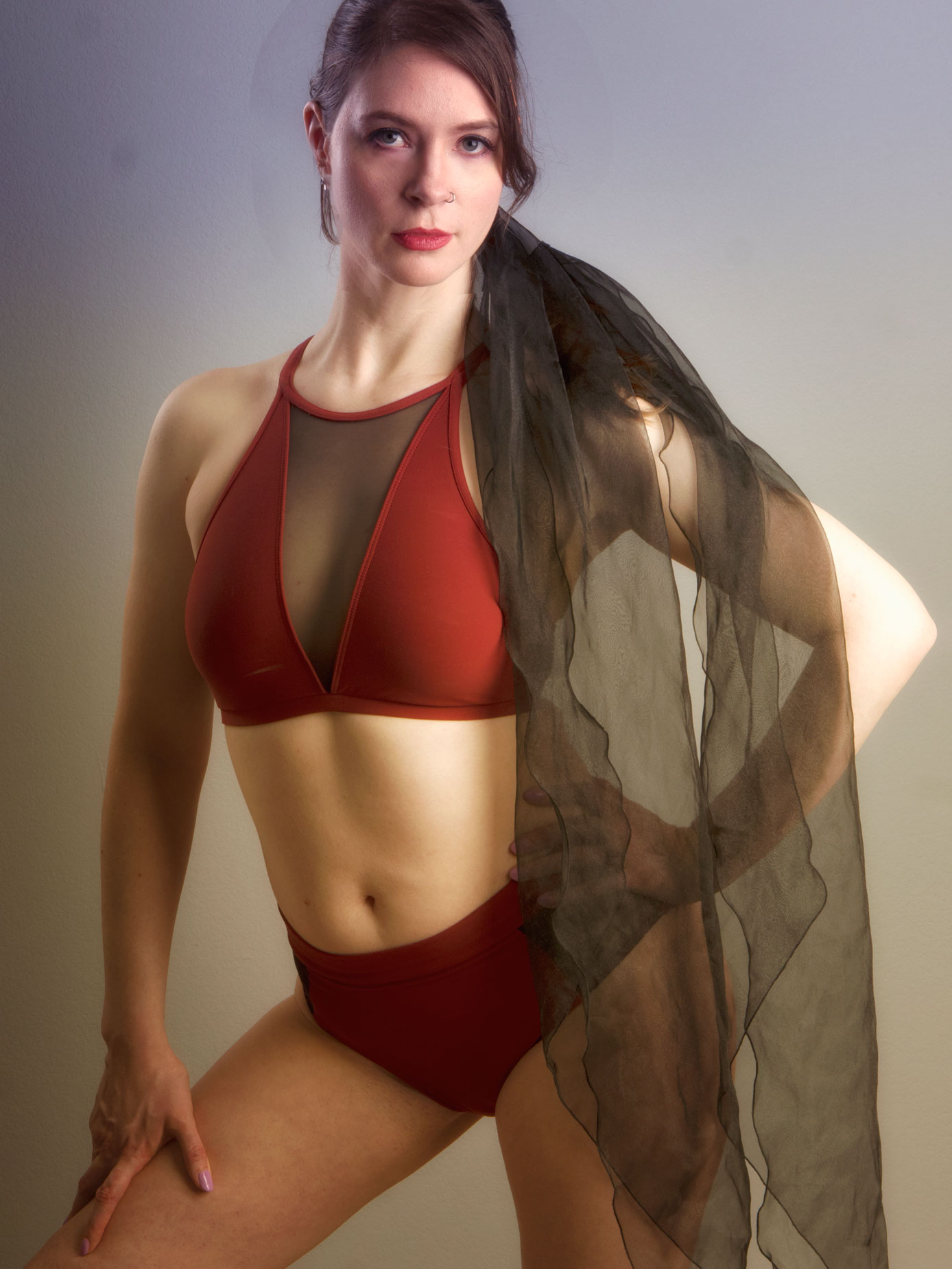 A studio is a special space that becomes a safe haven from the real world and where, to paraphrase the Outer Limits voice, you can control the lighting, the background and even the subject (to some extent.) Even my small 11×15-foot in-home studio, where many of my current and past portrait and glamour images, including today’s, were made, is a retreat that encourages my creativity and is the kind of place that can help you develop your own portrait style.0
In the Studio
When working in this environment, I can control everything from the subject’s pose, clothing choices and make-up with the resulting photographs tending to be as much a portrait of myself as they are of my subjects. As my friend Rick Sammon likes to say, “the camera points both ways” and what often emerges from that control is a style.
How I made this portrait: For this shot of a now-brunette Pamela Simpson I started editing using a technique I call Cut and Paste Portraiture that combined two different RAW files into the single image you see. You can read about this technique as well as my rationale for using it in the linked post. The lighting equipment for the portrait consisted of one Paul C Buff DigiBee DB800’s monolight and one Alien Bee B800 monolight. The DigiBee DB800 had a 37 x 27 x 12-inch Plume Ltd. Wafer soft box attached and was placed at camera right and fairly close to Pam. An Alien Bee B800 monolight with an 16 x 30-inch Westcott Apollo Strip soft box mounted was located at camera left. Because of the repurposing going on in my home studio, the amount of room where I could move lights was limited.
The camera used was a Panasonic Lumix GH4 with a Lumix G Vario 14-45mm f/3.5-5.6 lens (at 29mm) with an exposure of 1/125 sec at f/14 and ISO 200 and was slightly underexposed. This was corrected with a little selective dodging using graduated layers from PhotoKit. After my basement was flooded, Mary and I painted the studio’s walls Sherwin Williams Lazy Grey that’s similar to 18% grey and this was the first time I’d used it as a backdrop. It worked pretty well after applying the Bi-Color (User Defined) filter from Color Efex to give the “background” some dimension.
When shooting portraits, having a personal photographic style is not something I’m conscious about but the truth is that over time we all develop a signature way of shooting. In my case, I appear to like photographing women in a manner where they use their eyes to directly engage the viewer and at the same time exhibit inner and outer strength and I think that’s what Pam is doing with this portrait. Last week I wrote about creating a Mood Wall that can serve as a source of photographic inspiration. It may be that using just such a device could be a way to kick start your path to developing your own photographic style.
After ultimately developing a photographic style, it can usually be applied to your photography without even being conscious of the fact that you’re doing it. The danger, of course, is that we keep shooting that same way, or different versions of the same shot, for the rest of our lives so any style you develop must grow and change as you strive to make better images. Paul Simon once said that “talent evolves, changes and grows over time.” That’s something to keep in mind as you develop and then apply your own own unique style.
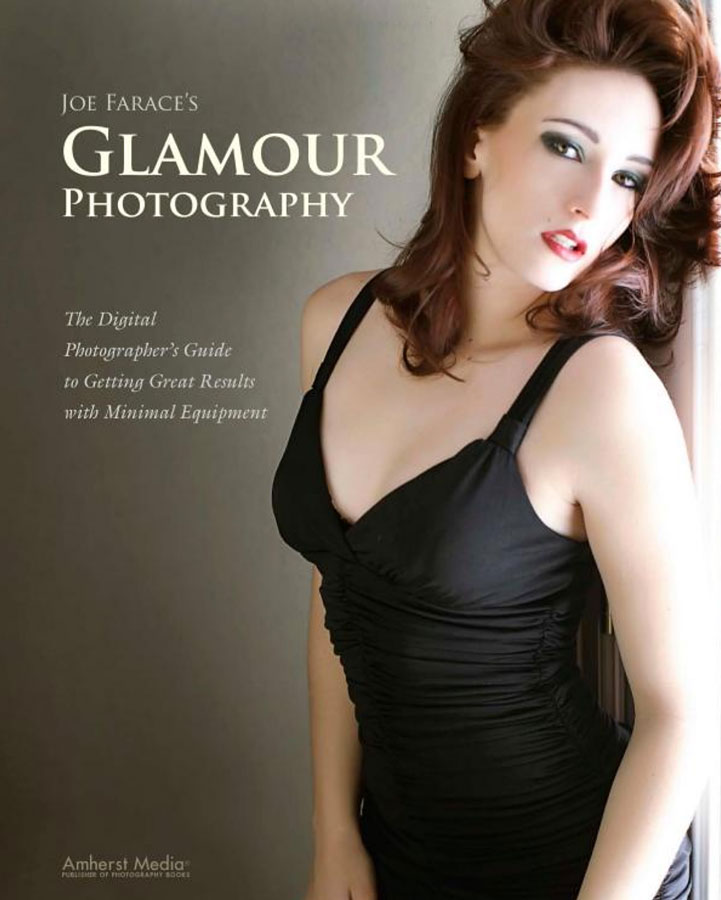
My book Joe Farace’s Glamour Photography features information about how I shoot glamour portraits using minimal lighting equipment including inexpensive monolights such as those offered by Paul C. Buff. (Not a sponsor.) New copies are available from Amazon for $30.54 with used copies available from Amazon.com for around ten bucks, as I write this. Kindle copies are $19.99 for those preferring a digital format.