
It’s not only #anythingcanhappenday but Optimist Day is celebrated on the first Thursday of February, this year.its on February 5’th. Anything can be achieved as long as you stay focused and optimistic. In fact, an optimistic person is more likely to be happy and motivated.
Today’s Post by Joe Farace
You can count the number of portrait paintings in this (National Portrait) Gallery that include teeth on the fingers of both hands!—Sandy Nairne, the (then) Director of the National Portrait Gallery (2002-2015)
 In the past several years years, the use of LED as a light source for portraiture has increased as more and more companies release products into this space. For me the question has not been about the type of lighting equipment I want to use but is about how many lights do I need to make an attractive portrait. I think that answer boils down to…
Two Kinds of Lighting Styles
When it comes to portrait lighting, I’ve found that that there are basically two kinds of photographers: The first likes to shoot using what they call “available light” by which they really mean using “every light that’s available.” For photographers, like my wife Mary, setting up five lights to make a portrait is just getting started and, to be fair, she is a genius at this style of lighting.
The second group, where I tend to fall, prefers to use as few light sources as possible because there’s less gear to fiddle with, which translates into more being able to spend more time concentrating on making a good portrait. And Isn’t that what making a portrait is all about?
Using fewer lights has many advantages: It is less expensive for the photographer, reduces setup time and results in less weight to transport on location. But can you make a portrait using just one light? I think so, especially when using continuous lighting. Continuous light sources are especially popular with new and aspiring pros because you can see the lilighting effect that’s being produced in real time.
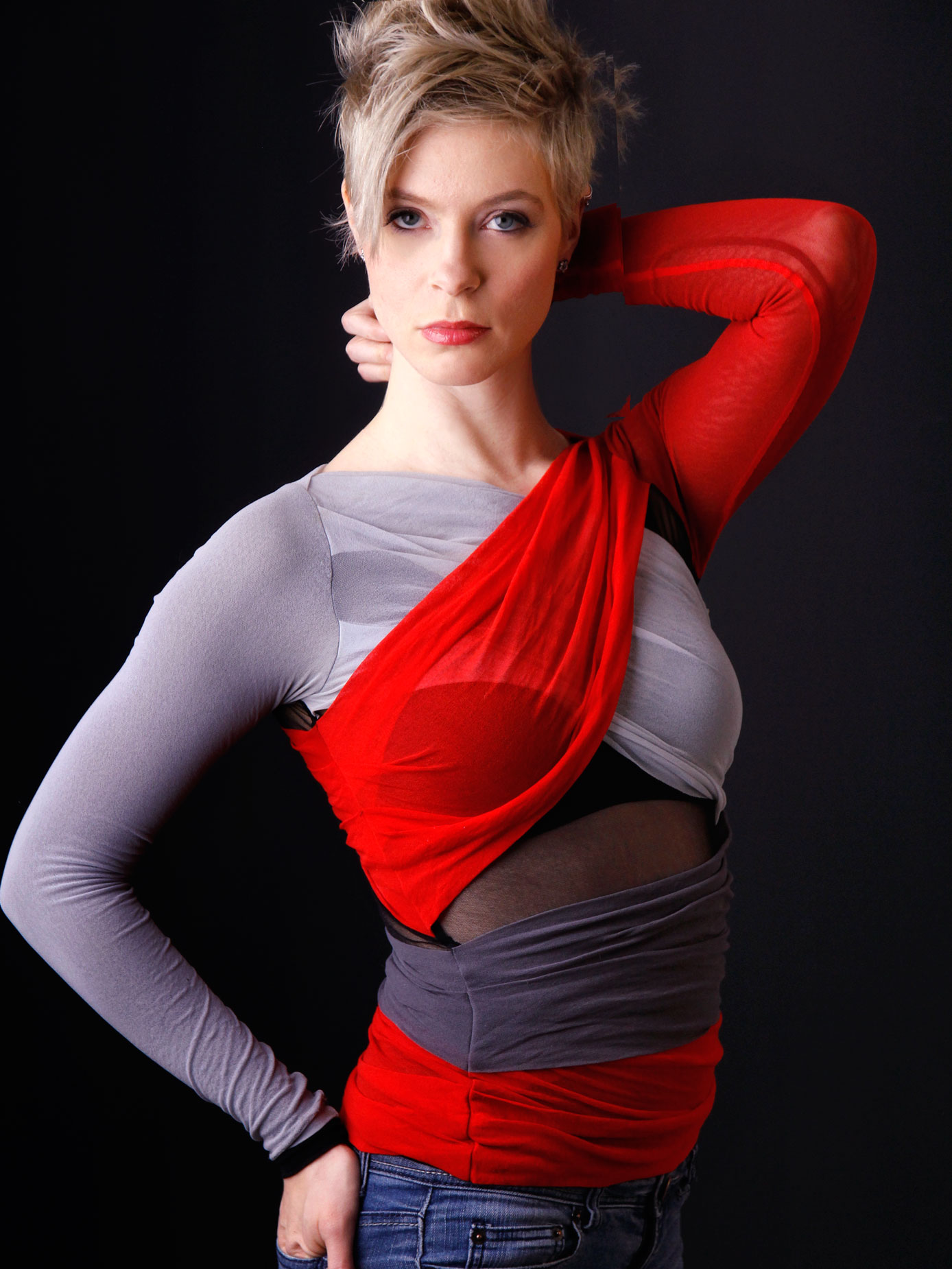 How I made this portrait: For today’s featured portrait, I used Fotodiox’s LED-200WA -56 Daylight Studio LED that produces output at 7600 Lux/m or 600 foot-candles that the company claims produces the equivalent to a 600-Watt incandescent source. On a 0-100 scale measuring how accurately artificial light compares to natural sunlight, the light’s Color Rendering Index (CRI) is rated at 85. That’s not perfect but it’s also not so bad either and I only had to do some minor color correction using PictoColor’s iCorrect Portrait. for this portrait of Pam Simpson.
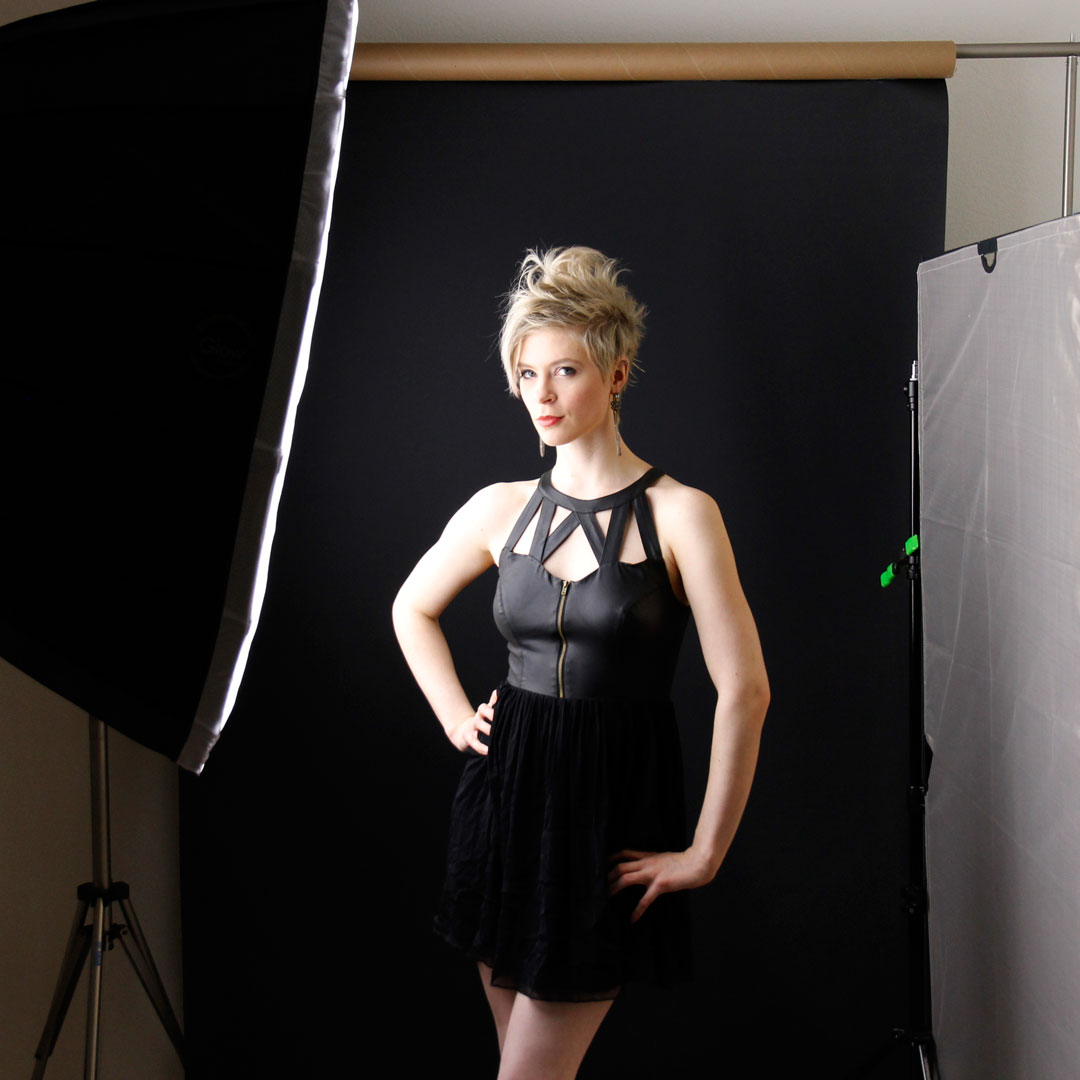
This (I think) low-key portrait-key of Pam was made in my 11×15-foot in-home studio and demonstrates one of the challenges of one-light portraiture: creating dimensionality. But, I think, this LED light appears to have done a good job of lighting the subject. The setup is as shown above right, although in that photo, Pam is wearing a different outfit than what’s featured at left. The Fotodiox LED light with a 47-inch soft box attached is placed at camera left with a 42×72-inch Westcott Scrim Jim Reflector with silver fabric located at camera right.
The camera used was a Canon EOS 60D with EF-S15-85mm f/3.5-5.6 IS USM (at 61mm) with an exposure of 1/60 at f/5.6 and ISO 800. Pam was photographed against a 5×7-ft Savage Black Infinity vinyl background mounted on JTL background stands.
 If you enjoyed today’s blog post and would like to treat me to a cup of Earl Grey tea ($2.50), please click here. And if you do, thanks so much.
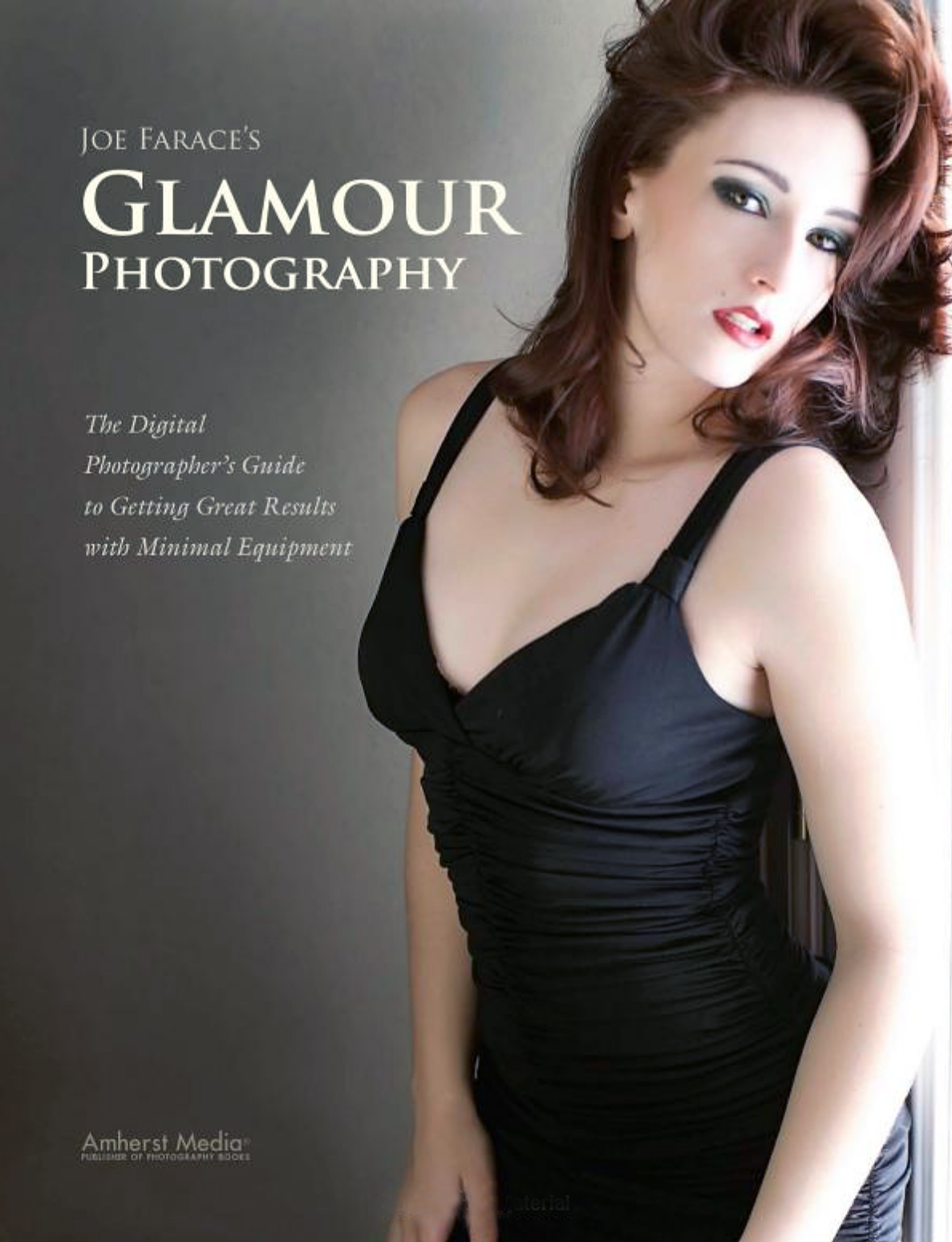
My book Joe Farace’s Glamour Photography is full of tips, tools and techniques for glamour and boudoir photography and includes information on all of the cameras used as well as the complete exposure data for each image. New books are available from Amazon for $22.62 with used books starting around ten bucks.as I write this. The Kindle version is $19.99 for those preferring a digital format.