
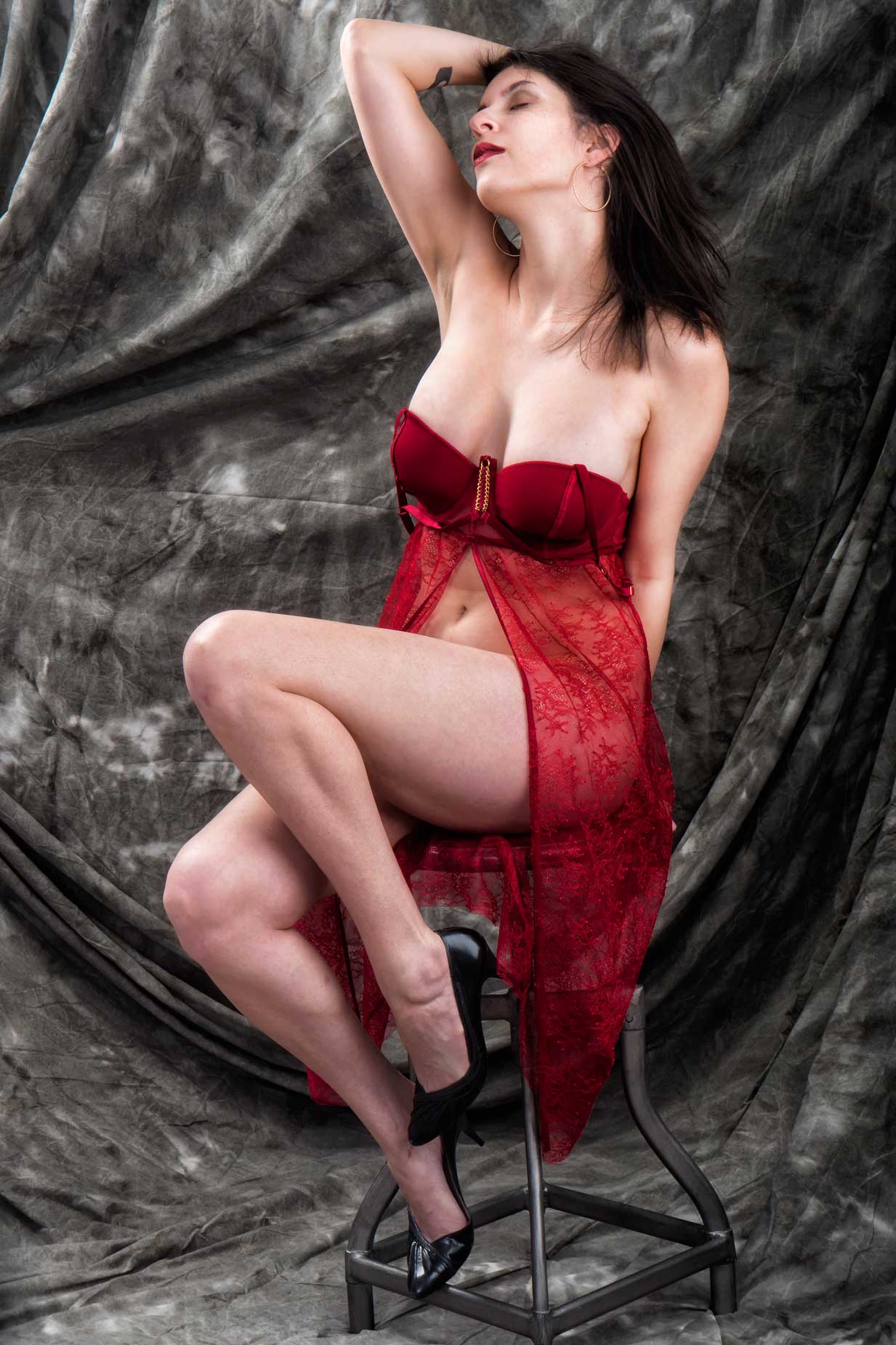
It’s #anythingcanhappenday on the blog and today’s post features a portrait of the amazing Erin Valakari This image was made during Erin and my thirteenth shoot together.
Today’s Post by Joe Farace
When choosing backdrops for portraits, there are lots of options for starting with the kind of fabric or material used. Muslin, for example, is a closely woven cloth produced from corded cotton yarn but what’s endeared it to photographers using it for a backdrop is it’s light weight and portability.
The primary difference between muslin and canvas, another material commonly used for photo backgrounds, lies in their density and thread thickness. Muslin’s average weight is three to ten ounces per square yard, while canvas can vary from seven to 14 ounces. This means a muslin backdrop can more easily be stuffed into a bag and tossed into your car or truck to take on location. If you want to produce a different style from the last time you used a particular muslin background, it can be draped using clips from Loews or Home Depot, as did for today’s featured portrait.
Canvas, on the other hand, need to be carefully rolled when being stored to keep it from wrinkling and is more challenging to transport, although I’ve done it more times that I can count. Because of their heavier weight, canvas backdrops are well suited for permanent installations. They can also be more expensive than muslin but the surface allows an artist to produce realistic or fantastical looking backdrops. Many companies offer canvas backdrops and the selection of different styles is impressive. When Mary and I had our studio we owned a combination of both canvas and muslin backdrops and many of them were on canvas.
The advantages of using canvas backdrops are subjective: Because paint can be hand brushed onto the canvas, the colors tend to be more intense. And because the background is really flat, images made using canvas backdrop are consistent from one session to the next. This is important if you are doing a series of headshots for a company or organization that are made over an extended period of time. But there is a Goldilocks option: Some companies offer wrinkle-free fabric that can literally be smacked into place with sewn-in Velcro fasteners.
How I Made this Portrait: If this past Tuesdays post was an tribute to the photography of the late Peter Gowland, today’s portrait of Erin Valakari is surely a homage to the 1955 film Artists & Models. The lighting setup for this images used a Paul C. Buff DigiBee 800 monolight with a Plume Ltd hexagonal Wafer soft box that was placed at camera right. An AlienBees 800 monolight with an 18-inch Paul C Buff reflector covered with a triple layer diffuser sock was located at camera left while another Digibee with a 48-inch Dynalite Quad Square black/silver umbrella was placed in a back left corner of the studio.
The background was an inexpensive muslin background suspended from JTL background stands with draping provided by using Home Deport clamps.The camera was a Panasonic Lumix GH4 and the Lumix G Vario 14-45mm f/3.5-5.6 lens at 30mm and the exposure was 1/125 sec at f/11 and ISO 200.
Today in the studio. I mostly use seamless paper, muslin and wrinkle-free polyester backdrops but for many years schlepped canvas backdrops and set them up in locations as diverse as a client’s living room or at convention centers to make on-location portraits. I have no doubt that my old canvas backgrounds are still out there somewhere working hard for another photographer.
Don’t forget seamless paper. You can read my thoughts on these kinds of backdrop and more in this post.
 If you enjoyed today’s blog post and would like to buy Joe a cup of Earl Grey tea ($3.50), click here. And if you do, thanks so much.
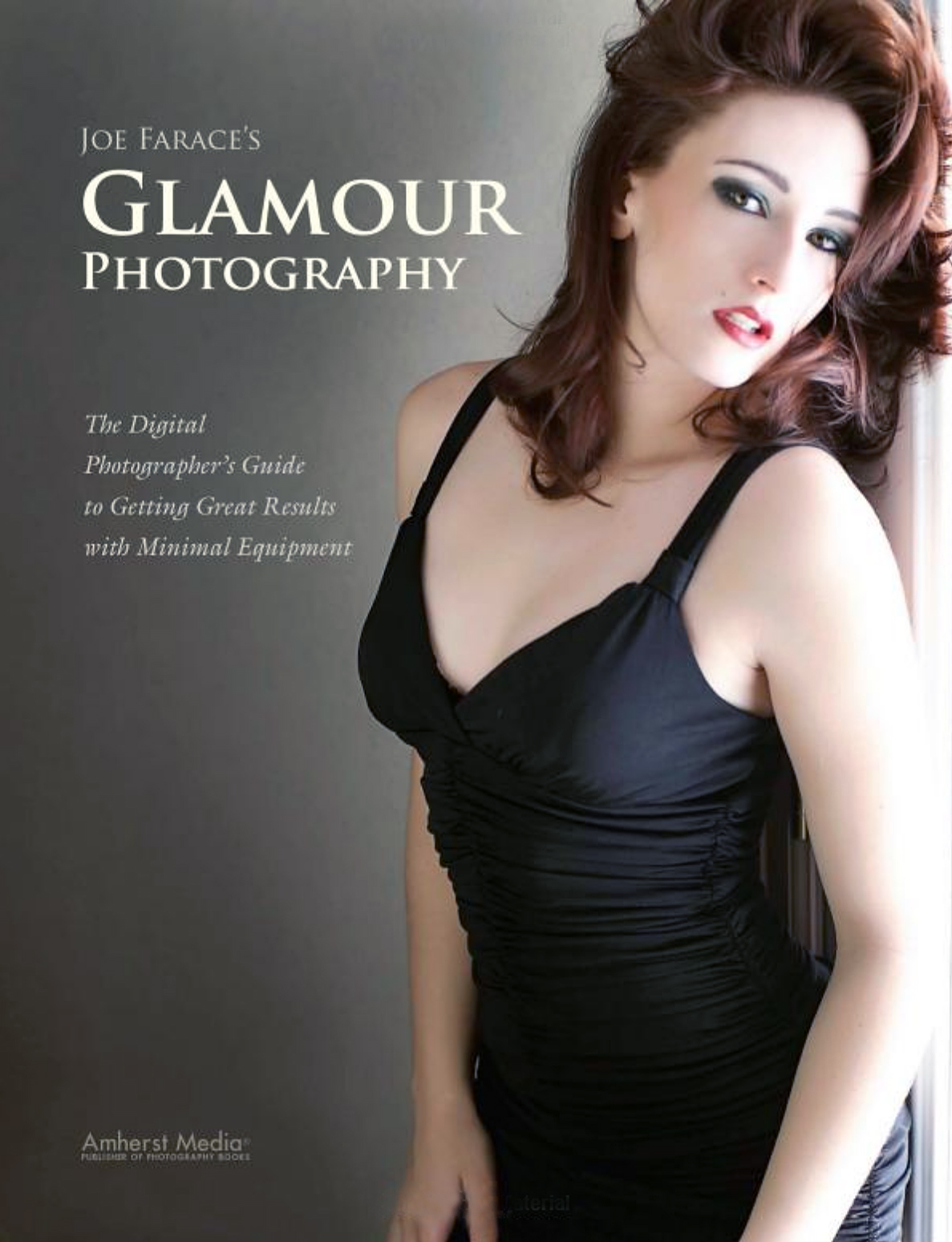
My book Joe Farace’s Glamour Photography is full of tips, tools and techniques for glamour and boudoir photography and includes information on all of the cameras used as well as the complete exposure data for each image. New copies are available from Amazon for $45.08. with used copies selling for around forty-three bucks as I write this. The Kindle version is $19.99 for those preferring a digital format.