
Today’s Post by Joe Farace
“Everything takes time. Bees have to move very fast to stay still.”–
One of the most interesting aspects of digital photograph to me is that we seem to shoot more images than we may have done when shooting film of something similar in the past. In my own case, during typical model test shoot in the film days I would expose two to three rolls of 35mm film. Sometimes these were even 24 exposure rolls, so all of the images that I made during a model shoot might consist of me making 72 to 108 images.
Nowadays shooting these same kinds of sessions with DSLR’s and mirrorless cameras I find I’m making many more shots. How many more? For a typical glamour session with models like Erin Valakari, I might make as many as 400 photographs as part of five wardrobe changes. Other shoots with other models generally produce 200-300 images.The question then remains…
Aerodynamically, the bumble bee shouldn’t be able to fly, but the bumble bee doesn’t know it so it goes on flying anyway. –Mary Kay Ash
The Birds and The Bees
Are my photographs better than when I was shooting film? I am convinced that not having to worry about film and processing costs lets me produce more images faster. But are they better? So I asked a few photographer friends if they thought that digital capture helps them produce better photographs.
- A former Shutterbug editor told me it “could be true. I did a model shoot where I shot three rolls of 120 film and two rolls of 35mm but I made 600 shots with my DSLR! When working with digital, I tend to shoot a lot faster and take shots I might have passed on with film.”
- One wedding photographer told me, “Just thinking about the cost of film and processing eases my resistance to pressing the shutter.” But here is where we run into the law of unintended consequences. He then told me “at a wedding I did Sunday I found myself holding back toward the end because I was out of memory cards! I went through the images, deleting a few that I thought) wouldn’t make the first edit.”
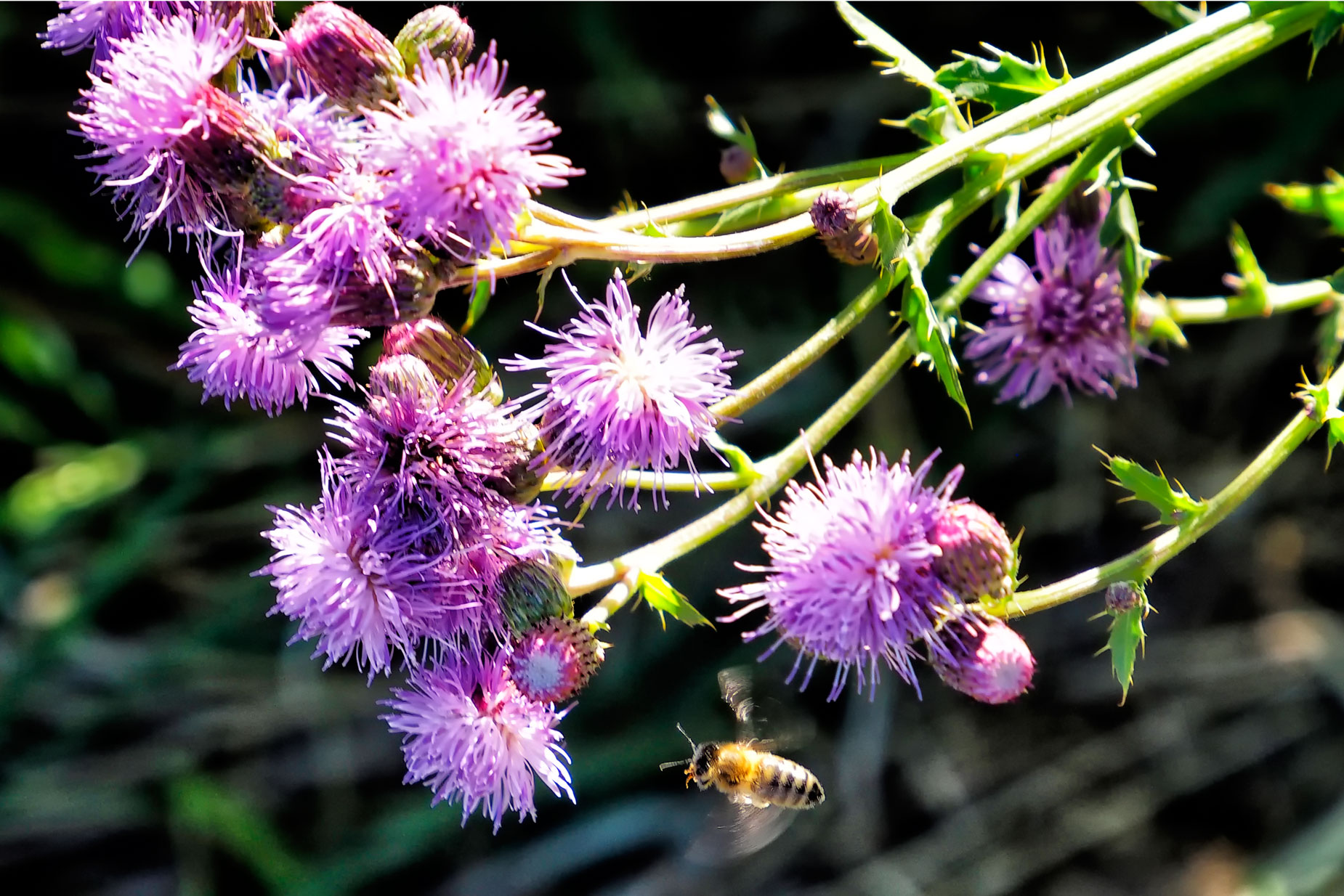
How I made this shot: When it comes to nature photography, for some reason, I have a tendency to photograph trees and bees. I photographed this little nature scene close to home, proving there are indeed photo ops in your own backyard, The camera used was an Olympus E-M10 Mark I with Tamron’s 14-150mm Di III lens at 100mm (200mm equivalent.) The Exposure was 1/250 sec at f/6.3 and ISO 320 with the camera’s IBIS producing results that were sharp although the shutter speed allowed showing the bee’s wing in motion, which (to me) makes an interesting image. Trivia: a bee’s wings beat 200-300 times a second.
It’s not just on paying assignments where we tend to shoot more digital frames than we may have previously shot with film. Another part of any photo shoot is making tests to check exposure, much as we would have used Polaroid film in the past. So maybe a better question to ask might be: Is making all of these additional exposures adding premature wear and tear on our digital cameras, especially shutters, than their film counterparts might have experienced? Sure it is. Is this hastening these camera’s demise? It almost has to, doesn’t it?
But to answer the original question, I believe that my current photographs are better than when I shot assignments or personal projects with film because digital capture gives me the freedom to explore variations of an image that I might not have otherwise made. When making glamour and portraits images, this is a concept I call “shooting through a pose.” There’s more info in the linked post.
If you enjoyed today’s blog post and would like to buy me to a cup of Earl Grey tea ($2.50,) please click here. And if you do, thanks so much.