
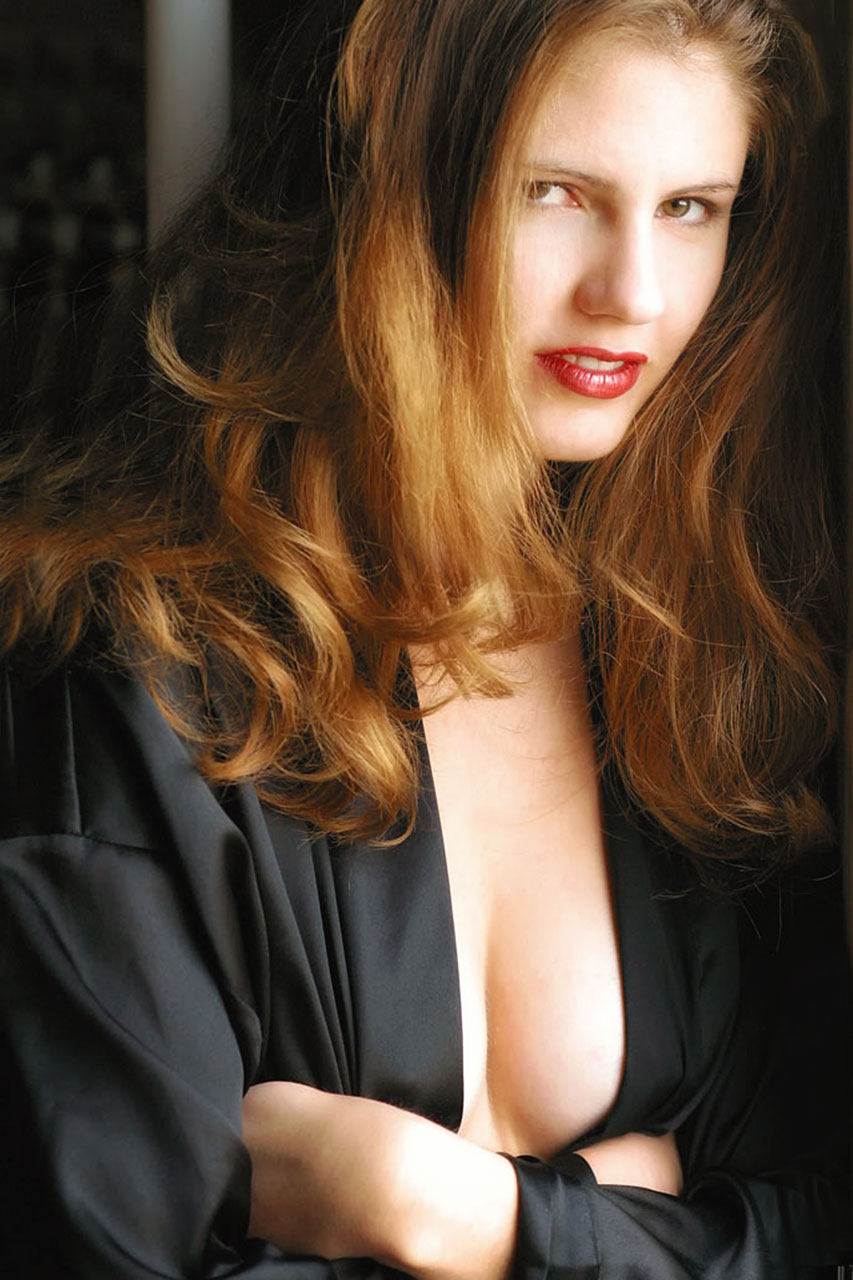
My Sunday Series on Outdoor Portraits is on hiatus as I consider changing this day’s theme to Available Light Portraiture, which is what mostly today’s post is about. This post also takes a look at a special model called Kim
Today’s Post by Joe Farace
The late Richard Avedon once said, “A photographic portrait is a picture of someone who knows [that] he is being photographed.” That’s because a portrait seldom represents reality. Instead it’s a snapshot of a point in time that represents an idealized version of someone who knows they’re being photographed.
A Few Tips for Your Next Portrait Session
Today, submitted for your approval, are a few tips that I’ve found (key words) can help make the final portrait a little bit better than maybe otherwise might be the case. Please feel free to use any of the tips that you like, ignore what you don’t and as always, have fun with your photography no matter what or who you may be photographing.
 Avoid large elaborate jewelry. Just make sure that your subject’s face, especially their eyes, are the main focus of the portrait. Don’t forget to ask the model to remove her wristwatch too.
- Ask your subjects to wear solid colors. Nothing detracts more than clothes covered in busy patterns and prints. I recognize this is easier to request for than actually accomplish.
- Clothing fit. If a subject’s clothes don’t fit as well as you might like, use wooden clothespins (out of camera range) to snug them up. This happens to me more than you think.
- Hairstyles. Ask the subject to change their hair style with each change of clothing. One of my favorite tricks is to have them spray their hair with water; some subject’s hair gets curly, some goes straight but either result one can produce great looks.
How I made this shot: Kim is a model that has a PhD in Entomology and was, perhaps, my second muse, although I may not have known or appreciated it at the time. She was photographed near the back door of my former home using only natural light; the door had a window in it. A 32-inch (80cm) Westcott reflector that was placed at camera left. The camera used was a Canon EOS D60 with an EF 85mm f.1.8 lens, my favorite portrait lens. The exposure was 1/60 sec at f/5 and ISO 1000.
- Expression. Some people look great with a smile, while others look better without one. The only way to find out which way your subject’s looks best is to try both approaches. If you’re lucky, the subject looks great both ways producing lots of different looks.
- Make-up. When changing hairstyles or outfits, ask the model to changes her make up style and color too. It doesn’t have to be drastic, maybe just a different lipstick color or darker eye shadow. Avoid the flat monochrome look that’s seems popular. Some subjects may think it looks great for everyday life but it looks flat and featureless in photographs.
- Footwear. For a more a statuesque posture, ask the model to wear her highest heels that she can walk in. Key words. No high heels? Ask her to stand on her toes for a few shots.
- Relax. A model shoot is a team effort. Subject and photographer must work together to achieve the best possible images. Most importantly, don’t forget to talk to your subject during the shoot and maybe show them a few images on the camera’s LCD as the shoot progresses to encourage their active participation.

If you’re interested in learning how I shoot available light glamour portraits, please pick up a copy of Available Light Glamour Photography which is available used from Amazon.com starting around $36, as I write this. The Kindle version is $27.69 for those preferring a digital format.