
A favorite of young and old alike, National Hard Candy Day is on December 19th amd recognizes the sweet tooth in all of us.
Today’s Post by Joe Farace
You don’t get to the highest levels of the sport without having the basics in order. —Daniel Cormier
 The most frequent question I’m asked by photographers during PhotoWalks and workshops is how can they obtain the “proper exposure.” I’ve written several posts on that topic here as well as on my car photography blog and today’s post continues that theme…
I think shooting in manual mode is for photographers who prefer to drive a car with a stick shift than one with an automatic transmission. Some purists and YouTube pundits claim that manual exposure mode is the only one you should ever use, I don;t necessarily agree. I find that I mostly use Manual when working in the studio while shooting with electronic flash or when working under challenging lighting conditions. That’s because some lighting situations can confuse even the most sophisticated camera’s automatic exposure system. Anyway, here’s my two cents:
THE BASICS
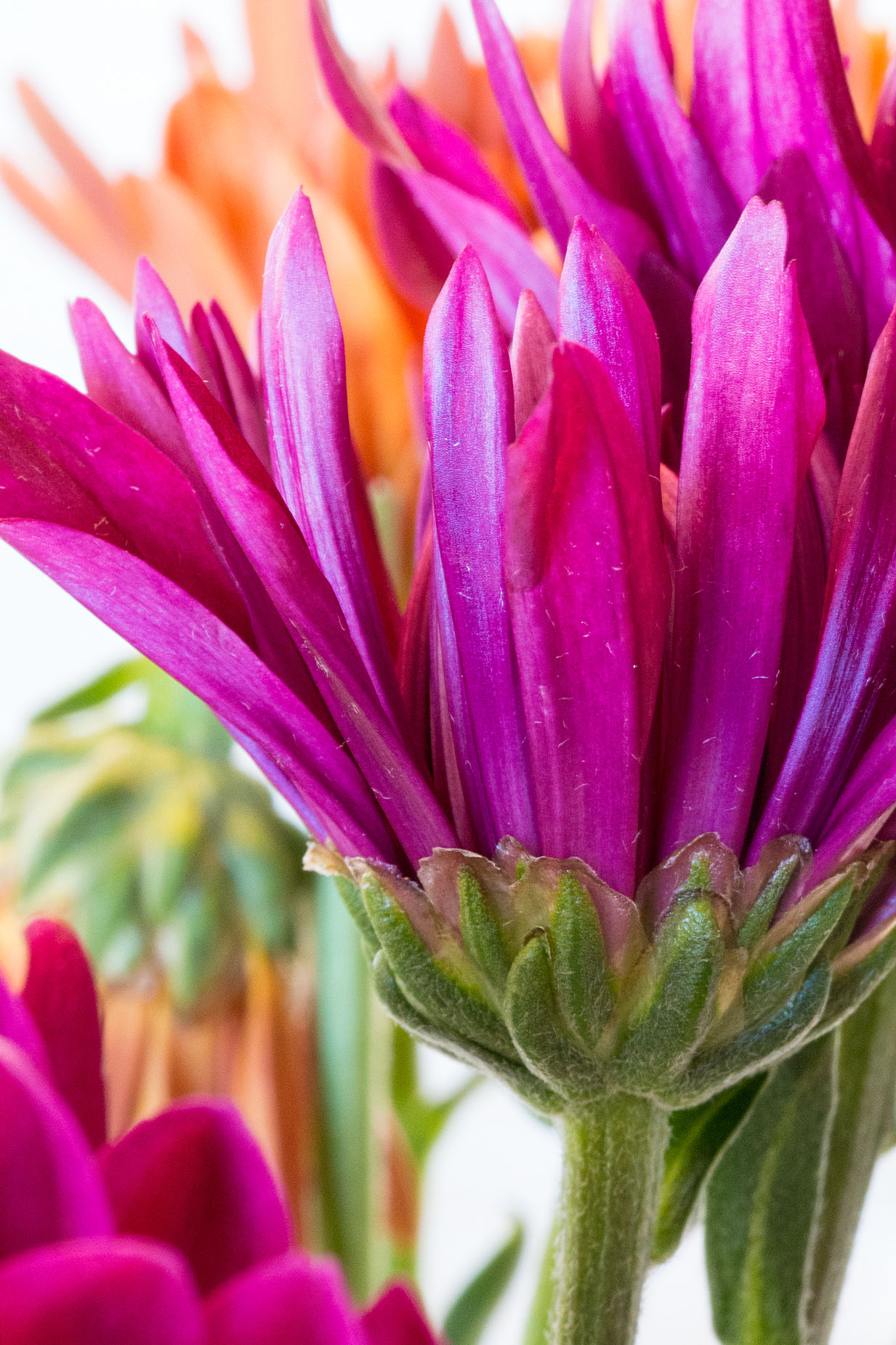 Obtaining the best exposure is a matter of choosing and using the appropriate combination of lens aperture, shutter speed and ISO setting. That’s it. You can set the exposure manually or let the camera do it using the many modes that modern DSLRs and mirrorless cameras offer. For 90% of the photographs that you’ll make, these automatic modes do a fantastic job in producing correct exposures but its those last 10% is why sometimes you have to shift into manual mode. Manual exposure can also be helpful with high contrast situations or those having a strong backlight but also can help when trying to achieve a specific mood.
How I made this photograph: I stopped by a local grocery store and bought the cheapest bundle of flowers they had and placed them on my kitchen table next to patio doors which provided the available light. I mounted my Olympus E-M5 Mark I with a M. Zuiko 60mm f/2.8 Macro lens onto an old but sturdy Manfrotto tripod to produce the image you see at right. The Manual mode exposure was 1/2 sec at f/16 and ISO 1600. The image was cropped in-camera to the 3:2 aspect ratio instead of the camera’s native 4:3 ratio.
You can set manual exposure by using the information that’s provided by a hand-held light meter or, more conveniently, the metering system built into your camera. As I mentioned when talking about IR capture in a previous post, here’s how I typically use my camera’s in-camera meter like a handheld one: I look through the viewfinder in Program mode to see the suggested exposure settings, then switch to use Manual mode to set the shutter speed and aperture based on my interpretation of how I want the image to look. For some outdoor and infrared photography I’ll bracket.
BULB MODE
Most cameras also offer a Bulb mode, a variation on manual mode where the shutter stays open as long as the release is pressed. This setting lets you to make really long exposures for holiday lights, fireworks or special effects such as images of carnivals and amusement parks. For long exposures like this it’s also a good idea to use a really sturdy tripod and further reduce the risk of camera shake by tripping the shutter with a cable or remote release
PS: Many of these suggestions relate to exposures that are made using available and natural light. Working in a studio under tightly controlled conditions is another story and makes manual mode shooting go simpler and faster.
If you enjoyed today’s blog post and would like to buy me to a cup of Earl Grey tea ($2.50,) please click here. And if you do, thanks so much.