
Today is National Rose Day, a romantic day that is the first of many days that are celebrated before one of the most love-focused days of the year—Valentines Day. You can celebrate this day in all sorts of ways to symbolize love, affection and romance in honor of the upcoming week of love.
Today’s Post by Joe Farace
“A rose by any other name would smell as sweet,”—spoken by Juliet in Romeo and Juliet 2.2.45-7
I think macro photography is one of the most rewarding genres of photographic pursuits that you can engage in. You don’t have to travel around the world to enjoy this activity; You can do it in your own backyard or, in the case of today’s featured photograph, the front yard (of my former home!)
There are many ways to approach the hardware needed for macro photography including the use of close-up lenses, extension tubes or even a teleconverter but the easiest way to do it is by using a macro lens, like the Canon EF-S 60mm f/2.8 Macro USM I used to create the below image. That’s because conventional lenses are optimized for focus at infinity, not -up photography but macro lenses are corrected not just for close focus but can also be used at infinity.
A Rose is a Rose is a Rose…or not
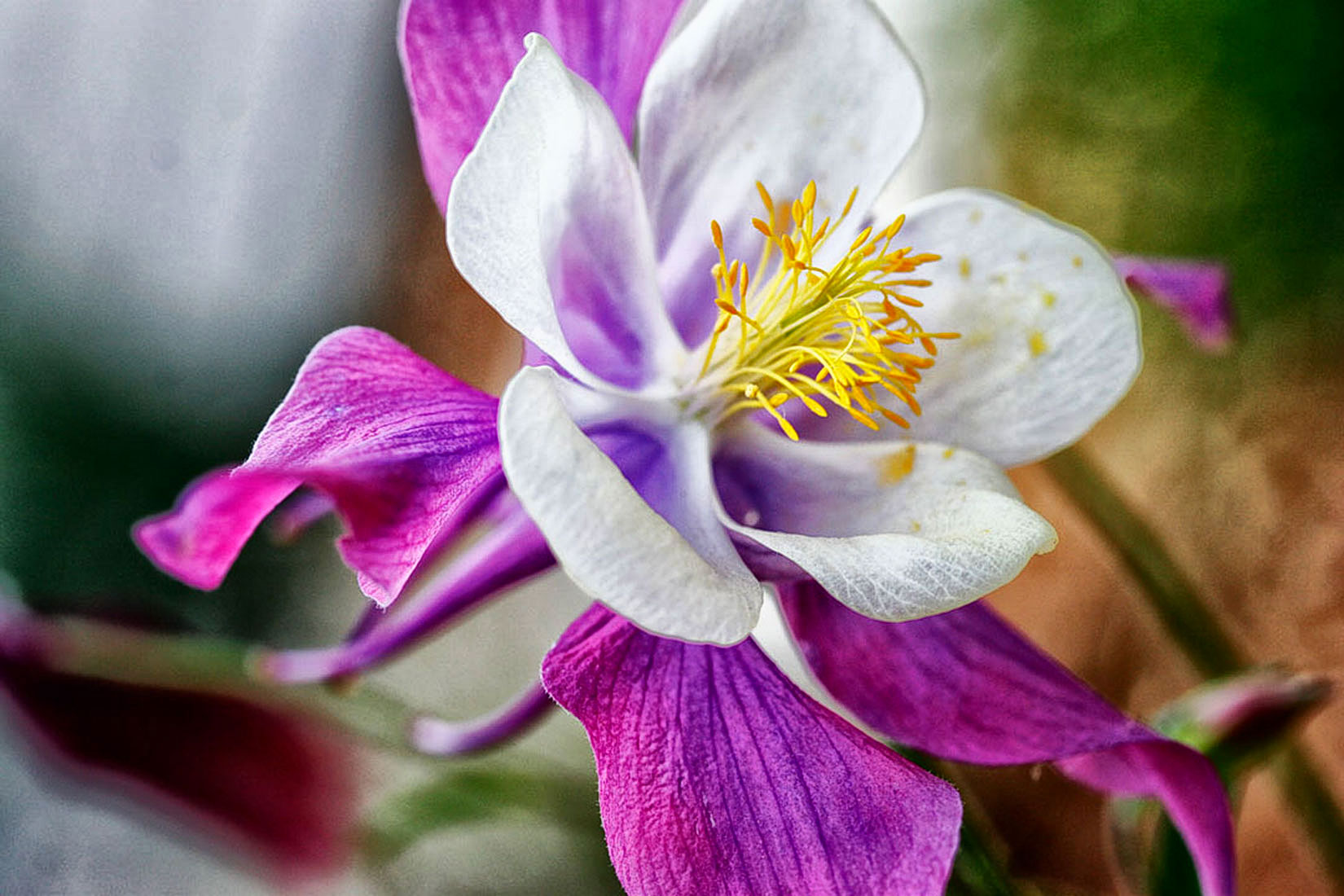
How I made this shot: Colorado’s state flower is the Rocky Mountain Columbine Aquilegia caerulea aka Columbine but it’s also known as “granny bonnets” to some. The flowers vary in color, from pale blue, white, pale yellow and pink but the flowers are commonly bi-colored, with the sepals being a different shade than the petals. The genus name Aquilegia comes from the Latin aquila which means eagle and refers to the spurred petals that some believe resemble an eagle’s talons. The above image was made using a Canon EOS 50D and EF-S 60mm f/2.8 Macro USM with an exposure of 1/200 sec at f/5 and ISO 200.
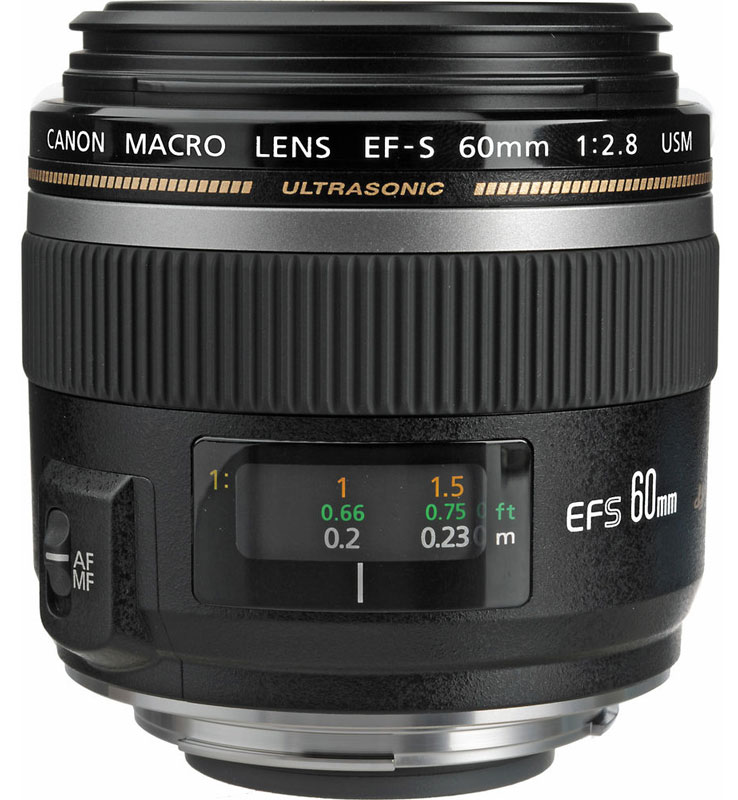 The EF-S 60mm f/2.8 Macro USM was, for a time, the shortest focal length macro lens Canon offered with internal focusing. The EF 100mm f/2.8L Macro IS USM lens has internal focusing, and is image stabilized but at almost $1300 may be a budget-stretcher for some. The (discontinued) EF-S 35mm f/2.8 Macro IS STM was more affordable but the shorter focal length (56mm equivalent) on APS-C cameras) might be too short for some macro shooters, me included. The EF-S 60mm f/2.8 Macro, on the other hand, produces an effective focal length of 78mm, which I think may be a focal length that works better for many macro photographers.
The EOS 50D has a nine-point AF system arranged in a diamond-shaped array, and produced the most accurate focusing when I used the camera’s multi-controller to select a specific focus point. AF for the EF-S 60mm f/2.8 Macro USM lens is driven by a silent ring-type Ultrasonic Motor so the lens’s length doesn’t change when focusing. The lens has a floating optical system that lets you focus down to life-size (1:1 magnification) at a working distance of four-inches allowing you to fill the frame with a subject the size of a penny. The lens uses special coatings to minimize reflections and flare and has a circular aperture design, so even when stopped down it produces natural-looking bokeh.
Keep in mind that all EF-S series lenses, like the 60mm f/2.8 Macro, are designed for use on Canon APS-C DSLRs and have a rubber ring surrounding the rear element. That ring sets deeper into a camera’s mirror box than an EF lens does which will hit the camera’s mirror if you try mounting an EF-S lens on any of Canon’s full-frame DSLRs. So don’t.
Recommendation: If you’re intrigued by the possibilities of macro photography, please take a look at the work of Canadian photographer Don Komarechka, whose amazing imagery will open new worlds for you.
If you enjoyed today’s blog post and would like to buy Joe a cup of Earl Grey tea ($2.50), click here.