
Today’s Post by Joe Farace
Patina “is the thing that humanizes cars,” said Collier, and that’s really what it’s all about for people who think like him.—Aaron Robinson, Hagerty
 In the collector car world, patina refers to the naturally aged surfaces of a vehicle, faded paint, worn upholstery and gentle surface rust that accumulate through decades of honest use rather than neglect or damage. It’s distinct from simple deterioration because it tells a visible, authentic story about a car’s life.–Elizabeth Puckett, Motorious
A Compact but Useful Lens
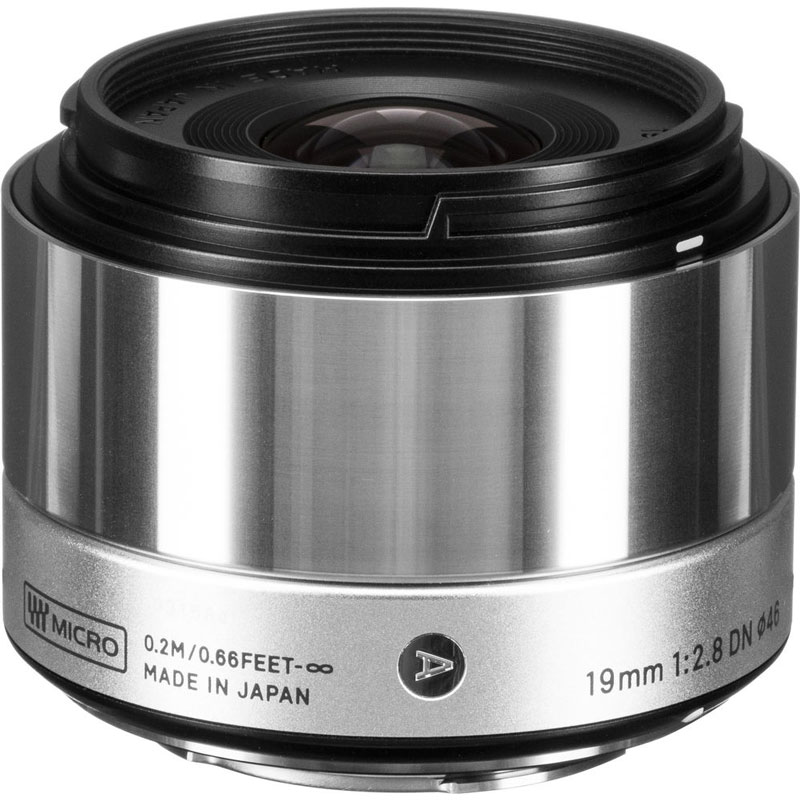
A Sigma Art lens is one that is built for top-tier optical performance, edge-to-edge sharpness and has a large maximum aperture. They are designed for artistic and creative expression, This category previously included two lenses that were originally designed for Micro Four-thirds mirrorless cameras: The 30mm f/2.8 DN and 19mm f/2.8 DN. Today, they can be found used from all the usual suspects including KEH and MPB and you can even pick up a used copy of the 19mm f/2.8 DN from Amazon. Both lenses incorporate telecentric optical designs and have a linear auto focusing motor that produces accurate and, for video, quiet focusing They have metal exteriors and a simple focusing ring.
The Sigma 19mm f/2.8 DN is a relatively wide-angle lens with an angle-of-view that, in the Micro Four-thirds format is equivalent to 38mm. The lens was also available for the Sony SE mount where the multiplication factor is zero. The minimum focusing distance is 7.9-inches with a maximum magnification is 1:7.4. For MFT, the 30mm f/2.8 DN has an angle-of-view equivalent to 60mm and can be useful for portraiture, documentary, travel and everyday shooting including photographing cars and trucks as I did with today’s feature image. The lens features a double-sided aspherical element with a minimum focusing distance of 11.8-inches and maximum magnification is 1:8.1. Both lenses come with lens hoods and well-made cases.
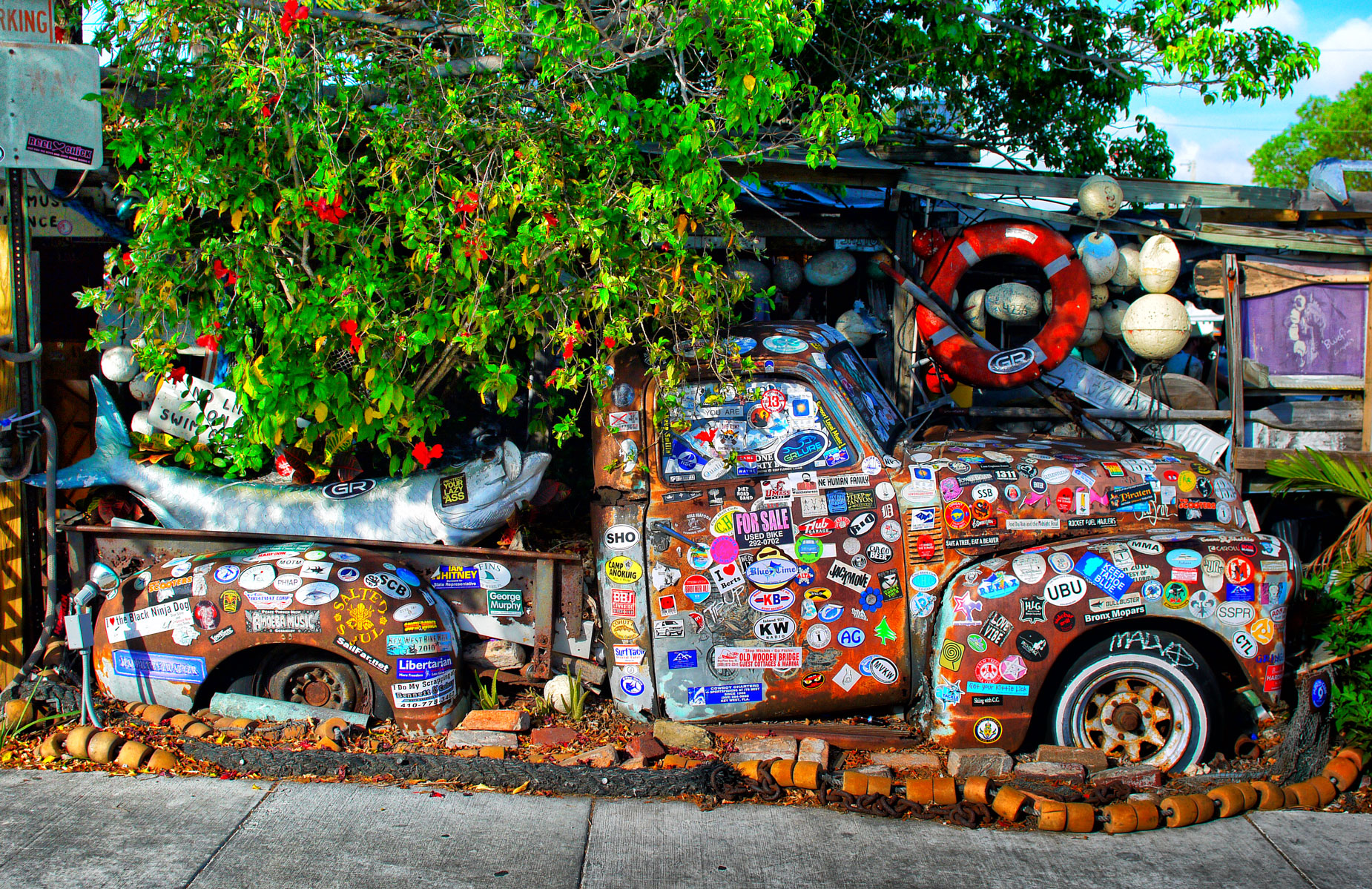
How I Made this Photograph: A few years ago, Mary and I along with my cousin Mike and his wife took a trip to Key West, Florida. I brought both lenses along to see how they handled the rigors of admittedly causal travel photography. I ended up shooting mostly with the 19mm f/2.8 DN, which proved to be an able traveling companion; not so much for its lens hood, which kept jumping off at inopportune times. Not having a hood in place only created flare in one or two of the 400 shots that I made with the lens. Otherwise, the 19mm f/2.8 DN did a great job producing sharp images and I never wondered if I would have been better off with a zoom lens.
I made this image of a patina-beyond-belief pickup truck outside a restaurant where we all had dinner one night using a Panasonic Lumix G2 that I don’t remember owning but EXIF data* can’t be wrong, can it? The Program mode exposure was 1/2500 sec at f/5 and ISO 400. I made two exposures of this scene; one was underexposed, one was overexposed. This is the underexposed image that was tweaked using Photoshop’s Curves and further enhanced with Vivenza that was layered with a dash of the Tonal Contrast filter that’s part of Color Efex.
If you enjoyed today’s blog post and would like to treat me to a cup of Earl Grey tea ($2.50), please click here.