
Today’s Post by Joe Farace
“There is the desire of a consumer society to have no learning curves. This tends to result in very dumbed-down products that are easy to get started on, but are generally worthless and/or debilitating.”—Alan Kay
I once met Alan Kay back in the day at a time when COMDEX was the biggest trade how held in Las Vegas. Now it’s just a memory and even people working in the computer industry may not even remember it. “You mean CES? Nope. It was during a time when my writing was split 50-50 between computers and photography. When the Dot Com bubble burst around 2000, it took COMDEX and my computer writing career with it. Which brings me, somewhat indirectly, to today’s topic…
What’s this have to do with photography?
It’s about being prepared for whatever paradigm shift that comes your way. I believe that as photographers develop their image creation abilities, they move through three phases during their journey. In my friend Rick Sammon’s book Creative Visualization for Photographers, he takes the position that there are four stages and I was surprised that, even though he and I never discussed this topic, how much we had in common on this topic. Let’s take a look at the stages, at least as I see them:
Stage One begins when a photographer gets their first “good” camera and discovers all of the medium’s potential for fun and creativity. During this time, beginning shooters enthusiastically explore their world and every memory card or roll of film is crammed full of images that look so much better than they could ever have imagined. Unfortunately, this blissful period doesn’t last long and is quickly replaced by what happens next.
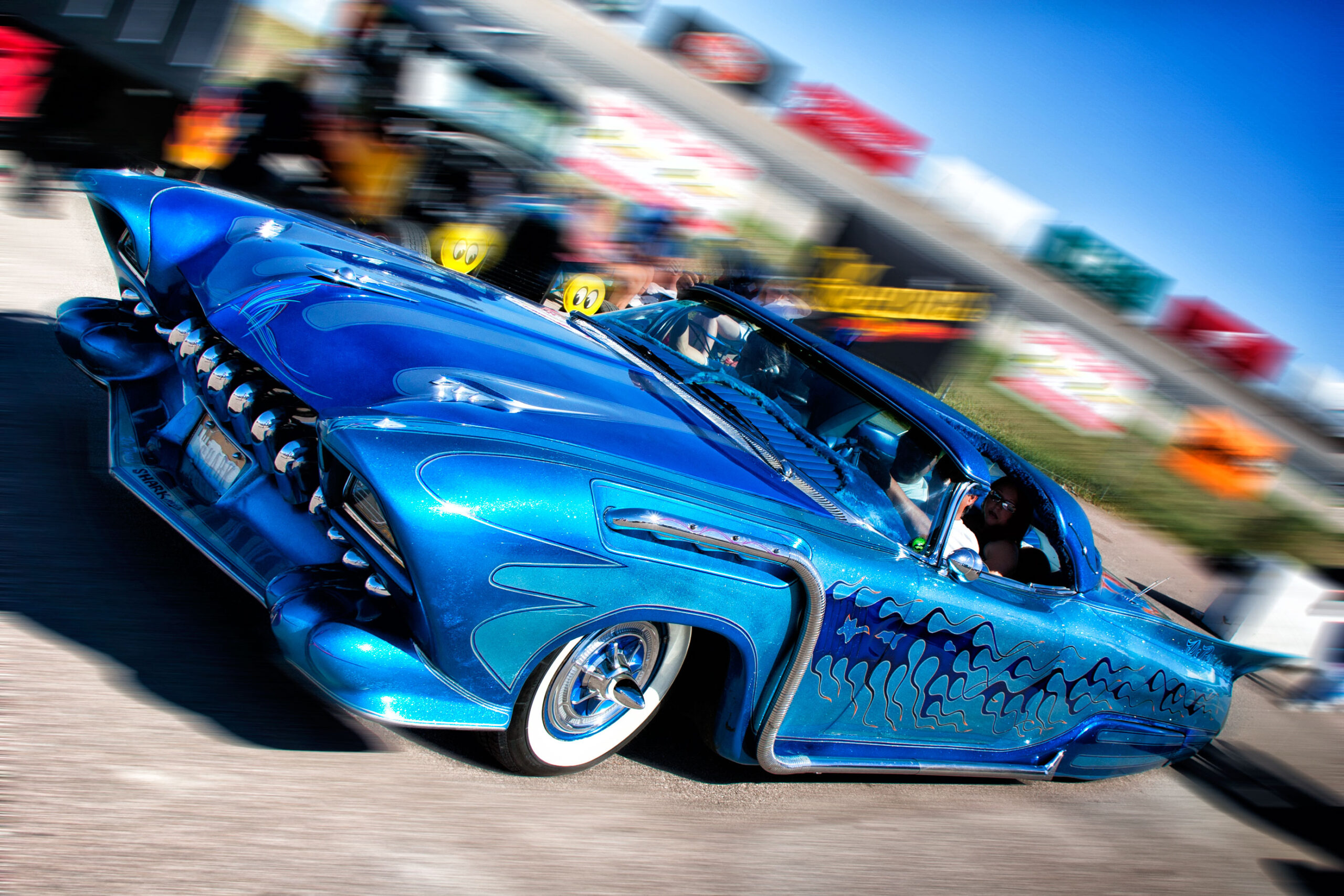
How I Made this Photograph: I photographed this low rider at a Good Guys car show in Colorado. The camera used was a Canon EOS 1D Mark II N with an EF 28-105mm f/3.5-4.5 II USM lens at 53mm. The exposure was 1/250 sec at f/8 and ISO 100. The RAW file was processed using Vivenza with a layer of Motion Blur added to put the emphasis on the car, not the busy background. The car was, in fact, driving past when I made this third of three exposures. Finally the Tonal Contrast filter from Color Efex was added for more drama,
Stage Two occurs when the photographer’s level of enthusiasm is still high but becomes diminished when reviewing their latest images only to discover these new images are much worse than they expected. Instead of being happily surprised by the the quality of their images, all they can see is what’s wrong with their photographs.
Part of surviving this phase has to do with managing expectations. Here’s a few tips to help you deal with this change: Don’t let on-line criticism or even praise of your work inflate your ego or slow down your journey along the learning curve. Unfortunately, phase 2 can last a long time but as a photographer continues to improve their skills by reading books, blog posts, watching YouTube videos, including Barry Staver and my podcasts but, most importantly, practicing until they reach the next and final phase
Stage Three is the point in which all of the images a photographer sees in their viewfinder and what they capture are exactly what they expected. There are no surprises. Interestingly, because there’s no urgency to click the shutter you will find that sometimes during this stage you may shoot fewer but better pictures.
While this phase can be fulfilling, some of that original magic is understandably lost* unless you are shooting film. That’s because when shooting with film cameras, there’s no instant feedback and there will always be an element of surprise that’s an integral part of Stage one. Until the right combination of lighting, subject, and photographer’s mood and inspiration come together to capture a magic moment, you gotta follow the advice of The Hitchhikers Guide to The Galaxy and “keep banging those rocks together.”
*One way and certainly not the only way to rediscover some of that magic is by experimenting with other genres, such as shooting using infrared photography techniques. There’s lots of posts on that subject here on the blog; poke around and you might find some ideas you might consider following up on.
If you enjoyed today’s blog post and would like to buy Joe a cup of Earl Grey tea ($3.50), click here.