
Today’s Post by Joe Farace
Sunshine is delicious, rain is refreshing, wind braces us up, snow is exhilarating; there is really no such thing as bad weather, only different kinds of good weather. —John Ruskin
Over the past decade, the first measurable Colorado snowfalls have occurred in October and November. But on September 3, 1961, the 4.2 inches of snow that fell in Denver was the earliest snowfall recorded since the Weather Bureau began keeping records in 1872.
Snow blanketed Colorado mountain peaks early Friday, as Denver gears up for a stormier weekend.—9News
Weather Or Not
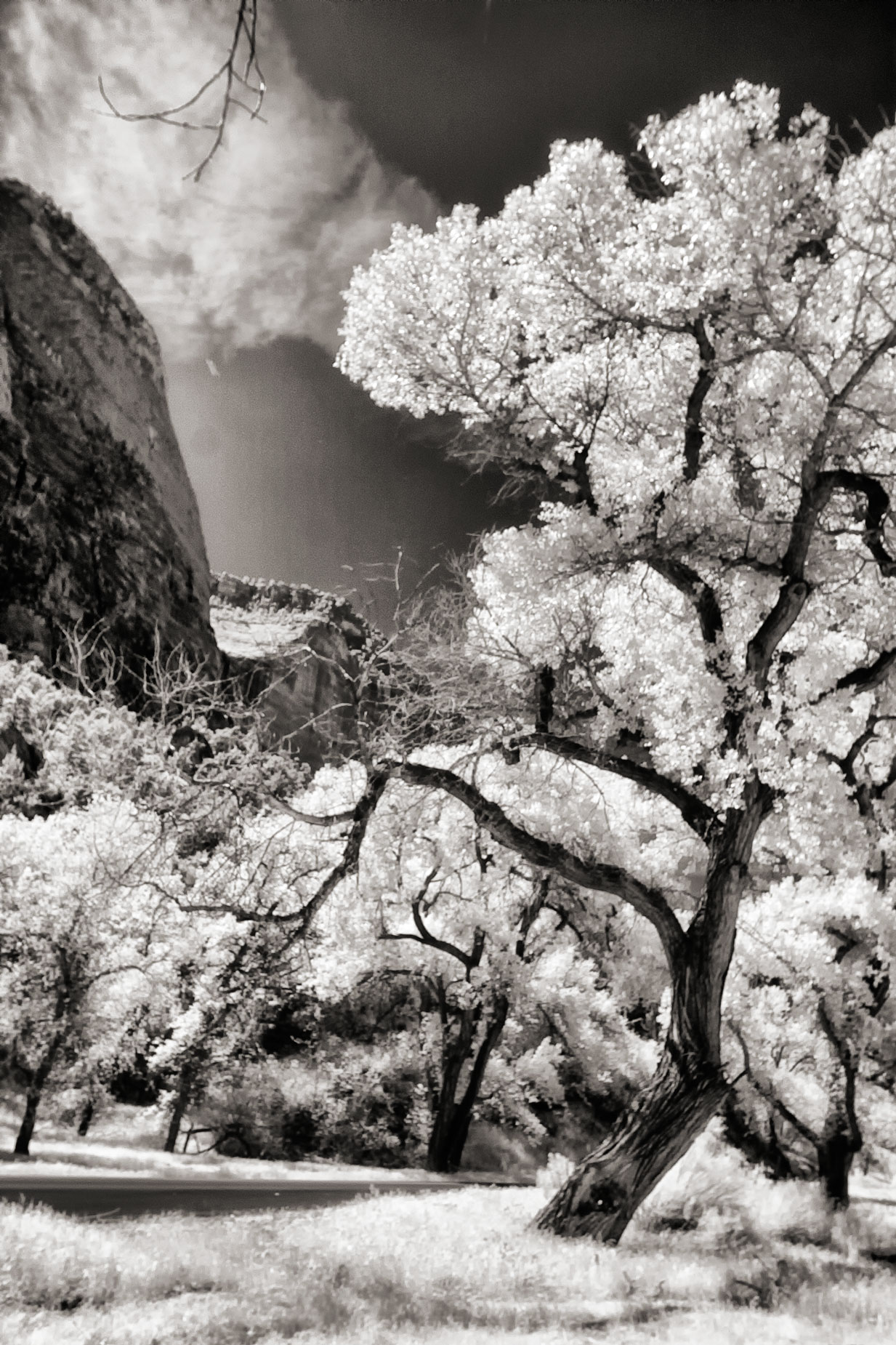 In many part of the country and especially in my little corner of Colorado, it won’t be long before leaves start falling off the trees. With recent nighttime temperatures in the 40’s F, some of my eciduous trews have already started to turn. That mean that right now might be your best chance to go out and shoot some classic infrared images.
There’s all kinds of options for capturing infrared photographs including color and monochrome images that can only be captured via invisible light. Photographing in infrared can transform mundane subject matter into dramatic photographs and scenes that you might ordinarily walk by and never think of photographing, take on a spectacular look when seen via infrared light.
Best of all, it has never been simpler to accomplish than with digital capture. When shooting IR film the process wasn’t that simple. In addition to using a special film, your camera had to be loaded and unloaded in total darkness to reduce the possibility of fogging that film. To shoot IR film you also needed special filters—something that still an option for digital capture—and more than likely had to process the film yourself.
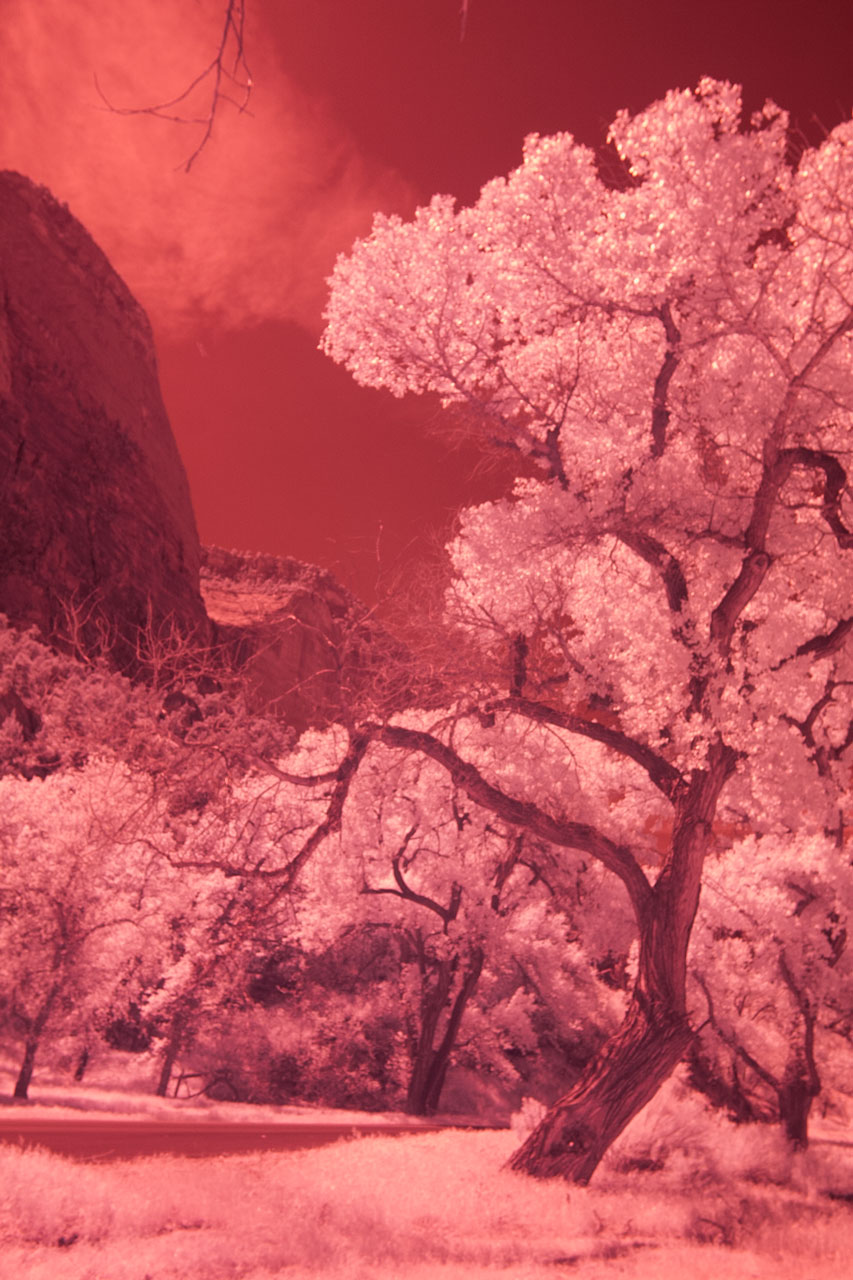
How I made this photograph: This image was made in Zion National Park, which I still believe may be one of the best places on this country for infrared photography. It was shot using a Canon EOS 50D that was converted to infrared capture by LifePixel with their Standard IR (720nm) filter. The lens used was the Tamron SP AF 11-18mm F/4.5-5.6 Di-II LD Aspherical (at 18mm.) Exposure was 1/125 sec at f/9 and ISO 200, which shows the big advantage of shooting IR with a converted camera as opposed to using on-camera filters, because you can easily handhold the camera instead having to use a tripod. The finished RAW file (see below left) was converted to monochrome using Silver Efex with a layer of Platinum toning provided by PhotoKit 2.
Consider this
 If you decide to get serious about digital infrared photography you might think about having one of your less-used cameras converted for IR-only operation. That will let you be able see the results immediately on the camera’s LCD screen. Older DSLRs and mirrorless cameras coming onto the used market offer a perfect opportunity to pick up an extra camera that uses all of your existing system’s lenses and can be dedicated to infrared photography without breaking the ole piggy bank.
One of the most important lessons you’ll learn about shooting IR images is forgetting everything you know about the best time of day to capture images. To give foliage that trademark infrared glow you need to shoot during a time of day when there’s more sun on the scene than not. This puts your prime shooting times around mid-day! These are not the best of times to make conventional images but these are the “golden hours” for infrared. If you need a rule of thumb, try this one: The best time of day to shoot IR is when it’s the worst time of day to shoot normal images.
Sometime in 2026 I would like to hold an infrared photography workshop in Zion National Park. A few years ago one of the big photography websites approached me asking about sponsoring such a workshop but with a change in their ownership that offer evaporated. If your organization is interested in sponsoring such a workshop, please click the Contact button and let’s talk.

I’ve found that Life Pixel does a great job with IR conversions and they’ve done most of the conversions for my Canon DSLRs and all of my Panasonic Lumix G-series cameras. This is not a paid or sponsored endorsement, just my experience.
Used copies of my book, The Complete Guide to Digital Infrared Photography are available from Amazon starting around nine bucks as I write this. My book Creative Digital Monochrome Effects has a chapter on IR photography and is available new from Amazon for $11.46 with used copies starting around six bucks as I write this.