
My #thursdaythoughts theme has been retired for 2025. In it’s place is something different—Anything Can Happen Day. This was what Thursdays were called on the Mickey Mouse Club where I stole the idea!
Today’s Post by Joe Farace
The countenance is the portrait of the soul, and the eyes mark its intentions.—Marcus Tullius Cicero
 A portrait shoot is a team effort so it’s critical that before you snap one image, you should talk to your subject and discuss what you and they would like to accomplish. Many times I’ve seen photographers shooting portraits but expecting the subject to do all the work. Sometimes that approach works and sometime it doesn’t and that’s because there are basically two kinds of photo subjects:
Inner-directed people: You tell the subject to stand “over there,” point the camera at them and they will change poses as fast as you can click the shutter. It’s been my experience, that this type of subject represents 20% of the subjects that you’ll photograph.
When photographing inner-directed people, you’ll get lots of good poses, some great ones and a few not so good because the subject isn’t getting any feedback, except from themselves. The other downside is that you’ll probably shoot more photographs, which in turn takes more editing time. This is a phenomenon I wrote about in my post Making More Shots but Having Less Fun.
Outer directed subjects: These people represent 80% of photo subjects and expect you to tell them what to do. Photographing this type of subject takes longer (and you’ll shoot fewer images) and you need to take the time to communicate with them exactly how you want them to stand, place their hands and even the angle of their head. They will respond better if you occasionally (key word) show them what a photograph looks like on the camera’s LCD screen. A little encouragement always helps.
While it’s up to you to tell outer directed subjects how to pose, you need to be gentle and allow them to be who they really are. I watch what they do naturally and use that as a basis for refining a pose.
How I made this portrait: I photographed Amanda—who is totally inner directed—in my in-home studio using a Panasonic Lumix GH4 with a Leica DG Macro-Elmarit 45mm f/2.8 ASPH. MEGA OIS lens and an exposure of 1/125 sec at f/8 and ISO 200. Lighting is from a Godox monolight with a 16 x 30-inch (40 x 76 cm) Westcott Apollo Strip softbox attached and placed at camera left. Side light came from another Godox monolight that was located at camera right with its standard metal reflector in place. The background is a Savage Infinity black vinyl backdrop.
A Clean Screen is a Happy Screen
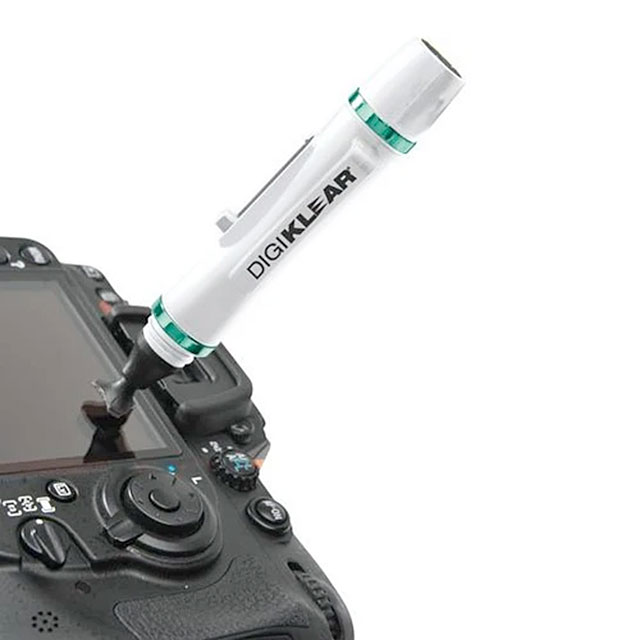 No matter what kind of digital camera you use—DSLR or mirrorless—keeping the LCD screen clean, dust and smear free can be a challenge. As camera’s screens have gotten bigger they seem seem to attract even more dust and finger marks. That’s why I keep a LensPen DigiKlear in my camera bag and Lowepro fanny pack.
DigiKlear is safe and easy to use and will keep every part of your camera clean, especially screens because it’s been designed specifically for cleaning the small digital glass and LCD screens found on the backs of DSLRs and mirrorless cameras. It is the perfect cleaning device not just for cameras but can also be used clean screens on other optical devices including drones.
DigiKlear features a retractable dust removal brush and a special non-liquid cleaning element that’s designed to never dry out.
- DigiKlear measures 4.33-inches(11cm) long and has a round cleaning tip measuring 12mm in diameter.
- The Cleaning tip is semi-triangular shaped tip for cleaning into the corners of the screen.
- DigiKlear features the LCF invisible carbon, which is the patented LensPen cleaning compound that has been redeveloped into an invisible white carbon.
Best of all, a DigiKlear only costs $12.95, so you can afford to keep one in each of your camera bags. It also makes the perfect gift for your favorite photographer—or yourself!
LensPen is a long-time sponsor of my sites and blogs but I started using their products long before I even had a blog. My wife bought me my first LensPen in 1994 just after I acquired a Nikon N90s film-based SLR! I would like to thank LensPen for their continued support.