
Today’s Post by Joe Farace
“Intimacy was impossible without trust.” ― The Seven Husbands of Evelyn Hugo
 Intimate Portraiture is all about creating a mood, at least I think so. I also believe there are basically two kinds of portrait lighting styles, especially in the studio, with many, many variations in between including low key techniques and high key imagery. OK there’s another one, that I practiced for a long time and many still use it today, it’s called “flat & boring.” Maybe I’ll do a post about this technique in the future.
A low key portrait contains predominantly dark tones and colors. It creates strong contrasts between light and dark area by accentuating the contours of an object and throwing other areas into shadow and usually only requires one light source. These kind of images can also be captured in black and white which end up being similar in tone to a film noir style portrait.
High Key Portraits
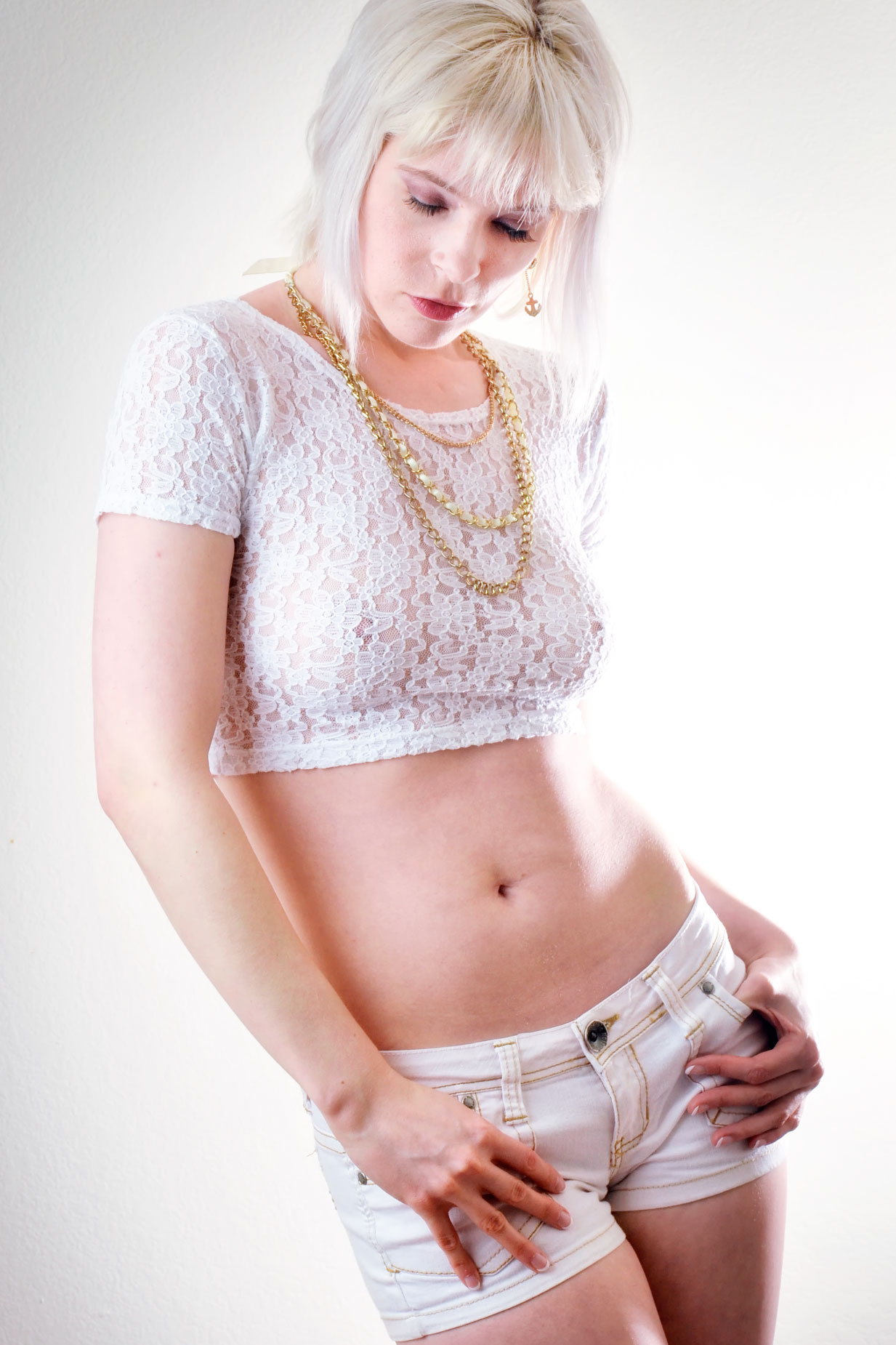 On the other hand, high key portraits use soft lighting and contain mostly white or pale tones.
High-key lighting is typically free from dark shadows and can contain small darker areas such as the subject’s hair or eyes to keep the portrait from becoming too boring. This technique also uses bright lighting to reduce or blow out any dark shadows that may be lurking in the image. The high key look is generally thought of as producing an images that is “positive and upbeat,” although I am not sure that I agree 100% with that assessment .
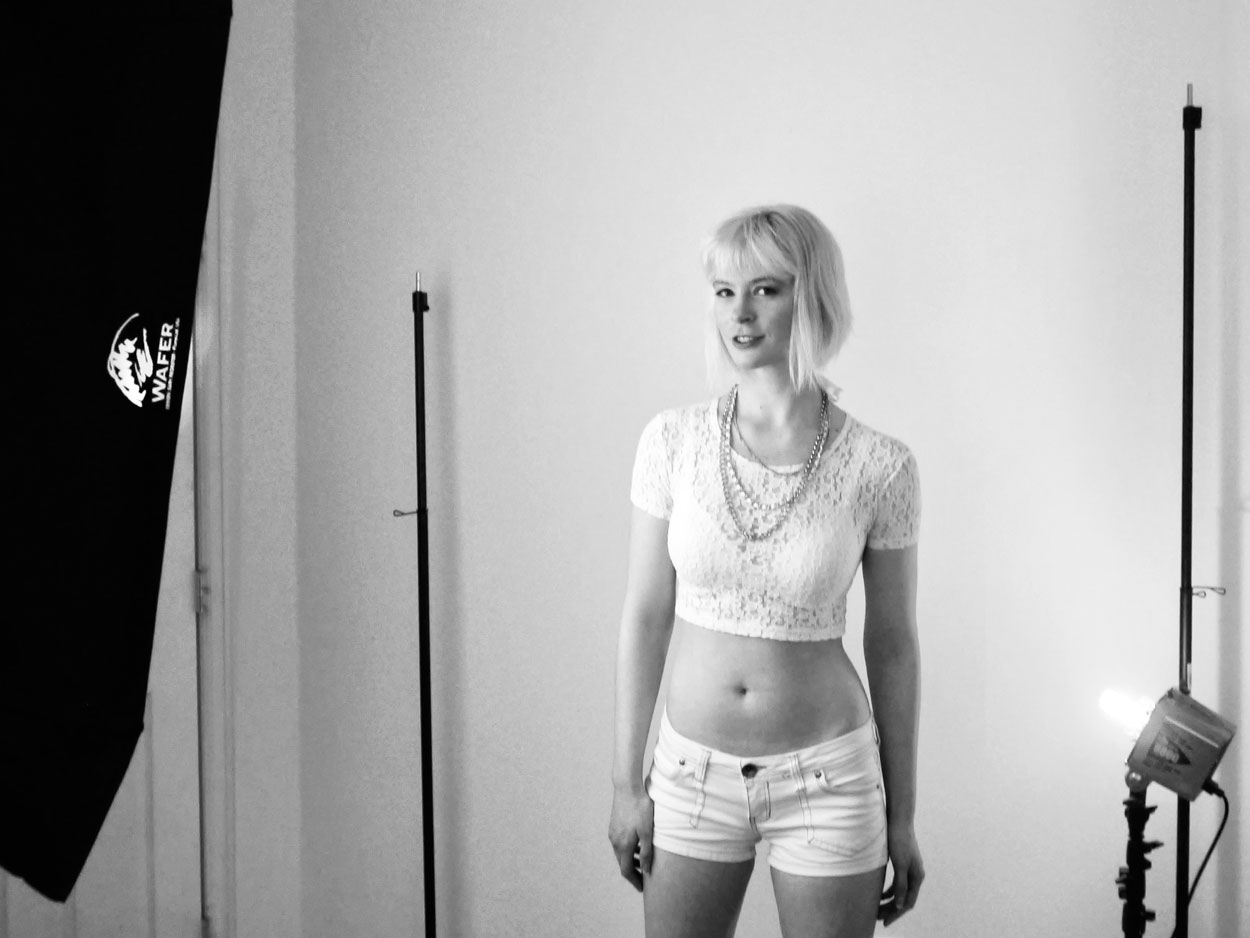
How I made this portrait: I photographed Pam Simpson aka Satin Pam in my home studio using one of its white walls as a background (before it was painted a more-or-less 18% grey. ) As you can see in the lighting setup photograph (above right) a Plume Ltd Wafer soft box was located at camera left. This soft box is available in different sizes and shapes, including the Wafer HexOval 100 (37.5 x 27.5 by 12 inches deep) I use. A Paul C Buff DigiBee 800 monolight is attached to the softbox with a Balcar-compatible speed ring. My Purple Haze Paul C Buff Alien Bee 800 monolight is placed low and at camera right and is used in bare tube mode and is more-or-less aimed toward the the wall but there is so much much bounce in a white-painted studio that it’s everywhere.
The camera used, for some reason, was my wife Mary’s (former) 16.2-megapixel Nikon D5100 with its 18-55mm f/3.5-5.6 kit lens at 55mm (82mm equivalent.) The exposure was 1/160 sec at f/9 and ISO 300. The image was originally captured as a JPEG file before I instituted my RAW+JPEG regime. The file was lightly retouched using my normal techniques, including Imagenomics’ Portraiture plug-in along with the Glamour Glow filter rom Color Efex to soften the overall image.
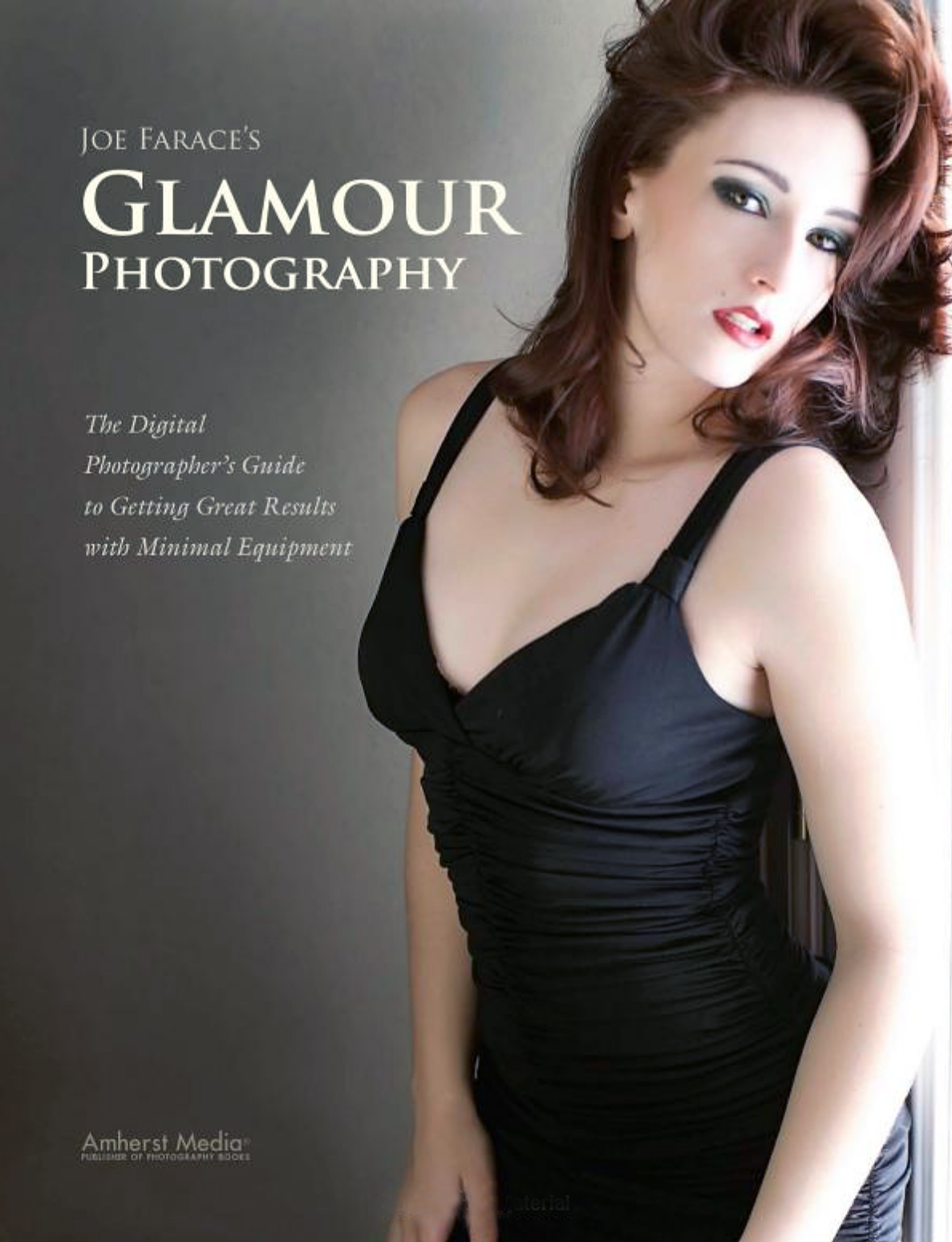
My book Joe Farace’s Glamour Photography is full of tips, tools and techniques for glamour and boudoir photography and includes information on the cameras and lenses used as well as the complete exposure data for each image. New copies are available from Amazon for $30.54 with used copies starting around ten bucks as I write this. The Kindle version is $19.99 for those preferring a digital forma