
Today I’m veering away from my Sunday available light portrait series to dip my toes into Tricky Tuesday territory and take look at one of the most useful tools I’ve found for studio photography–The Scrim. Going forward, this kind of post may or may not become the new Sunday series theme. I’ll keep you posted.
Today’s Post by Joe Farace
The scrim that the projected portions of the show normally screened on was ground into the floor, spotted with grime, footprints and oil.– Cory Doctorow, Down and Out in the Magic Kingdom.
 When it comes to portraiture, studio lighting isn’t just about the quantity of the light that’s being produced by a light source, it’s more often about the quality of that light. One way to control that quality is by using scims.
Westcott’s Scrim Jim Cine system builds on the concept of scrims using a modular design that allows both reflective and diffusion effects from whatever kind of light source you want to use, whether it’s electronic flash or LED. Along with adding “Cine” to the name, Westcott has made improvements to the system by making the connections more secure, beefed up the posts and standardized on sizes to match industry standards.
What’s a scrim?
The most basic definition of a scrim is that it a screen-like mesh that’s mounted onto a frame that is then placed in front of a studio light to reduce its intensity but in common usage any similar device that produces a diffusion effect is called a scrim. When used with reflective fabric, a scrim can also serve as a reflector. Here’s a few things that using scrims can do for your portraits:
- Diffuse harsh light: It breaks up direct, harsh light, including what some LED sources produce. (See the latest Pixels, Grain & Cookies podcast for a discussion of this topic.) They can also be be used outdoors to tame midday sunlight, turning a merciless light source into something that’s more flattering light for portraiture.
- Reduce light intensity: It cuts down the brightness that’s hitting the subject without shifting the image’s color temperature.
- Control shadow drop-off: Unlike a soft box, when using a scrim with a light source it can be positioned independently at different distances and angles, giving you finer control over transitions of contrast and shadows.
The Westcott 4×4 Scrim Jim Cine Kit features a 4 X 4-foot anodized aluminum modular frame along with diffuser fabric and a silver/white bounce fabric. The reversible bounce fabric is double laminated and can be used to reflect light and add highlights to your subject or scene.The 6×6 Scrim Jim Cine Kit has four 46-inch frame tubes and four 22-inch tubes. A 6×6-foot 3/4-stop diffuser softens available or studio lighting without affecting color temperatures, while the double-laminated 6×6-foot reversible silver/white bounce fabric reflects light to illuminate your subject.
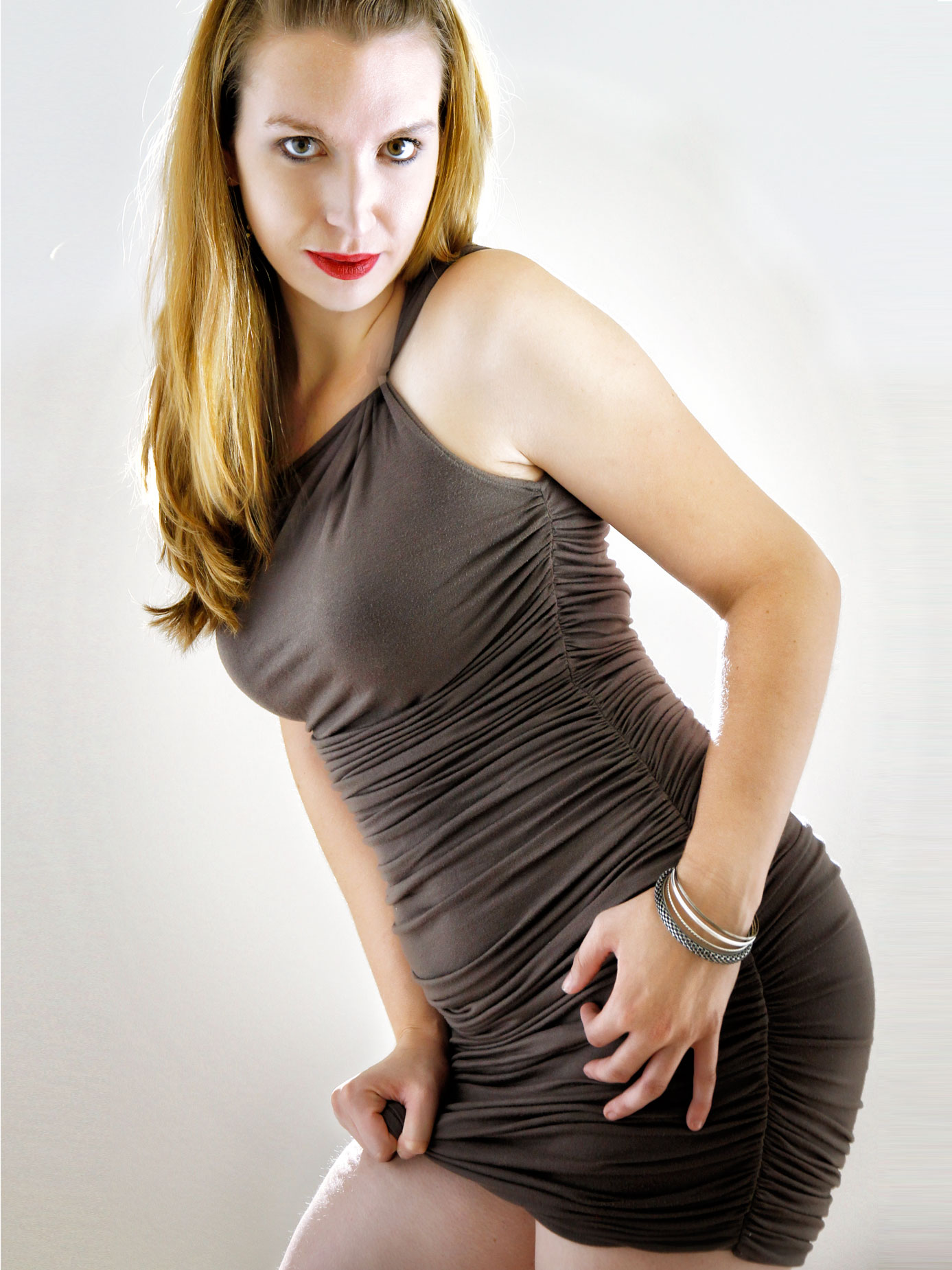
How I made this portrait: In the lighting setup that I used for this photograph of the statuesque six-foot tall Danielle, one LED light is placed near the back formerly white painted wall of my 11×15-foot home studio and aimed at the subject’s back. No reflector was used on the light which allowed the light to kick all around the walls and turn it into a high key white. At camera left is a 42 x 72-inch Scrim Jim with a white fabric cover while at right is a Westcott 30-inch 5-in-1 Reflector. If I had another Scrim Jim‚ I would have used that instead. The camera used was a Canon 60D with EF-S 15-85mm f/3.5-5.6 IS USM lens at 50mm. The exposure was 1/30 sec at f/5 and ISO 800 with a plus one stop exposure compensation.
 If you enjoyed today’s post and would like to support this blog, you can join my Patreon where memberships start at just $1.25, with additional levels of support at $2.50 and $5 that includes special benefits including access to uncensored, posts.
My book Joe Farace’s Glamour Photography is full of tips, tools and techniques for glamour and boudoir photography. It includes information on all of the cameras and lenses used as well as the complete exposure data for each image. New copies are $45.08 with and used copies available from Amazon for for around thirty-nine bucks, as I write this. The Kindle version is $19.99 for those preferring a digital format.