
It’s “Tricky Tuesday” which is a way for me to share some of the tricks, tips and techniques I’ve used over the years when shooting portraits in the studio, Today’s post is about lighting tools and features the always amazing Pam Simpson
Today’s Post by Joe Farace
I advocate glamour. Every day. Every minute.—Dita Von Teese
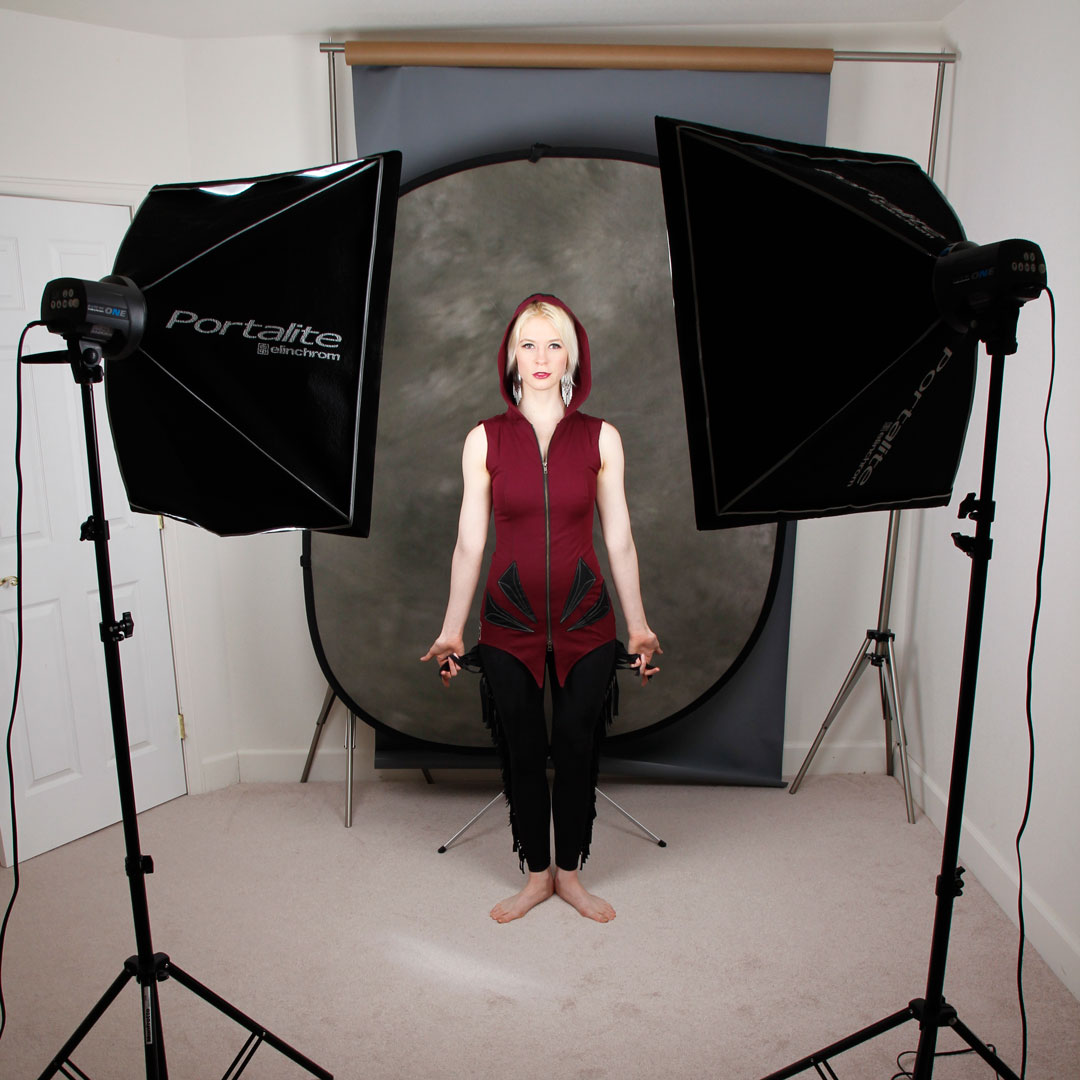 A monolight is a self-contained studio electronic flash. It contains a power source, modeling light, flash tube and controls, all within a single, compact housing, Monolights can be powered by AC or DC battery power and like any studio light allows the fitting of light modification devices, such as reflectors, umbrellas or soft boxes.
A monolight’s controls typically let you change the amount of its output from full, half, quarter and sometimes 1/32’nd power, either in stepped increments or as continuously variable output. One of a monolight’s most valuable features includes a modeling light that lets you preview what the flash will look like when falling on the subject and whose intensity can be varied to match the power setting or even set to off.
The Monolight Advantage
Monolights typically include a sync cord to attach the light to your camera’s PC (Prontor-Compur) connection which triggers the light when tripping the camera’s shutter. These days, not every DSLR or mirrorless camera has a PC connection and you might have to use a hot shoe to PC adapter to connect the sync cord to the main light. Because of the high voltages across the tip of a sync cord, you should avoid using cheap adapters because it can fry the electronics inside your camera. If you want to eliminate the sync cord entirely, there’s another suggestion below:
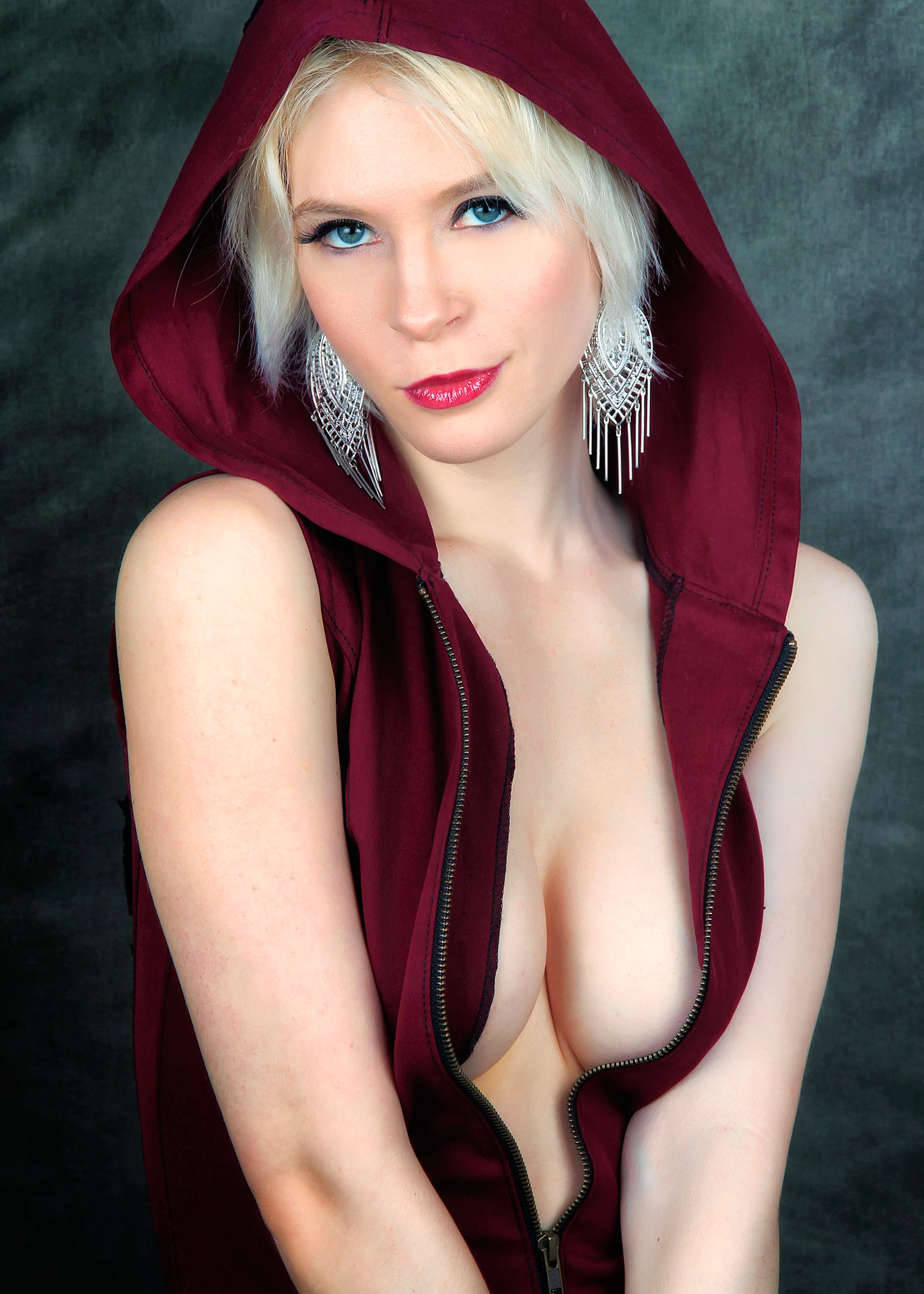 How I Made this Portrait: I photographed the dynamic Pam Simpson in my 11×15-foot home studio. In this setup two Elinchrom D-Lite RX monolights were placed at approximately 45 degrees to one another with a 26-inch square soft box mounted on each one. Their output was adjusted using my laptop computer to be approximately one-quarter power, providing almost instantaneous recycle no matter how fast this subject changed poses. The background was a 60 x 72-inch Savage Monsoon, two-sided collapsible backdrop, think cloudy, stormy day, with one side being darker than the other.
The camera used was a Canon EOS 60D with EF-S15-85mm f/3.5-5.6 IS USM lens (at 53mm) with an exposure of 1/125 sec at f/11 and ISO 200. The images was lightly retouched and then I used a techniques from my post Cut & Paste Portraiture to make an adjustment to her head title. Next, I added some burning and dodging from PhotoKit 2 before applying two layers of Pro Contrast from Color Efex before finishing off with a layer of the Glamour Glow filter also from Color Efex.
The Wireless Alternative: When working in the studio, I can be a bit of a klutz and have, more than once, stumbled over a power cord and more times than I can count, over a sync cord. For me, and others like me, a wireless flash trigger, like the inexpensive ($105) Pocket Wizard PlusX is the best and safest solution for tripping the light fantastic and not yourself. This unit has a range of (up to) 1600-feet and offers 10 channels that are backward-compatible with all other PocketWizards and PocketWizard-enabled devices. Many years ago, Mary bought me a pair of these devices as a gift and I consider them to be indispensable studio gear.
 In a Bonus Password Protected posts, members of my Patreon get to see.uncensored images of Ms. Simpson and other models. You can read about the affordable memberships and other benefits in this post.
My book Joe Farace’s Glamour Photography is full of tips, tools and techniques for glamour photography and includes information on all of the cameras I used as well as complete lighting and exposure data for each image. Used books are available from Amazon for $45.08, as I write this. The Kindle version is $19.99 for those preferring a digital format.