
Today’s Post by Joe Farace
UPDATED: August 11, 2022
 I think it’s obvious that LED studio lighting is a trend that isn’t going away any time soon. But if you’re new to working in the studio with LED lighting systems, such as Fotodiox’s Pro LED100WB-56 Studio LED light, it brings you face-to-face with terms like lux, lumens and foot-candles. Don’t let these buzzwords freak you out; there was a time when megapixels were alien too.
Lux is a unit of illumination that’s equal to one lumen per square meter or the equivalent of 0.0929 foot-candles. One way to look at it is the 13 lumens that are produced by a candle or the 1,200 lumens created by a 100 Watt light bulb. A foot-candle is a unit of illuminance on a surface that is one foot from a uniform point source of light of one candle and equal to one lumen per square foot. As you can see these definitions are circular but don’t let that drive you crazy. If you poke around the Internet, you will find charts that compare Exposure Value to foot-candles and lux. Or you can just ignore all this and use the light meter built-into your camera, which is what I do, using the meter’s incident setting.
It’s not just the way that light from LED sources are measured, it’s also the quality of that light because not all LEDs are made with the same quality and can vary batch-to-batch. And based on my experience there doesn’t seem to be a direct correlation between the price of a LED light source and its build quality.
 Although the output quality of some cheap LED lights reflect their price point others are surprisingly good, just as some expensive LEDs are not that great. The bottom line is that although some budget LED lights reflect their price point other inexpensive lights are surprisingly good, just as some expensive LEDs lights are not all that great.
Some inexpensive lights exhibit a characteristics called Pulse Width Modulation that causes flickering making them appear to be producing continuous light when specific elements within the light source may not be alight and in fact are flickering off. You can see an example of this, with a different model but a similarly styled shot on this post.
To measure this quality of LED studio lighting, I purchased a pocket-sized Diffraction Grating Spectroscope that lets me inspect a light source’s spectrum and actually see peaks and missing bands. These devices are used by rock and mineral collectors and you can find them on eBay or Amazon for about $40. Although your eyes automatically adjust for missing color bands or spikes, your camera cannot and this difference results in time spent or wasted, depending on your interpretation, in the digital darkroom trying to get the color “right.”
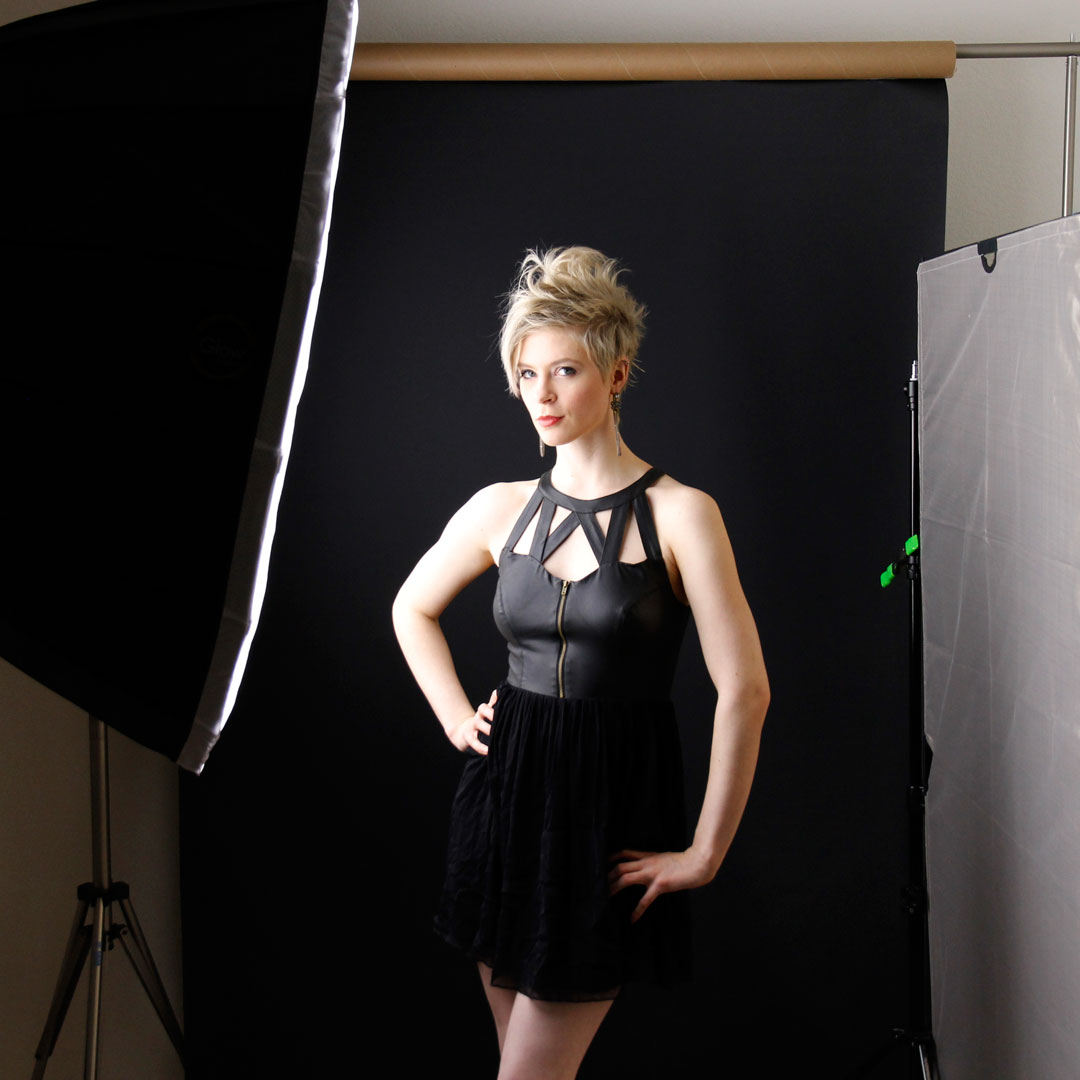
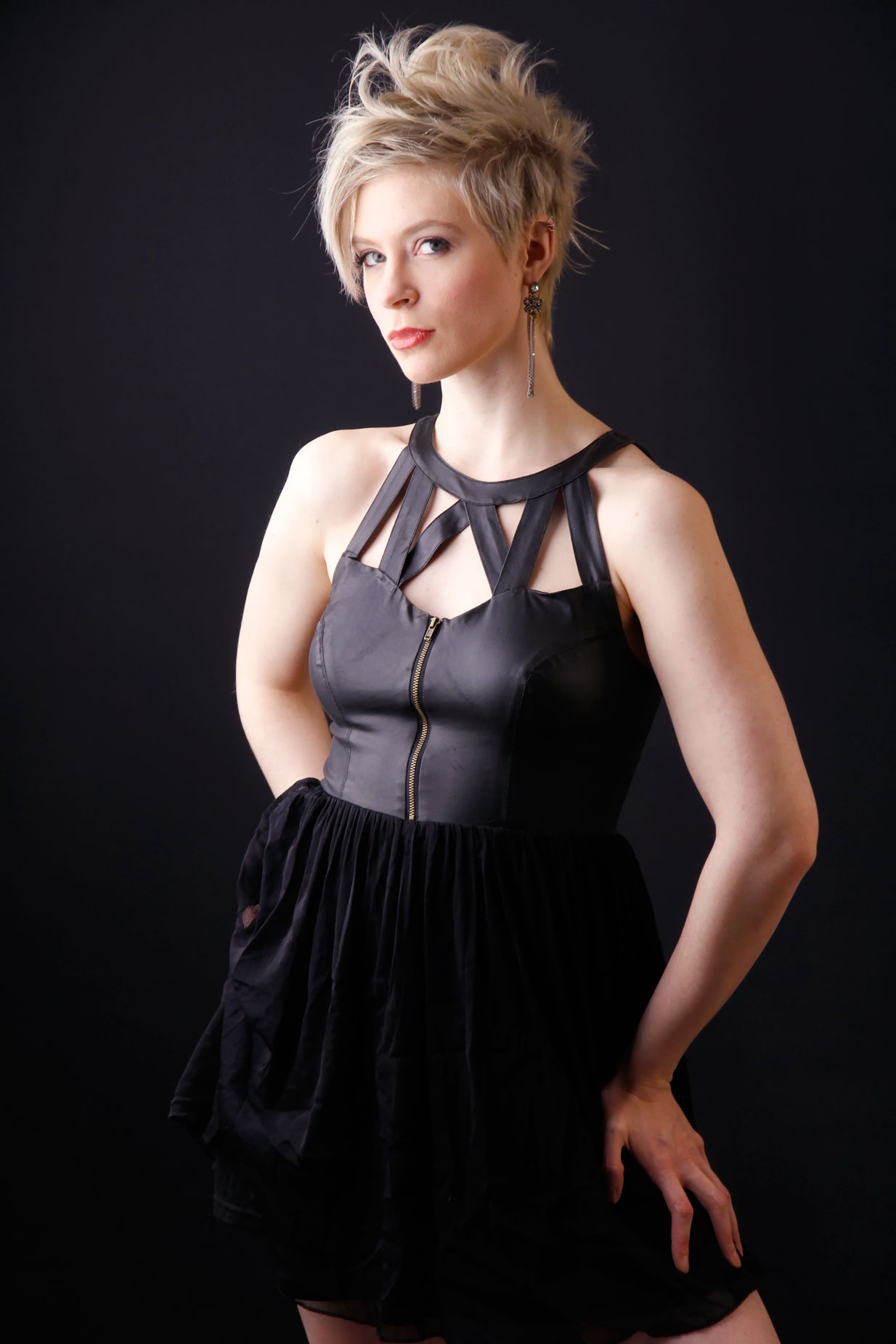
How I made this shot: This lighting setup for this portrait could not be more simple and uses one Fotodiox LED light and one reflector. Pam Simpson wearing black was photographed against a black Savage Infinity vinyl suspended on JTL background stand. A 47-inch softbox takes up a big-chuck of the space in my 11×15-foot home studio and was placed at studio left. A 42 x72-inch Westcott Scrim Jim Cine with Sunlight fabric acting as fill is placed at camera right. The camera used was a Canon EOS 60D with EF-S15-85mm f/3.5-5.6 IS USM (at 50mm) with an exposure of 1/50 at f/5.6 and ISO 800. Notice I had to increase my ISO setting slightly to match the basic exposures created by using the softbox.
If you enjoyed today’s blog post and would like to buy Joe a cup of Earl Grey tea ($3.50), click here. And if you do, thank so very much.
 If you’re interested in learning how I shoot portraits and how I use cameras, lenses and lighting in my in-home studio and on location, please pick up a copy of Studio Lighting Anywhere which is available new from Amazon.com for $34.95 or used around twenty-three bucks, as I write this. Kindle version is $19.99 for those preferring a digital format.