
Flashback: Recently, my wife and I were having lunch and I told her I was having trouble coming up with a new theme for my Tuesday blog posts and she suggested “Tricky Tuesday” as a way to share some of the different tricks, tips and techniques I’ve used over the years in the studio and outside it. Here’s another try at this new theme…
Today’s Post by Joe Farace
Art doesn’t just happen by accident. It is about pulling out new tricks and trying new things. —Nicholas Meyer, author of Sherlock Holmes & The Real Thing
Richard Avedon once said, “I think all art is about control—the encounter between control and the uncontrollable.”
I think that’s what a dedicated studio, no matter it’s size or where it’s located, brings to a portrait photographer. A studio, even something as small as my 11 x 15-foot (3,3 x 4,5m) home studio, becomes a safe haven from the world where, like the Outer Limits voice says, you can control the lighting, the background and even—to some extant—the subject
In The Studio
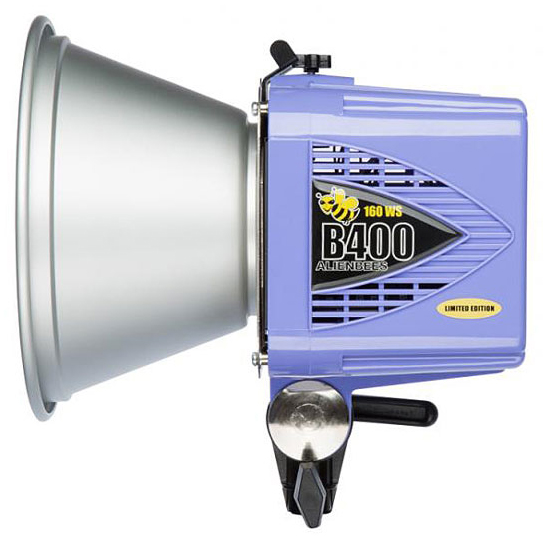
 The real trick, if there is any, about studio lighting is having the right attitude about the type and amount of gear you really need.
Choosing the right equipment doesn’t have to be expensive, which is why my philosophy is to work with the minimal amount and least expensive hardware I can afford. Even the most simple lighting set up, when used creatively can make your portraits look as if they were made in a big time studio—even though your studio is in a garage or your home’s basement, like mine.
What emerges from all of the control a dedicated studio space can provide control is a style. Creating images in my own photographic style is not something I’m conscious about when working in the studio but the truth is that over time we all develop a signature way of shooting. The danger is, of course, is that once we figure it out, we’ll keep shooting the same way or different versions of the same shot over and over again for the rest of our lives.
Any style you develop must grow and change over time as you learn more about the art and craft of portrait photography, especially lighting. Otherwise, what’s the point? Your own starting point for developing a style can’t just be a copy of another photographer’s work. That’s because I think it’s almost impossible to duplicate the exact way that someone else creates their unique images images, so you will gradually have to make accommodations as far as your own equipment, space and experience is concerned. What you can gain from looking at other photographer’s images is inspiration. This will come from when you continue to shoot and learn from experience but also from books and maybe even blogs like this one. In the end, you should see an improvement until what emerges is your own true personal style.
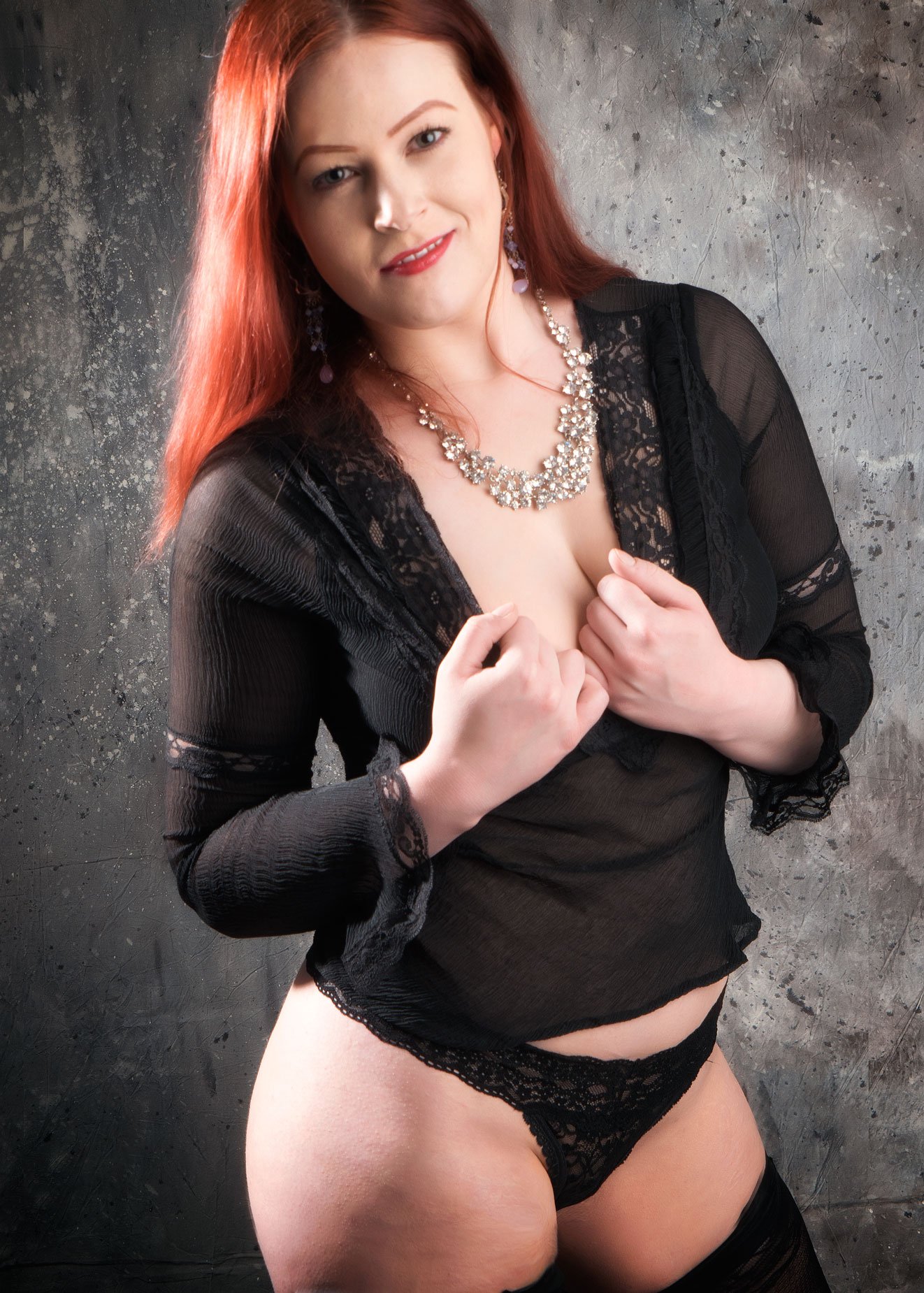
 My trick of the day, which was used to make the above right image of the incredibly sweet Kelly Alexander, is to start by keeping the lighting relatively simple. For example, here’s how I made this portrait:
The above image is a classic Joe Farace-style shot that was made in my home studio. The model is more often than not, in a three-quarter length pose and she’s looking directly at the camera. Lighting was provided by a DigiBee DB800 with 52 x 38 x14-inch Plume Wafer Hexoval (132 x 96 x 35cm) softbox. A second DigiBee DB800 with 18-inch (45cm) Omni reflector was at camera left and left and slightly behind the subject. The Carbonite muslin backdrop is from Silverlake Photo Accessories and was hanging on JTL background stands. The camera used was a Panasonic Lumix GH4 with G Vario 14-45mm f/3.5-5.6 lens at 31mm with an exposure of 1/125 sec and f/8 and ISO 200.
It’s worth mentioning that because of their ruggedness, dependability and affordability, I’ve standardized on the use of Paul C Buff’s Alien Bee and DigiBee monolights in my home studio. This is not a paid or sponsored endorsement, just my experience.
 If you enjoyed today’s blog post and would like to buy ($2.50) Joe a cup of tea, click here.
If you’re interested in knowing how I use cameras, lenses and lighting in my in-home studio and on location, please pick up a copy of Studio Lighting Anywhere which is available used from Amazon.com starting around eighteen bucks as I write this. The Kindle version is $19.99 for those preferring a digital format.