
My Sunday Series on Available Light Portraiture continues today with a portrait of Megan, who was photographed in the home office of my former home sitting in the red Queen Anne chair that I used for portraits (and to sit in.) I had the same chair in my present office until Mary replaced it with the green plaid wing back chair that’s currently there.
Today’s Post by Joe Farace
“Taking pictures is like tiptoeing into the kitchen late at night and stealing Oreo cookies.”—Diane Arbus
The best-looking portraits will often be ones that allow the subject to contrast with the background, making them stand out and add drama to the photograph. This might simply mean making a slight adjustment in your camera position, so take the time to pick the right spot not just the first shot you make, so don’t be afraid to change it several times during a session. Ansel Adams once said that “a good photograph is knowing where to stand” and that’s just as true for portraiture as it is for landscape photography.
Low-key photography is a genre of photography consisting of shooting dark-colored scenes by lowering the “key” or main light that’s illuminating the scene and can be used to create a moody atmosphere, letting the viewer experience the photograph through their own subjective interpretation
It’s all about the lighting
Portraits made indoors without any kind supplementary lighting can be a challenge and you need to use your ingenuity to find the right kind of light source to produce illumination that flatters your subjects. That light can come from windows allowing natural light to enter the scene but these days it seems that with some affordable new homes, that windows are placed sparingly are more often with a sense of using the fewest amount required by building code in order to save the builder money. With older homes, it can also be a challenge because windows are sometimes smaller but the secret is to look for and work with whatever natural light you can find, wherever you find it.
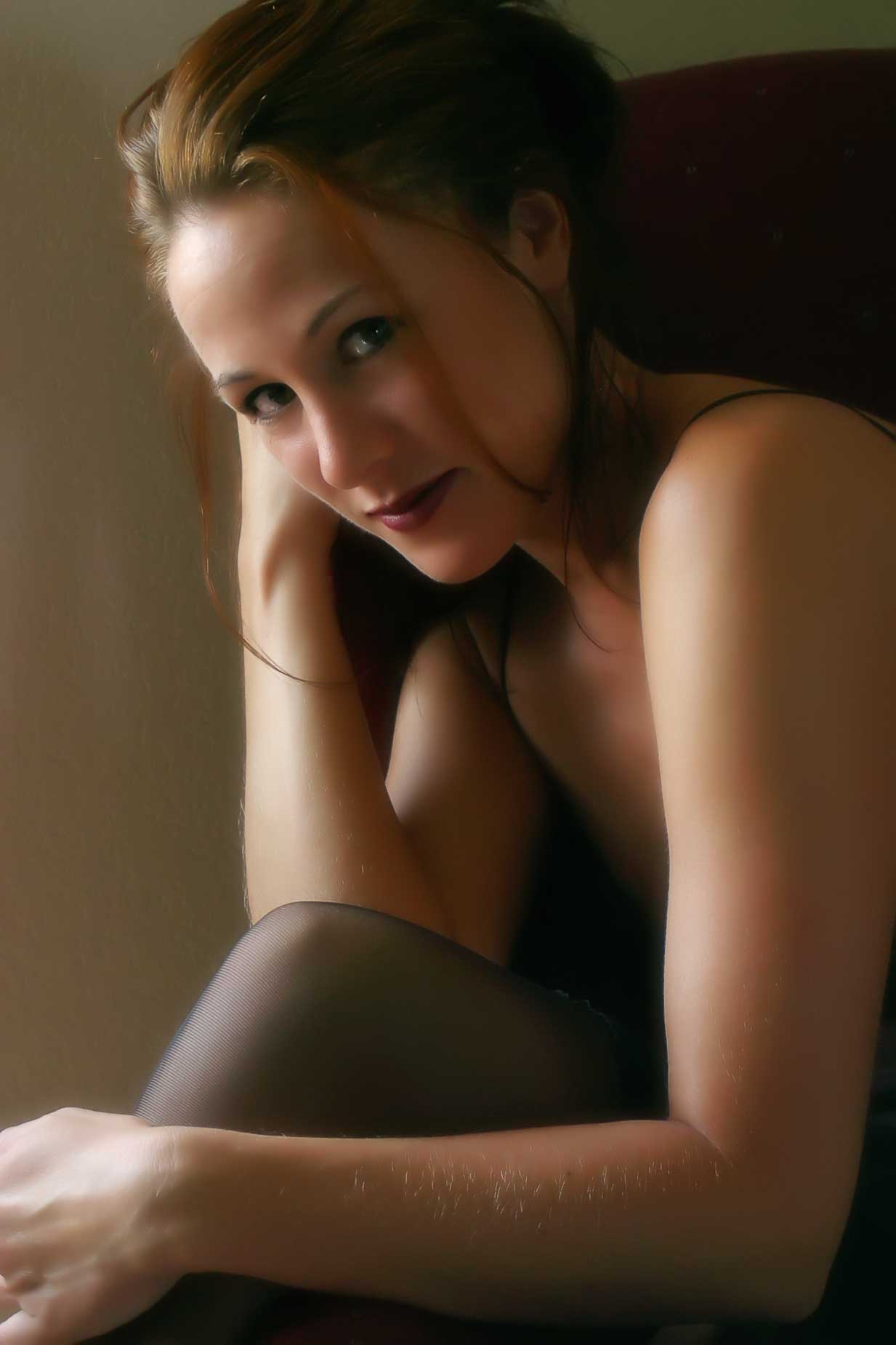 Using available light sometimes means is you will face the challenge of color balance as well as increased ISO settings to compensate for an overall lack of the quantity of light. Bumping up the camera’s ISO setting will, with many cameras result in the production of digital noise. The use of wide-aperture of fast lenses can also be an important part of this equation because their use is just as important outdoors and indoors.
How I Made this Low Key Portrait: The natural light coming from a window at Megan’s right in my home office produced all the light needed for this moody image. The camera used was a Canon EOS D60 and the inexpensive and now discontinued EF-S 22-55mm f/ 4–5.6 USM lens with an exposure of 1/100 sec at f/7.1 and ISO 400. A minus one and one-third stop exposure compensation was added but I think I went a little too far and the image needed a bit more than normal tweaking.
Portraits are all about light, so if you want to conquer indoor lighting start by looking around your home for places where there’s plenty of existing light. When I wanted lots of light in my former home, the best and most natural light was found in the kitchen; I have yet to find a similar spot in my current home. The walls in that kitchen were painted a soft white color and there was a large North-facing bay window with mini-blinds in each window panel that let me control light better than any studio.
Moody lighting from a South-facing window in the back door between my dining room and living room to my former home, produced the linked image. Your home or apartment may be different with more windows and doors in different locations than mine but the key to getting started is looking at these windows as potential light sources for your photographs. You may be surprised at what you might discover.
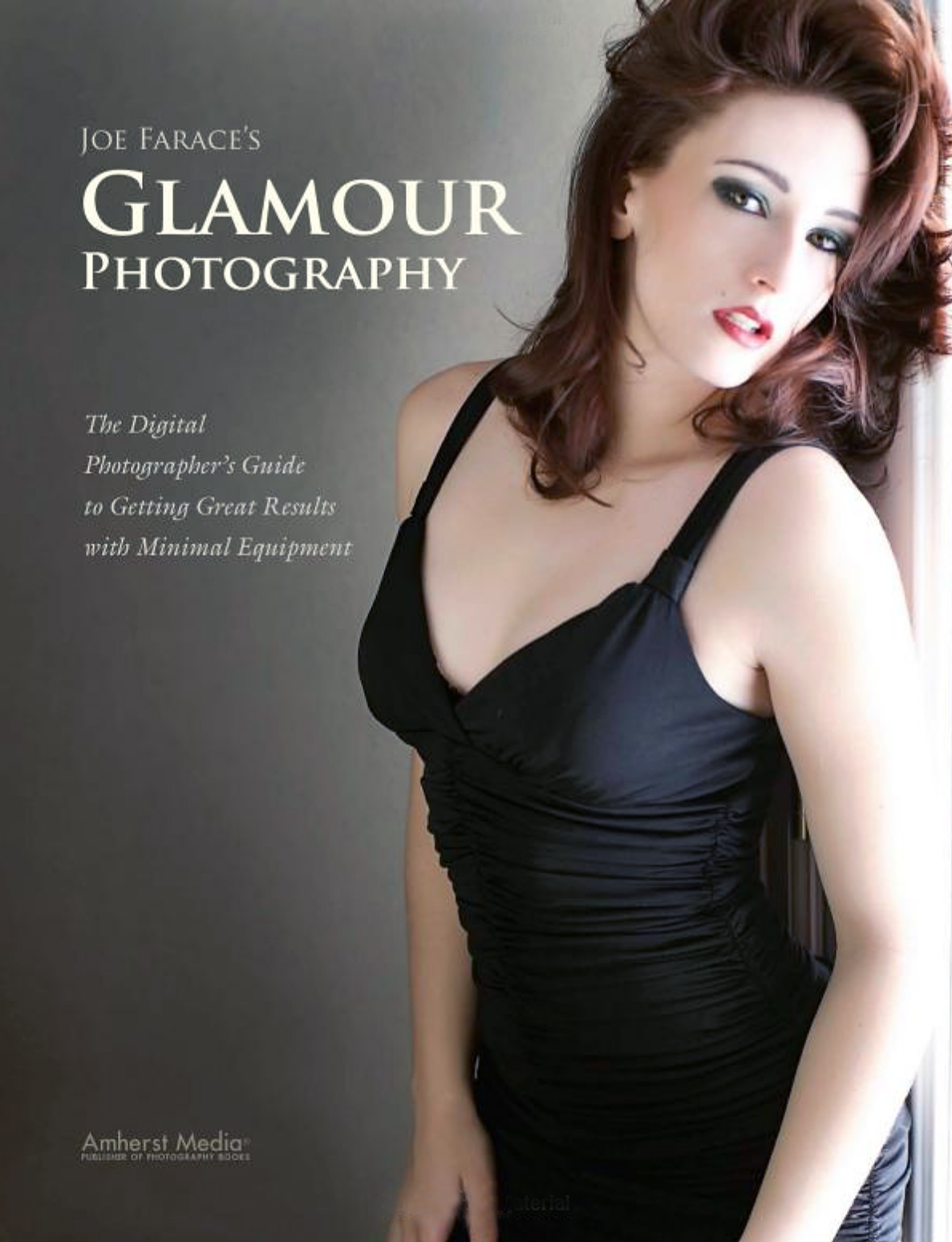
My book Joe Farace’s Glamour Photography is full of tips, tools and techniques for glamour and boudoir photography and includes information on all of the cameras used as well as the complete exposure data for each image. New copies are available for $30.54 with used books starting around twenty-five bucks.as I write this. The Kindle version is $19.99 for those preferring a digital forma