
Today I’m veering away from my Sunday available light portrait series to dip my toes into Tricky Tuesday territory (again) and take look at an unusual lighting source for portraiture—LED light bulbs. These kinds of posts may or may not become the new Sunday series theme going forward; I’ll keep you posted.
Today’s Post by Joe Farace
“How many digital photographers does it take to change a light bulb? They can’t, there isn’t enough light unless they use flash.”— Ray Bromley,
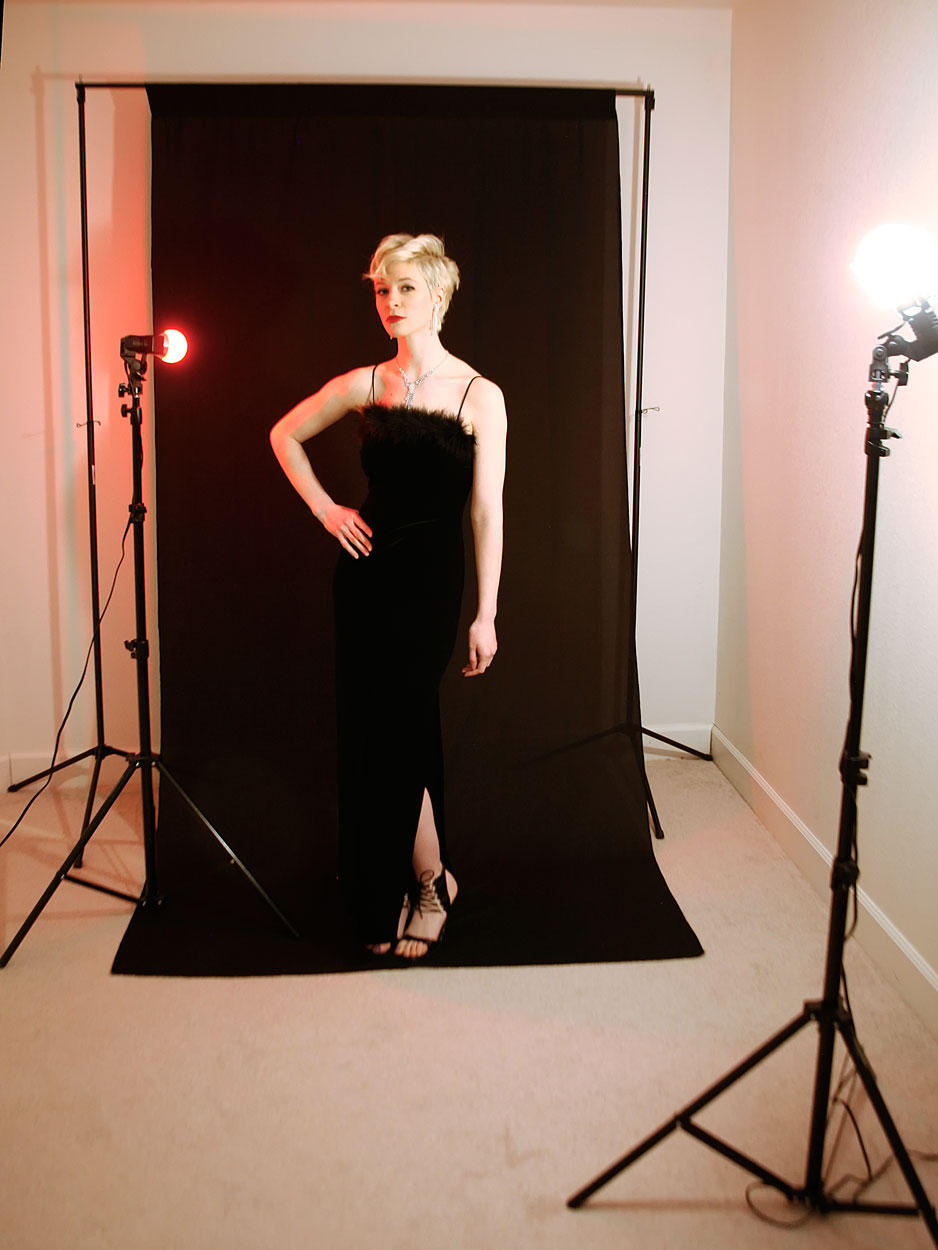 A talented Colorado photographer I knew used to to toss around an expression that “Light is light.” and it’s one that’s stuck with me over the years. He believed that it didn’t matter what kind of light source you used to make a portrait as long as the quantity of that light was sufficient.
I’ve always believed that light has four main characteristics: Direction, quantity, quality and color and felt that quality was the most important aspect. But…I can’t deny that while you can always pump up a camera’s ISO setting to astronomical levels–something that Barry Staver and I talk about in a recent podcast--you really need enough light to make a portrait.
Why Not Use a Light bulb?
First a question: How much light output is a LED light bulb produce? I screwed a 9W (60 Watt-equivalent) Philips LED light bulb into the inexpensive ($44.95) Gary Fong’s Lightbulb Adapter kit, measured ten feet and took an incident meter reading with my Gossen Luna-Star F2 meter set at ISO 400. The resultant exposure reading was 1/15 sec with an aperture between f/1.4 and f/2. So it was obvious that if you’re going to make a portrait with a light bulb (or two) you’re going to have to use faster lenses, kick up the ISO and move the light closer to the subject.
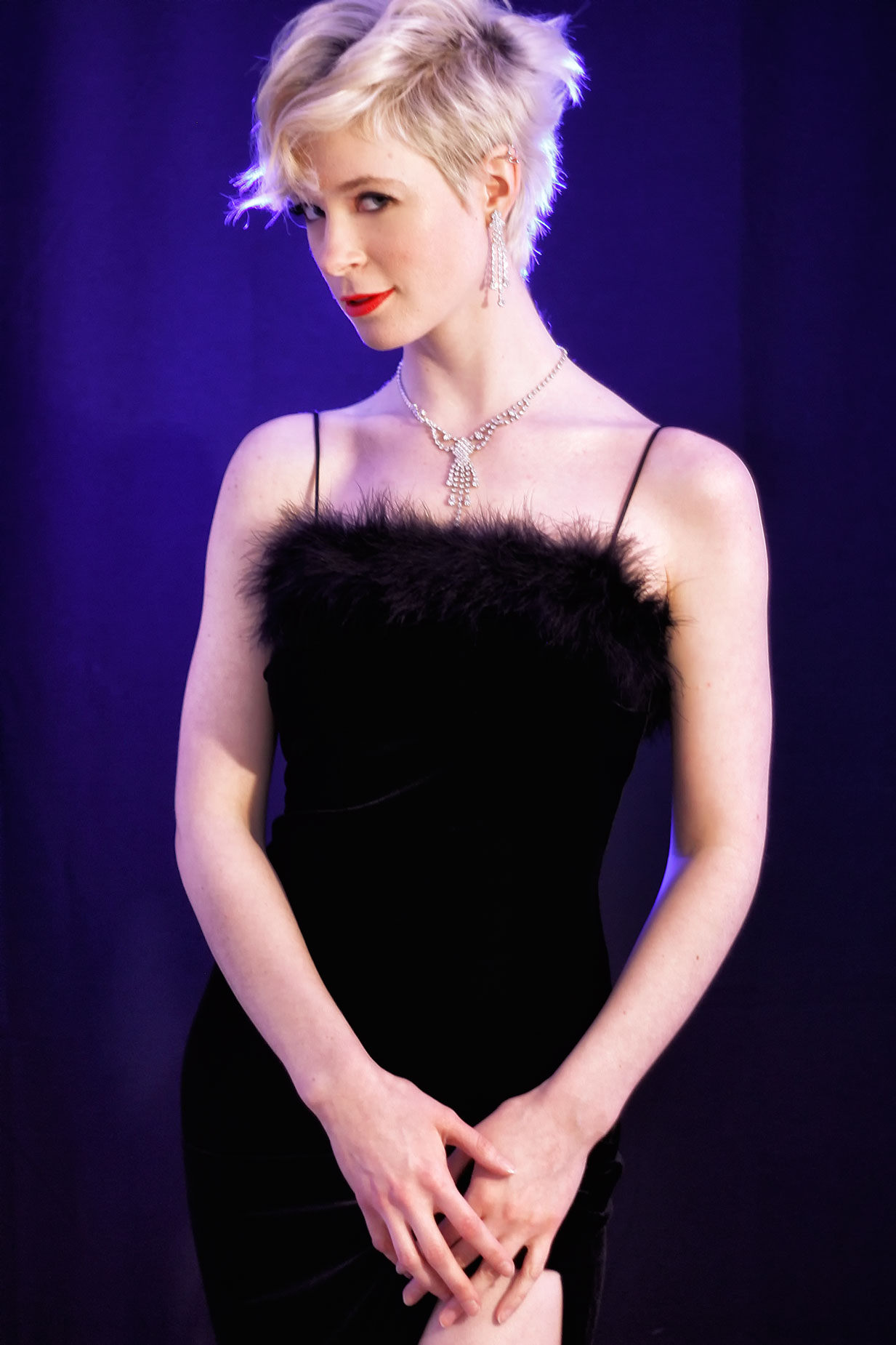 Even doing all three of those things I found myself shooting near wide open when using two different f/1.8 lenses ultimately increasing the ISO to 800. When shooting with cameras that have better high ISO performance, you should be able to exceed that but you might want to do a few tests to find the maximum amount of digital noise you’re willing to tolerate before photographing anything important.
Setting up the Lightbulb Adapter Kit is as simple as screwing in a light bulb and you can use it that way. LED light bulb are supposed to produce “true-to-life skin tones” but images made with a Canon EOS 60D set in AWB mode produced somewhat warmer tones than that. Your camera and another setting might be different so as always make time for testing. I looked at the light source through a spectroscope and saw that while the color spectrum of the bulb was indeed smooth, with no gaps, but it was more compressed than other true LED portrait lighting sources that I’ve tested.
How I Made this Portrait: For this portrait of the amazing Pam Simpson, I added a second Gary Fong Lightbulb Adapter Kit fitted with an adjustable color LED light bulb from Home Depot. It created a dramatic look that if I didn’t know was created with two light bulbs, wouldn’t believe it from looking at the image. The camera used was a Canon EOS 60D with my go-to portrait lens (for DSLRs) the EF 85mm f/1.8 USM lens with an Program Mode exposure of 1/25 sec at f/1.8 and ISO 800 with a minus two-thirds stop exposure compensation. The image might not be as sharp as I would have liked but it is “serviceable.” An image stabilized body or lens would have been a help with that.
Tips: The brightness of LED light is different than tungsten or incandescent lighting. When shopping for LED light bulbs you can’t use the traditional Watt ratings as an indication of how bright a bulb will be. For incandescent bulbs there is, more or less, a correlation between the amount of Watts and brightness but that’s not true for LEDs. An LED bulb that is as bright as a 60W incandescent is typically between 8 to 12 watts, which is why I used a 9 Watt bulb with this portrait.
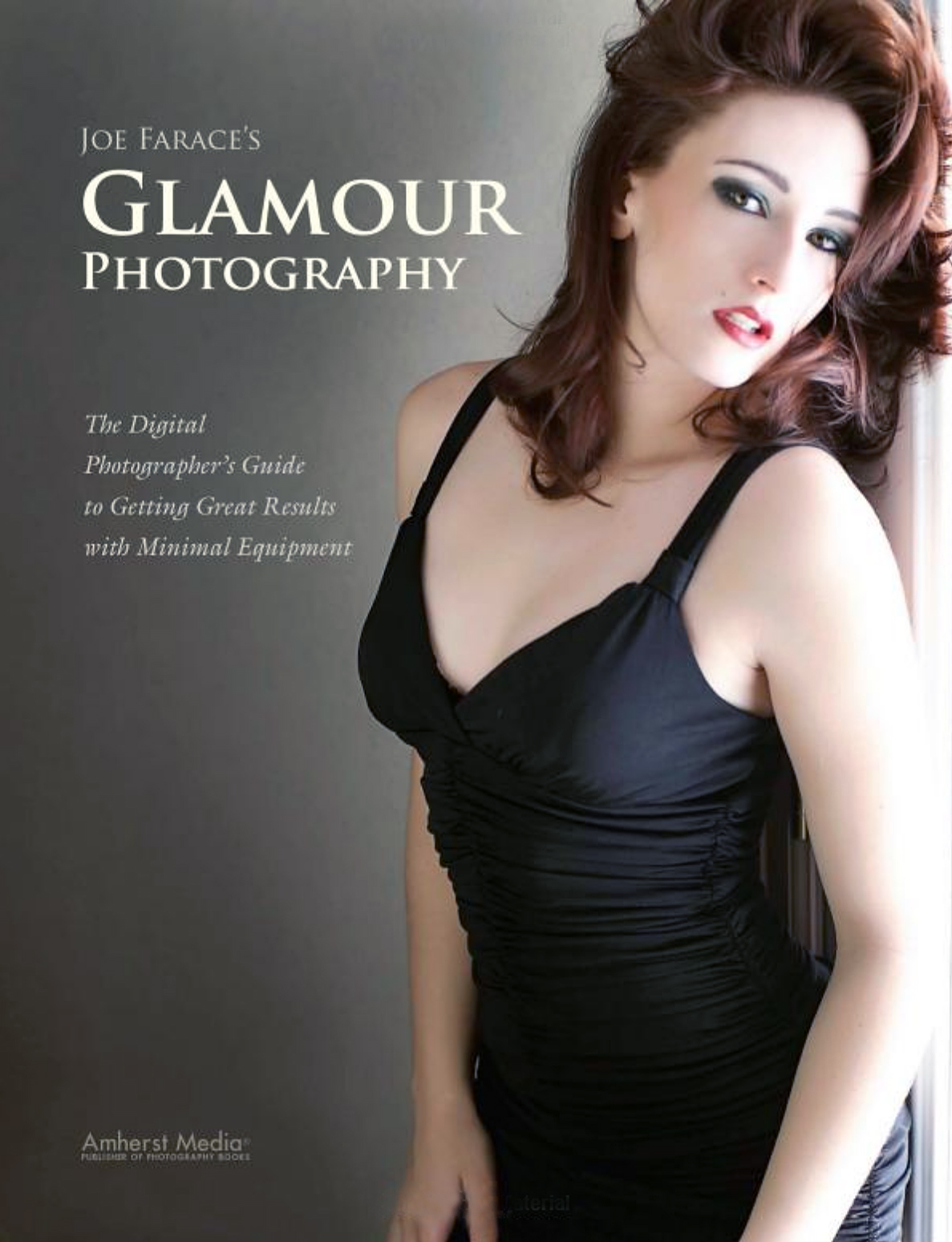
My book Joe Farace’s Glamour Photography is full of tips, tools and techniques for glamour and boudoir photography and includes information on all of the cameras used as well as the complete exposure data for each image. New copies are available from Amazon for $45.08. with used copies selling for around thirty-eight bucks as I write this. The Kindle version is $19.99 for those preferring a digital format.