
Today’s Post by Joe Farace
“when you take a photograph of someone, you take a portrait of their soul”
—
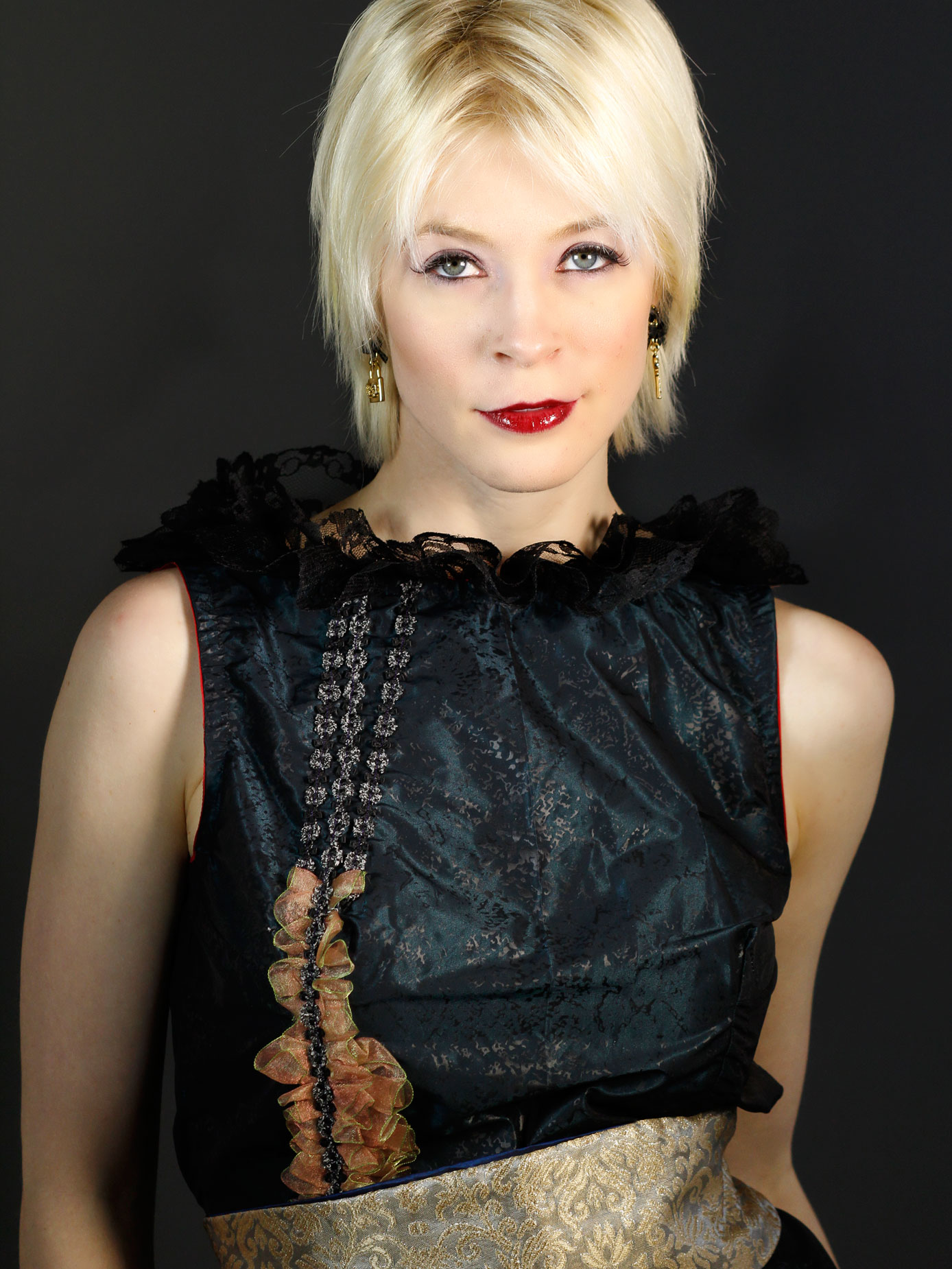
 Throughout the business of photography, headshots seem to be all the rage these days and there are as many ways to light a head shot as there are to illuminate a traditional portrait. This includes traditional studio flash systems or using an LED lighting system as I did with this headshot of Pam Simpson..
Making a Headshot with LEDs
Every time I tell a photographer that I’m shooting portraits in my home studio using LED lighting they usually tell me, “I hear there’s all kinds of color balance problems with these kinds of lights.” I hate to be the one to break it to you but there are color variations in every kind of light source—even daylight. At noon the light from the sun measures 5500 degrees K but on an overcast day the color temperature rises to 6700 degrees K. In open shade, you might encounter 9000 degrees Kelvin.
One of Farace’s Laws is that no light source is perfect and that applies to LED lighting gear too. That’s because not all the LED components that manufacturers use to make these lights are identical. It’s all about the pros and cons: On one hand LED lights have the advantage of offering continuous lighting and produce “what you see is what you get” lighting but that’s not without some downsides, for example:
 Some LEDs themselves have narrow angles of coverage along with problems, such as Pulse Width Modulation that works by rapidly switching power on and off, with the ratio of “on” time determining the average power delivered. This, in turn, can cause flickering giving the appearance of producing continuous light when in fact it’s not. Back when I was testing lighting systems for the print edition of Shutterbug I found the number of actual LEDs that were illuminated at the same time on a given lighting system could vary causing variations in exposure. You can see some examples of this here.
Then there is the question of what is the actual spectrum of light being produced. Top it all with the fact that some/most of the LED lighting systems I’ve tested are not all that bright. Although your eyes automatically adjust for missing color bands or spikes, your camera cannot and this difference results in time spent in Photoshop (or whatever) trying to get the color “right.”
I’ve found one way to measure the quality of LED lighting is by using a device like the Rotolight Spectroscope. It’s useful for evaluating lighting quality because it lets me visually inspect a light source’s spectrum and be able see peaks of intensity along with any missing color bands. Similar devices, called Diffraction Grating Spectroscope, are used by rock and mineral collectors and you can find them on eBay for about $40, sometimes less.
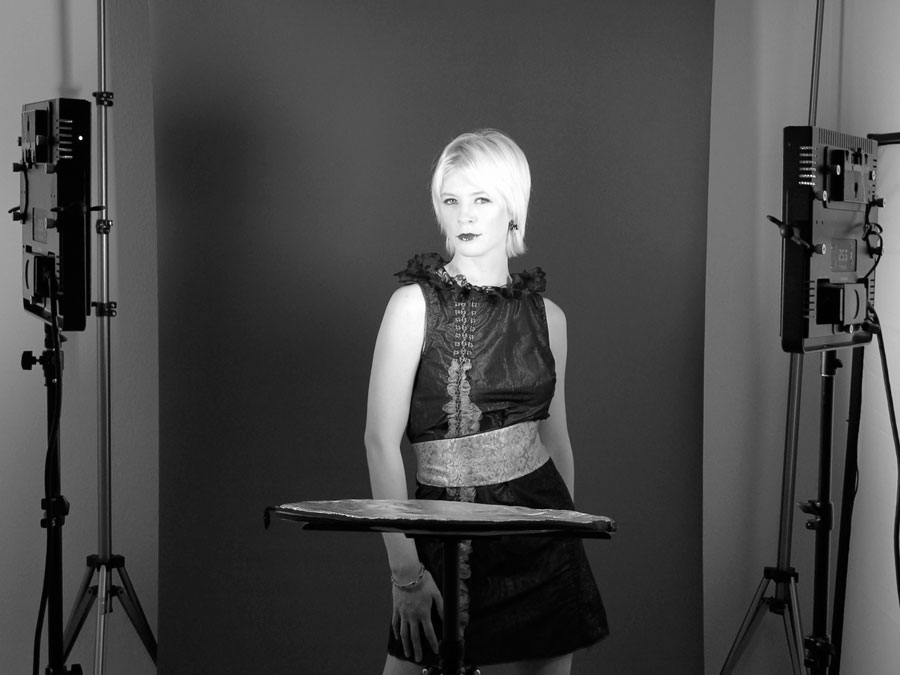
How I made this portrait: My lighting set-up shown above is a loosely constructed version of a headshot booth where, in this case, one LED light panel is placed at camera right and another is at camera left. A 22-inch reflector was placed on a Savage Tech Table to kick light under the subject’s chin. This lighting setup is perfect to create a cover girl look and the LED lights allow you see Pam Simpson’s lovely aqua eyes better than most electronic flash setups.
The background used is a 5×7-foot Savage Infinity photo grey vinyl that’s hanging on JTL background stands but because of the way the lights were aimed and the LED’s 40-degree coverage, the gray background photographed almost black. To make this headshot I used a Canon EOS 60D with an EF 85mm f/1.8 lens along with an exposure of 1/320 sec at f.4.5 and ISO 640 with a plus two-third stop exposure compensation, that might have been one-third stop too many or maybe not.
 If you enjoyed today’s blog post and would like to treat me to a cup of Earl Grey tea ($2.50), please click here. And if you do, thanks so much.
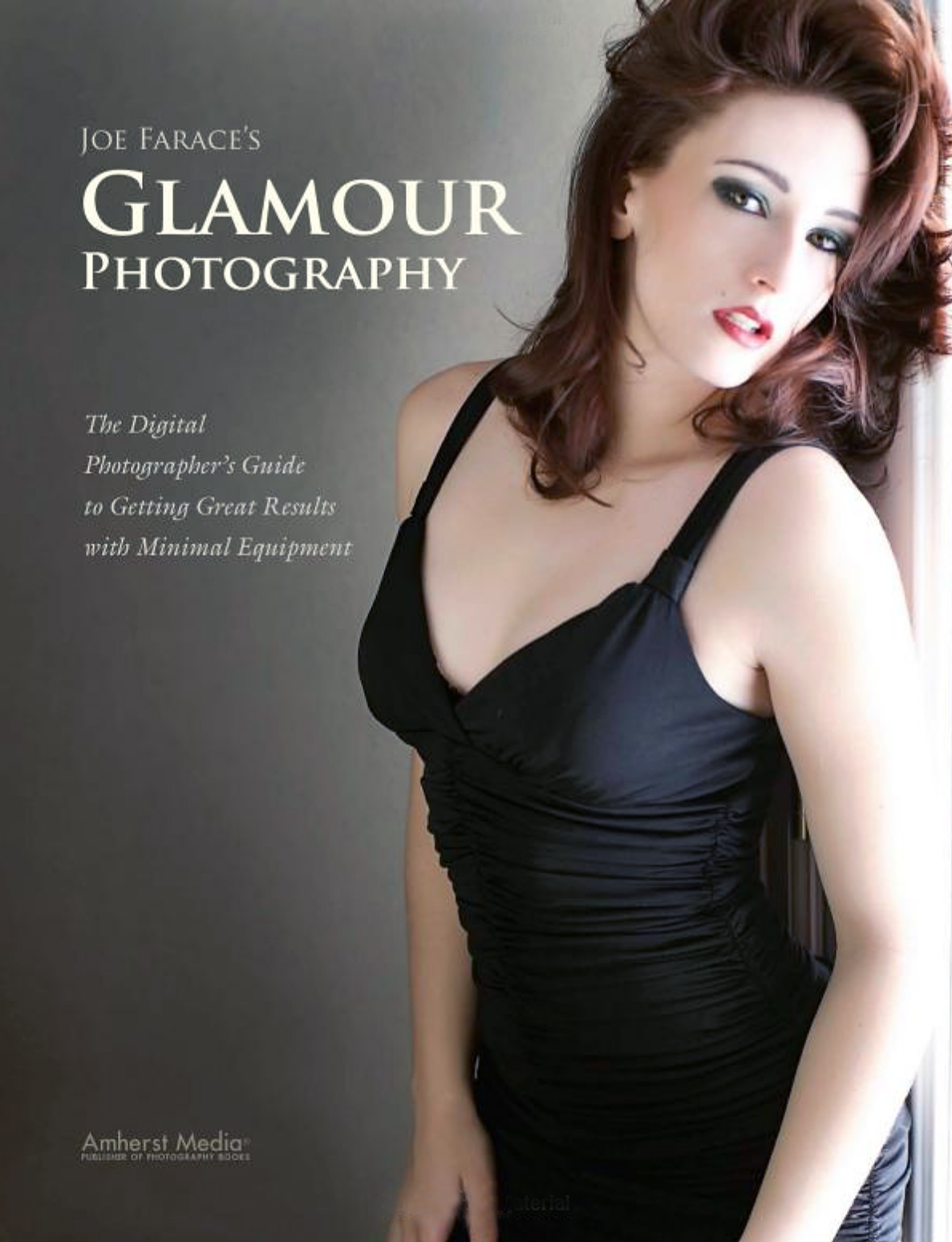
My book Joe Farace’s Glamour Photography is full of tips, tools and techniques for glamour and boudoir photography and includes information on all of the cameras used as well as the complete exposure data for each image. New copies are available for $34.80 with used books starting around thirteen bucks.as I write this. The Kindle version is $19.99 for those preferring a digital f