
Today’s Sunday Available Light Portraiture post is about infrared portraiture, a genre not typically discussed or explored. To be fair, one of the earliest uses of digital infrared portraits were made by wedding photographers but from what I can tell, this is not longer “a thing.” But I’m the kinda guy who keeps trying…hence today’s post.
Today’s Post by Joe Farace
When you photograph people in color, you photograph their clothes. But when you photograph people in black and white, you photograph their souls!”—Ted Grant…
…not that today’s portrait subject, Erin Valakari aka Vala the Artist, is wearing all that much in the way of clothes. But I digress..,
 When I first became involved in digital infrared photography, making portraits was not a typical use of this technology. Yet, one of the earliest non-landscape applications of IR photography was in wedding photographers who wanted to create images for their client’s albums that had a unique look. You can see some beautiful examples of this by creative photographers in my book, The Complete Guide to Digital Infrared Photography .
Portraits in Infrared
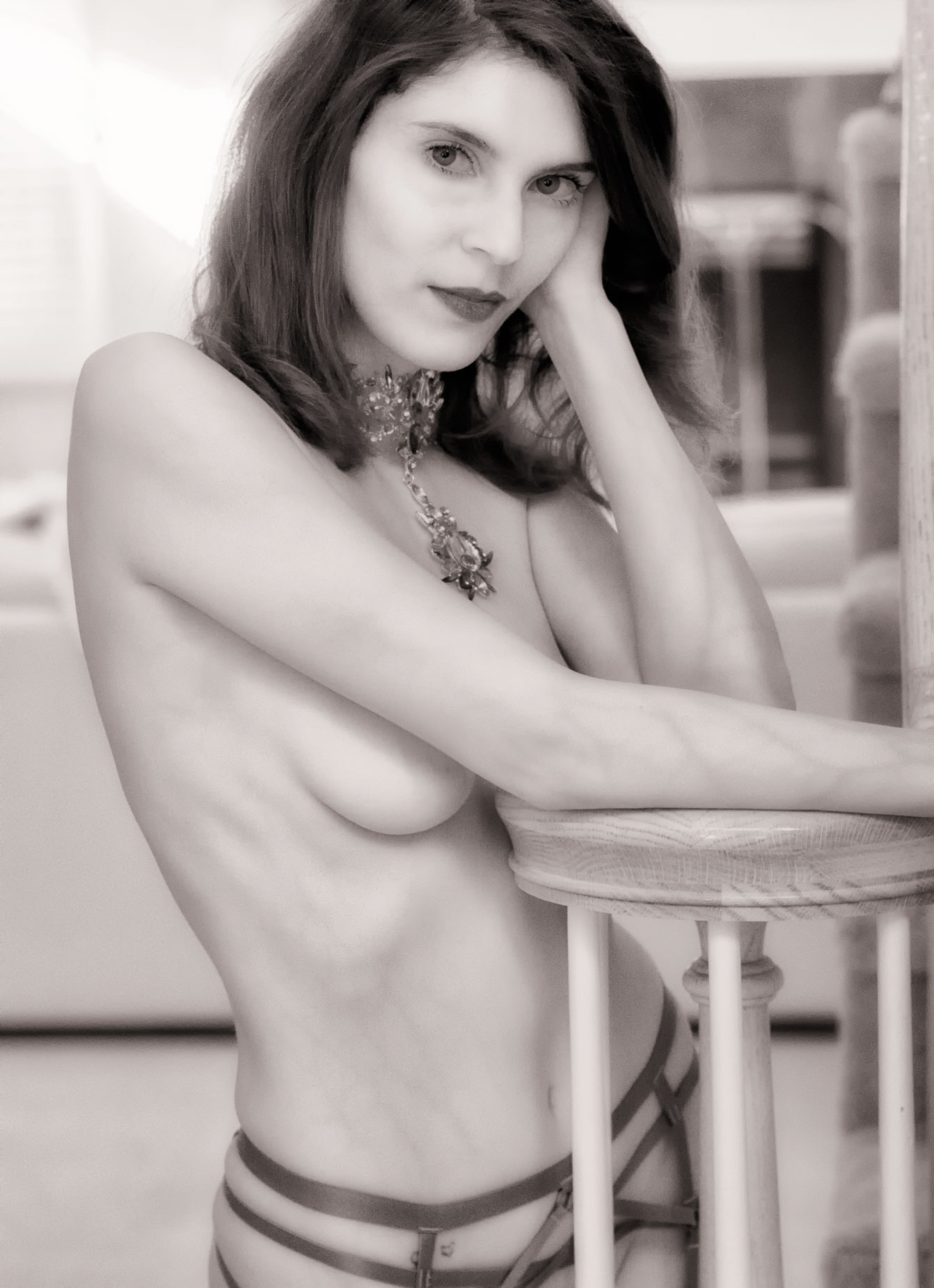 My initial hesitancy about making infrared portraits was, along with some of my IR-shooting friends, I’d been told by “experts” that we should not photograph people using infrared techniques. This appears to still be a widely held opinion. All of the images I made of my former muse that were part of an assigned article I wrote for a magazine aimed at professional photographers were rejected by its editor because she thought the subject “looked like a vampire.” Maybe she wasn’t a fan of the Twilight movies…
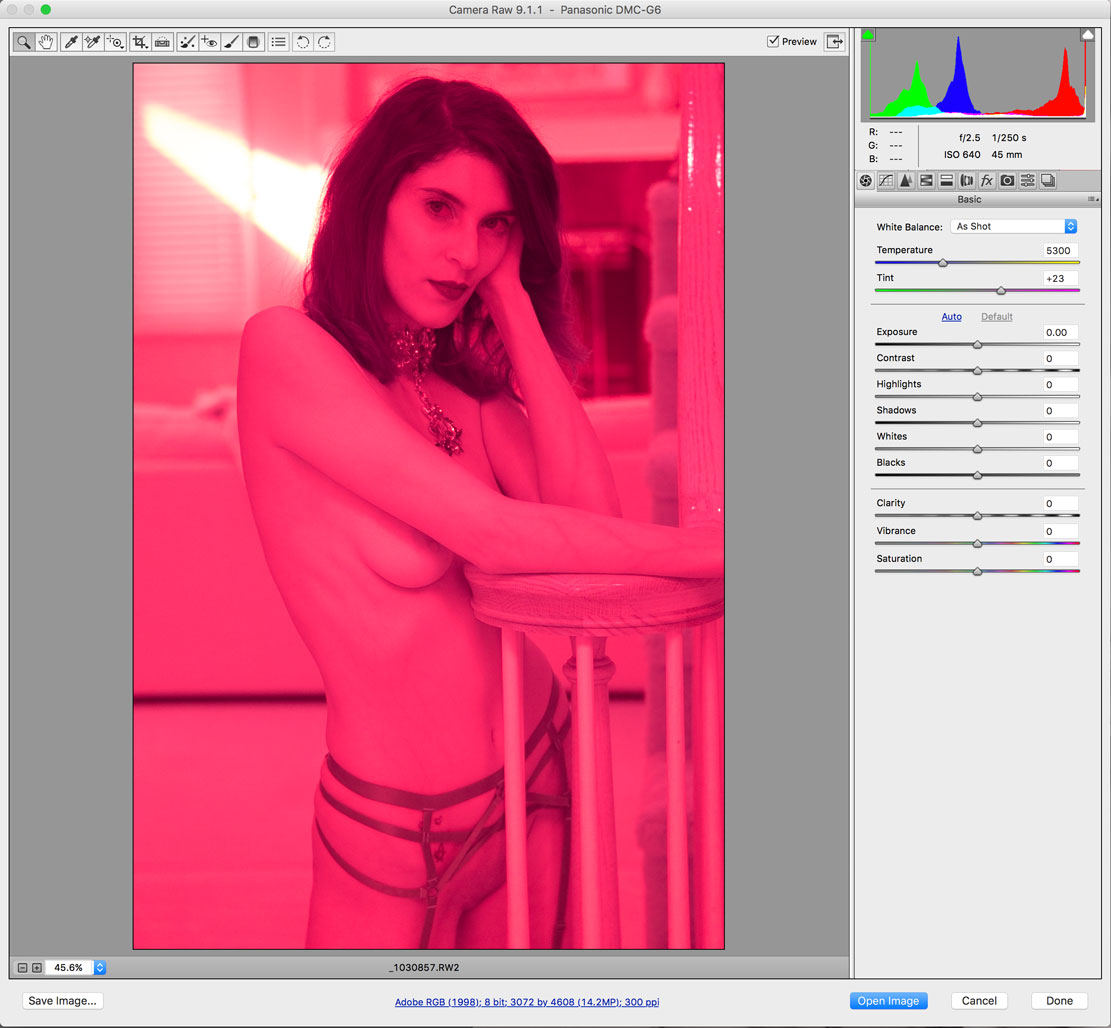
How I made the image: The original image I made of Vala the Artist was made in the foyer of my Daisy Hill home and was captured as a RAW file. You can see the original file (above right) in Adobe Camera Raw. Light was coming from from South-facing windows located in the second floor of the house and two North-facing windows that are behind her. The camera used was a 16-megapixel Panasonic Lumix G6 that was converted to infrared capture by Life Pixel with their Enhanced IR conversion (665nm.) The lens was an Olympus M. 45mm f/1.8 with an Aperture Preferred exposure of 1/250 sec at f/2.5 and ISO 640 and a one-thirds stop exposure compensation.
The image was processed using a monochrome Photoshop action that Life Pixel, at one-time, provided with their camera conversions. I didn’t like the action-processed image’s overall color so I layered on a Platinum tone from PhotoKit before refining and tweaking the image further with Vivenza to produce the final image seen here.
You can see another image of Erin from this session that was processed differently than this image along with some of my other thoughts on this genre in my post Creating Infrared Glamour Photographs, although there is some overlap with this post.
 I’ve found that Life Pixel does a great job with IR conversions and they’ve done some of the conversions for my Canon DSLRs and all of my Panasonic Lumix G-series cameras. This is not a paid or sponsored endorsement, just my experience.
New copies of my book, The Complete Guide to Digital Infrared Photography are available from Amazon for $44.59 with used copies starting around thirty bucks as I write this. My book Creative Digital Monochrome Effects has a chapter on IR photography and is available new from Amazon for $11.46 with used copies starting around nine bucks as I write this.