
Today’s Post by Joe Farace
What you see is filtered through your beliefs. You rarely see “reality.” You see your version of it.–Joe Vitale
A few years ago I attended a hot rod show planning to make some photographs for this blog’s #wheelswednesday posts. The big surprise for me was that sometime during that day I scratched the front element of my Canon EF 10-22mm f/3.5–4.5 USM EF-S lens. This wasn’t the first time I’ve done something that stupid but I hoped it will be the last.
When it comes to caring for equipment, there are, at least, two different kinds of photographers. The first group are photographic Oscar Madisons whose idea of cleaning their gear is to lick a lens and wipe it off with a pulled-out shirttail. The opposite extreme is Felix Unger, whose equipment looks as if they never use it. Trivia: Felix Unger was a professional photographer in The Odd Couple movie and TV series. When it comes to caring for my photo equipment, I’ll confess to having more than a few Felix Unger-like impulses but the older I get they seem to be fading.

How I Made this Photograph: I made this photograph of a classic Plymouth—love the color—at a car show that was held at Pikes Peak International Raceway in Fountain, Colorado. The camera used was a Canon EOS-1D Mark II with a EF 28-105mm 3.5-4.5 II lens at 105mm. The exposure was 1/25- sec at f/10 and ISO 100.
A Filter Controversy
Here are a few suggestions I think will save you the cost of an expensive repair or, worse yet, replacement of one of your favorite lenses. In doing research for this post, all the camera repair technicians I spoke with recommended attaching a UV or Skylight filter to the front of your lenses but I know some photographers disagree with this practice. They feel that any filter, no matter what its quality, degrades optical performance and can change focus.
By sad experience, I’ve found that a Haze or Skylight 1A filter provides an effective ounce of prevention, especially in photographic situations that include blowing dirt or sand, saltwater spray, or at events, like car shows, that are crowded with masses of humanity. It seems obvious that you want to use a good quality filter but one repair person told me he is constantly amazed to see a poor quality filter attached to an expensive lens.
High quality filters are available from B+W, Heliopan, and some cameras companies offer filters in various sizes. One option to using Haze or Skylight filters is Tiffen’s Clear and Ultra Clear filters that are made from clear optical glass, with the Ultra models using Water White glass construction, This glass is optically pure and maintains consistent light transmission and clarity. Water White glass filters transmit 98% of light and are typically anti-glare and anti-reflective coated.
Keeping Your Filters Clean
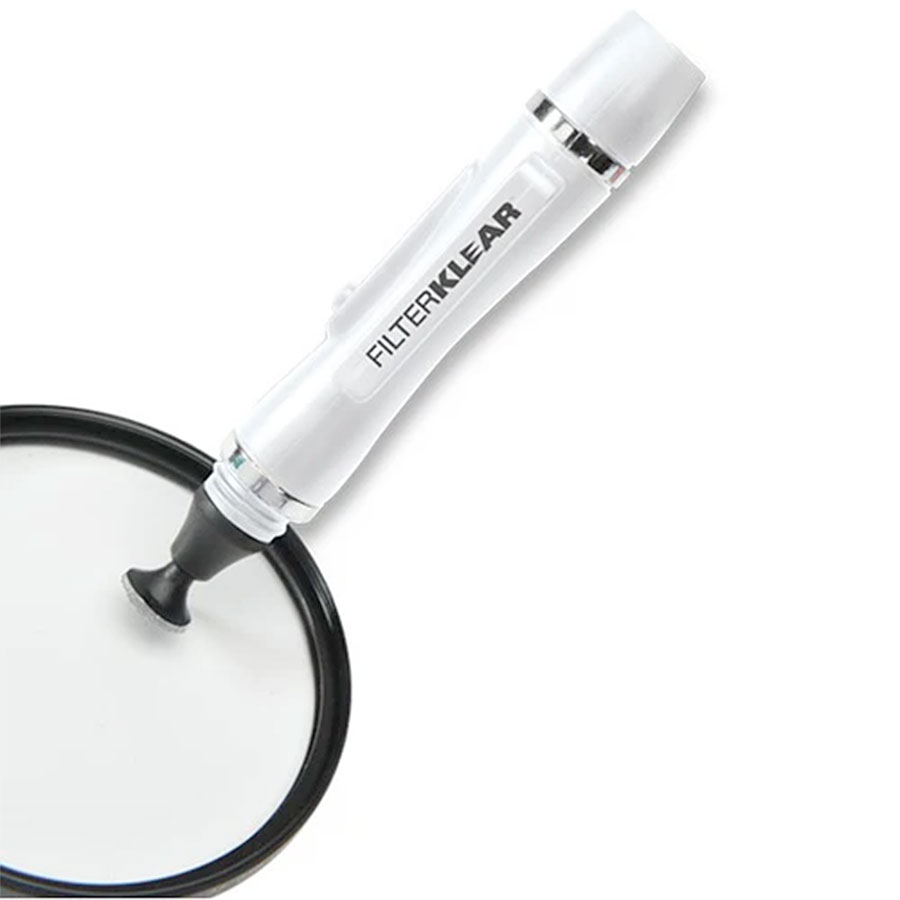 Whether you’re shooting with a DSLR or mirrorless camera, a FilterKlear from LensPen can be a indispensable accessory for anyone using any kind of filter on their lenses.
FilterKlear is specifically designed to clean camera filters and has a built-in. retractable natural hair brush, that is your first step in removing dust from a filter. Next, use its tip that has a special non-liquid cleaning element to finish the cleaning process.
- FilterKlear measures 4.3-inches (11cm) long and has a round cleaning tip that measures 12mm in diameter allowing this useful tool to easily fit in a pocket or camera bag.
- Its cleaning tip is completely flat and has been designed to match the shape and surface of a filter
- The tip is covered with a special Invisible carbon compound that removes fingerprint oils. This Invisible carbon compound is found in all LensPen products and has been formulated to eliminate fingerprint oils and smudges that somehow find their way onto your lenses, filters, eyepieces and screens.
Best of all a FilterKlear only costs $12.95, so you can afford to put one of them in each of your camera bags. It also makes a perfect gift for your favorite photographer or yourself!
LensPen is a long-time sponsor of my sites and blogs but I was using their products long before I even had a blog. My wife bought me my first LensPen in 1994 just after I acquired a brand-new Nikon N90s film-based SLR! I would like to thank LensPen for their continued support