
It’s my sister’s—known as “Sis” to one and all. Including her husband of 60 years—birthday! And, if you love chocolate, July 3’d is also National Chocolate Wafer Day encouraging you to indulge in a delicately sweet cookie.
Today’s Post by Joe Farace
National Anti-Boredom Month is celebrated during July to encourage everyone to find out what makes us bored and, at the same time, discover ways to fight against it. Most people associate becoming bored with having nothing to do, but that’s not always the case. Many times, we have plenty to do and may even be doing it, but the task at hand does not stimulate our minds. When this happens, we can become irritable, tired and not caring about how well we do a task—including photography.
My philosophy of work is that “I do all of the hard things first. You can read about my ideas on this subject in a Business Sunday post My Basic Philosophy About Work
One morning I was having breakfast with friends when one of them, an accomplished photographer who had done shoots for Playboy, said something about ideas he gets from his mood wall. “What’s a mood wall,” I asked and he says it’s a board that contains images, text or objects that are built around a single topic. When I mentioned this to my wife, she told me that most of her clients—architects and interior designers—have mood walls where they post clippings and photos of concepts that intrigue them and inspire them to try something new. From time to time, I think photographers need the same kind of inspiration, so I decided to make a digital mood wall.
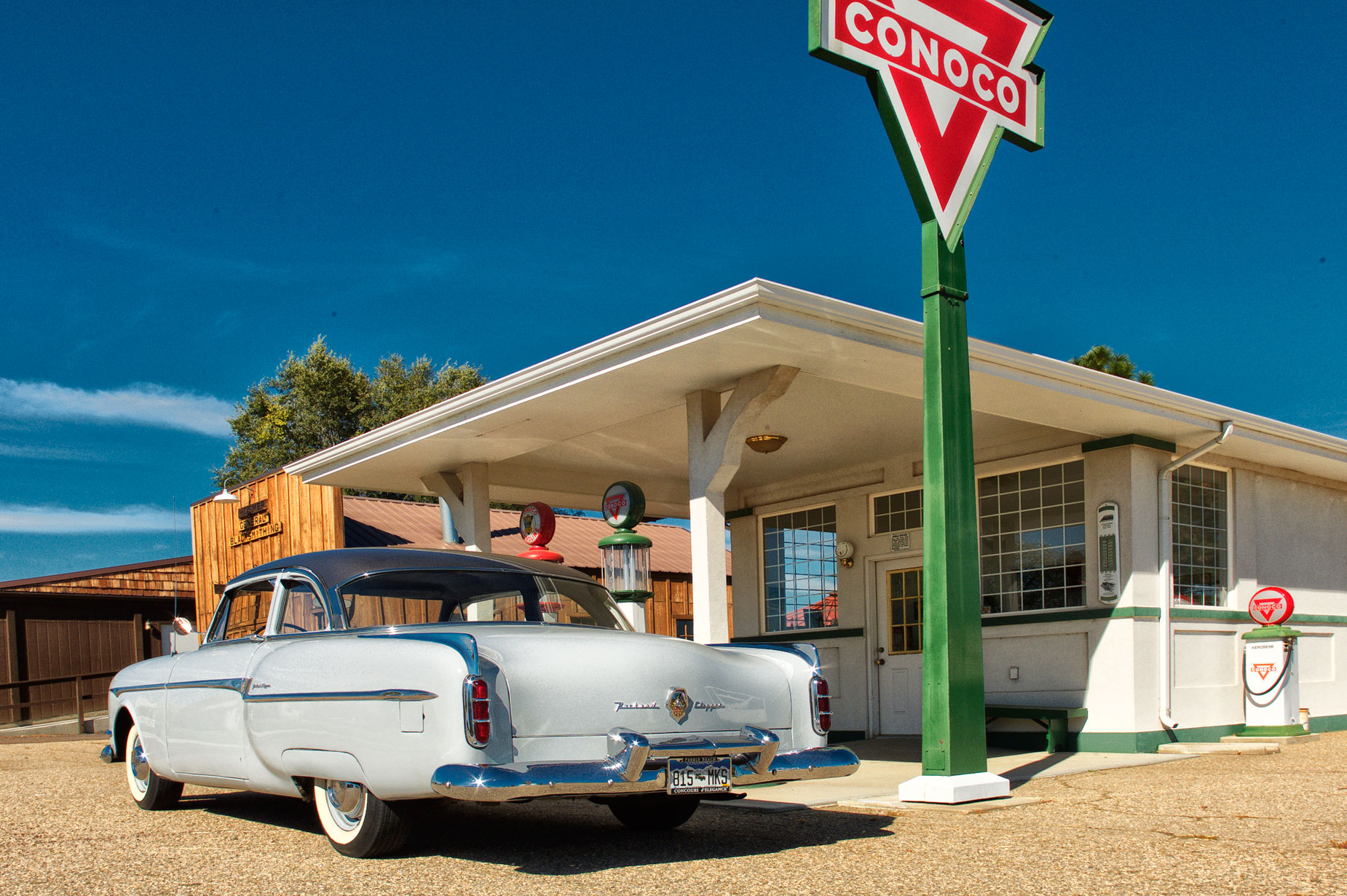
How I made the above photograph: Like the little girl with a curl, the combination of the Leica R9—I miss that camera—with Leica’s Digital Module R is good is very, very good. This image of my 1953 Packard Clipper Club Sedan—now in an Arizona museum— was made at the Adams County Historical Society. The exposure in Aperture Priority mode was 1/250 sec at F/13 at ISO 200. The lens used was the spectacular Vario-Elmar-R 21-35mm f/3.5-4.0.
The Mood Wall
I really wanted to make was a physical wall in my home studio where I could post 4×6-inch prints but that idea awaits completion while. the room is, as I have mentioned, being repurposed. That doesn’t mean I don’t need a Mood Wall. In fact, it probably shows that I need one more than ever. So I’m collecting images in a “Mood Wall” folder on my iMac’s hard drive that’s periodically reviewed and updated to eliminate those “what was I thinking” images and then is downloaded onto my iPad. In the meantime, the images I’ve collected get used for two purposes:
- The first was for a search for backgrounds, sets or just locations I could use to create portraits when getting out of the rut of shooting with the same backdrops that I’ve used for years.
- The second was as a posing guide, especially useful when working with new models who may not have refined their skills. I wanted to be able to show them a pose from the mood wall to inspire them. For my take on model posing skills, please check out my post Photographing Different Kinds of Portrait Subjects.
- Style. This includes clothing and make-up that bring a different—from my usual fare—vibe to creating some new images that, you guessed it, will keep me from getting into a rut.
Please note that this is not about copying other photographers work. The one thing I’ve noticed in every photography workshop I’ve taught is that students, even when using the same cameras and lenses, never create the exact same images, even when shooting side–by-side. It’s all about each photographer’s unique vision. You can see what I mean in my post What You See is Not Always What You Get.
As I see it, the images on a mood wall are designed to inspire and provide a jumping off point for your interpretation of an idea you may have found…somewhere. Give a real or virtual mood wall a try, you’ll be glad you did.
If you enjoyed today’s blog post and would like to treat Joe to a cup of Earl Grey tea ($2.75), click here. And if you do, many thanks.