
Today’s Post by Joe Farace
Reading is the sole means by which we slip, involuntarily, often helplessly, into another’s skin, another’s voice, another’s soul. – Joyce Carol Oates
Studies have shown that the majority of mystery book purchasers are women. Another report from Marketing Charts indicates that female fiction readers tend to consume mystery/thriller/crime books at a higher rate than male readers (57% vs. 39%.)
One study by the Seattle Times found that women account for 64% of all book purchases, including detective and thriller stories. Although I do wonder how it affects statistics that almost every book Mary buys, it’s almost always for me. She occasional buys (healthy) cook books and self-help books but in microscopic numbers with the key word being “occasional.” So why am I bringing up this disparity?
Reading Books with Female Protagonists
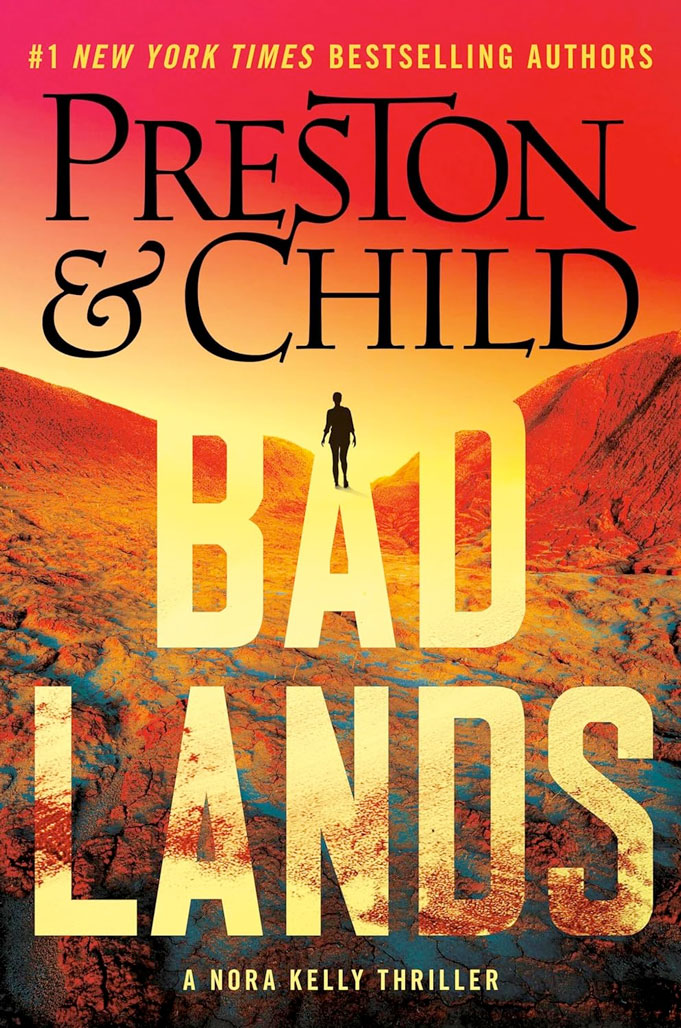 All of the last four mystery novels that I’ve read had female protagonists. I enjoyed all but one of them; I won’t mention the one I gave up on after five pages. Instead, let’s look at the good ones: Preston & Child’s Bad Lands is a thriller that features series protagonist Nora Kelly, an archeologist, who, along with FBI agent Corrie Swanson investigate the kind of twisted, sort-of supernatural crimes and situations that seem to fascinate the authors.
Bad Lands (or Badlands, I’ve seen it both ways) is a great read and reminded me, at times, of the work of the late Tony Hillerman and briefly features a tribal policeman who deserves his own series. Other times, some of its elements recall the 1995 film Last of the Dogmen, where a Montana bounty hunter and an anthropologist discover a tribe of Native Americans living isolated from the rest of the world.
This book revolves around a cult that might be responsible for the suicides—this seems to be a theme this month—of female cult members who are tied to an obscure tribe of Native American artifacts. That’s an oversimplification of the plot but the interaction of the these elements triggers the protagonist’s search for answers, making for fascinating reading. While the book’s ending might be a bit over dramatic, it is absolutely in keeping with the style that Preston & Child use with their Pendergast series that often have a James Bond style of finale. Bad Lands ends is more subdued fashion, there’s no ninjas rappelling down into the inside of a volcano, but is still kind of fun in a 70’s action movie, popcorn-munching way.
Review: The Mystery of the Crooked Man
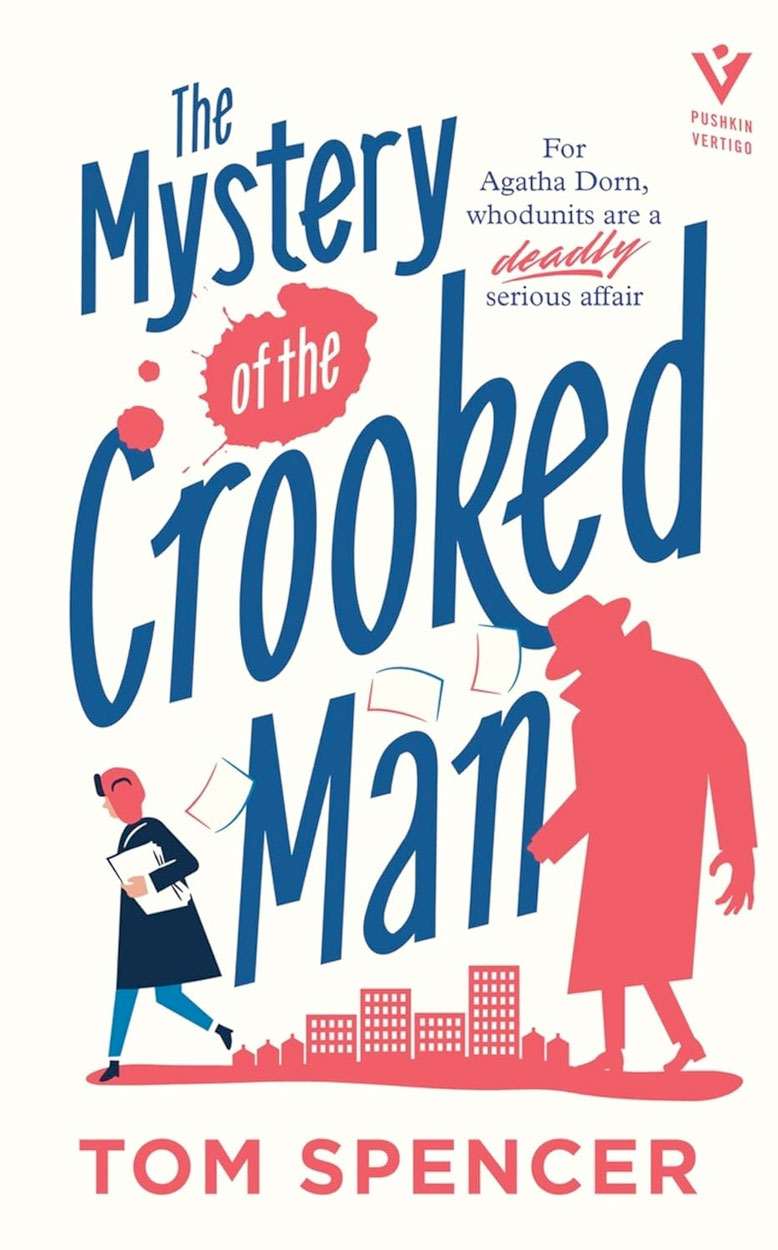 Let’s talk about a genre bending, no it does more than that, it’s a genre exploding book called The Mystery of the Crooked Man by Tom Spencer. I’ve often said that authors seem to fall into two categories: There are great writers whose prose itself it’s a joy to read and there are great storytellers who weave a tale that grabs you by the throat from the first sentence. Few if any writers, I’ve come across combine both of these elements but Tom Spencer does that with multiple exclamation points!!!
This is a Must Have book for fans of the Cozy mystery style but it also takes that genre in new, twisted directions that something like the late Douglas Adams might have conjured up.
Like the last four books I’ve read, this one features a female protagonist but unlike the other three, its male author writes it in the first person. The writer is English, the story is set in and around London but the author lives in Alabama. (I can’t image the culture shock that must be going on for him.)
The protagonist in this case is one Agatha Dorn, an archivist at some kind of library or literary repository. The author describes her as grumpy but I see her more as misanthropic, hilariously so and maybe just a little bit of a booze hound too. Initially you may wonder why you’re so interested in this obviously unpleasant and unsympathetic person but you quickly fall in love with Agatha and all of her quirks, oh and does she have some.
As part of her job as archivist, Agatha discovers a long lost book that was part of a donation to the archive and it appears to have been written by a beloved, now deceased female mystery writer. She gets the book published, bringing her fame and fortune only to discover that it’s a fake. Along the way there are a pair of suicides that may or may not be suicides, one by Agatha’s former lover and the other by the wife of the man who donated the material that produced the brouhaha around the fake book. The events are triggered when Agatha discovers that her friend was not a suicide but was murdered and she begins a search for the person who killed her.
Throughout the book Spencer makes numerous, seemingly UK language and cultural references, most of which I didn’t get but I’m guessing readers in Britain will. Then there’s the author’s use of words that might be unfamiliar to US readers. Rather than researching what certain words meant—it slowed the pace of the book for me—I just read through the words hoping it would make some sense during a second reading. (Which is why I’m glad Mary bought the book, instead of having it be a library book that had to be returned.) Every now and then, Spencer dives a little bit too deeply into lexicology by tossing out, what to me, are obscure words. Take oleaginous, for example. One of it’s meanings is obsequious, FWIW.I did look than one up.
It might be easy to compare this book to Marble Hall Murders by Anthony Horowitz, which also has a female protagonist in a literary setting (see my review) working (in that case with a “continuation” book) but you would be wrong since only snippets of the forged book show up in the text and there are many, many other differences. It’s also worth noting that almost all the characters in the book are female, which may be because of the large number of women who are actually working in the publishing industry…or not.
In its offbeat way, The Mystery of the Crooked Man is delightful and as I was closing in on the ending, I was starting to feel sad. Why? I enjoyed living in Agatha’s world and hanging out with her, so much so that I didn’t want it to end. I’ve had that same feeling with several movies but only one other book, Steven King’s 11/22/63—and that book is 880 pages long. The Mystery of the Crooked Man is only 321 pages. Pick up a paperback of this book at Barnes & Noble when you go there for their Criterion Collection movie sale. As Mr. Monk always says, you’ll thank me later.
Postscript: Not a Spoiler. The crooked man mentioned in the title of The Crooked Man has as much to do with this book’s story line as The Thin Man has to do with Dashiell Hammett’s book of that name.