
Today’s Post by Joe Farace
He rode through the woods on a big blue ox,
He had fists as hard as choppin’ blocks,
Five hundred pounds and nine feet tall…that’s Paul.—Shel Silverstein
On June 28, we remember the tales of the big blue ox and a mighty lumberjack of unusual skills. It’s National Paul Bunyan Day! Paul Bunyan is one of the most famous North American folklore heroes. The character originated in the oral tradition of North American loggers and was popularized by writer William B. Laughead (1882–1958) in a 1916 promotional pamphlet for the Red River Lumber Company. When I was a kid, I was fascinated by tales of Paul Bunyan but until today hadn’t thought about the big guy that much. Thanks for the reminder. So let’s talk about books…
Another Category of Books…
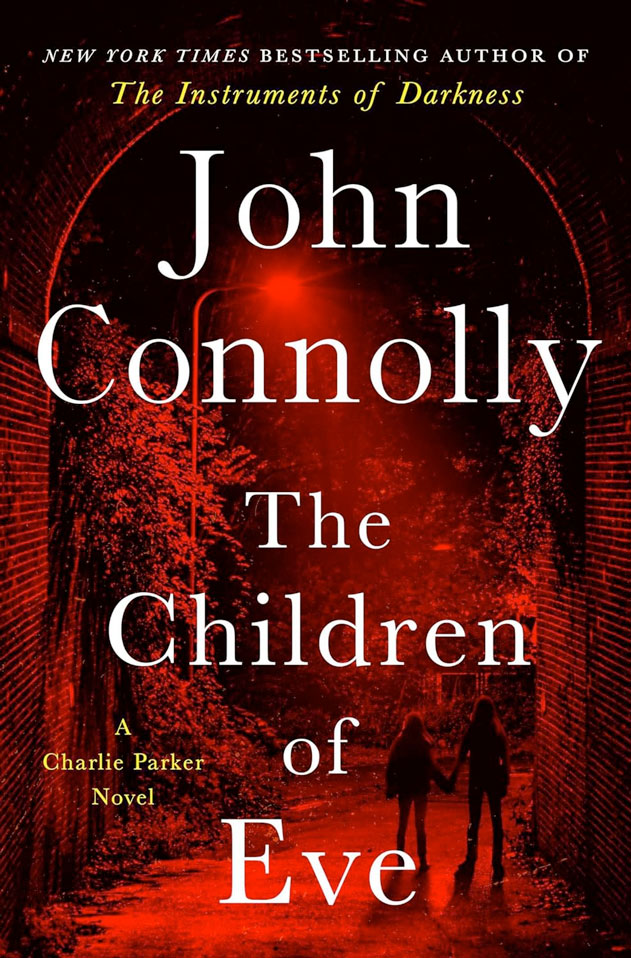 In the last book club, I talked about a book I didn’t enjoy. Well it tuns our that I had several of these kinds of disappointing books in a row where I didn’t make it past either John Grisham’s 100 page limit or Stephen King’s 50 page rule. Heck, I ditched one at four pages! Then I picked up John Connolly’s—not Michael Connelly—new book The Children of Eve hoping to break this run of uninteresting books. I’ve always thought of Connolly as writing books that combined mystery with gothic horror. Sort of like Robert B. Parker meets Stephen King. In other words Spenser meets some ghosts. Connolly’s hero Charlie Parker even has a black assassin sidekick called, not Hawk, but Louis.
I loved all of Connolly’s early books in this series but as the series progressed, poor Charlie gets battered and bruised by his encounters with the occult. It seemed to me that the author himself got battered as well and the books became less and less involving for me. One was so bad I did something I’d never done before; I returned the book to Amazon after reading less than 100 pages. Since them, this series has been hit-and-miss for me.
I read Children of Eve cover-to-cover with high hopes only to have them dashed onto the rocks after finishing it. NO SPOILERS. But let me say this: Suppose you read a whodunit and when you get to the final pages, the author reveals that nobody knows who the murderer was. That’s not exactly what happened here because although you do know who did it, the book builds up to a climax that was really an anticlimax. I enjoyed most of the book but the ending left me unfulfilled. It you are a die-hard Connolly fan you may like Children of Eve. You might want to get a copy from the library and give it a try. If you do, please let me know what you thought, especially about the ending.
A Trilogy Comes to an End?
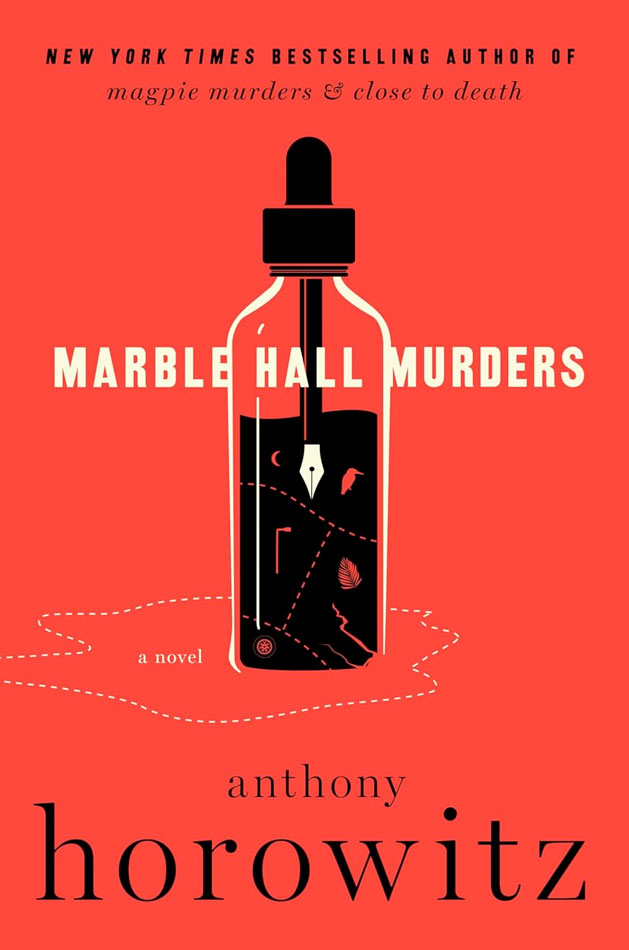 Maybe I’m wrong but Anthony Horowitz’s Marble Hall Murders feels like the end of his book-within-a book trilogy that began with Magpie Murders—I call it the “bird book” because most of the characters have bird’s names—and Mayflower Murders, the second book in the series. Notice that the letter “M” features prominently in all of their titles. I don’t know what that means but if you do, please tell me.
The series follows the adventures of Susan Ryeland, a book editor who seems to have the worst luck since Jessica Fletcher. In each of the books Ms. Ryeland—I’m sure her name has some hidden meaning, anagram or puzzle that’s a feature of all three books—gets involved in editing a book about a detective named Atticus Pünd, Horowitz’s stand in for Hercule Poirot. Ryeland herself is a stand-in for a younger Miss Jane Marple. So if you haven’t already figured it it, Horowitz has wrapped one Agatha Christie novel around another one and you end up getting so involved in one story that it’s almost disappointing when you’re ripped away just when the going gets good and have to jump into the other one and the cycle repeats itself in the other story. While this bouncing back and forth can be distracting at first, it is, at the same time, delightful once you get over any anxiety about it.
Since the creator of Atticus Pünd was murdered in the first book, by his book publisher no less, sorry if that’s a spoiler but an adaption of the book has already appeared on PBS‚ the book that Ms Ms. Ryeland is editing is a “continuation series,” a practice Horowitz take some potshots at. That’s humorous because he, himself, wrote a continuation James Bond novel! I get the feeling that Horowitz is having fun with this series both with the Agatha Christie references and the fun he gets to make of the book publishing industry. Having, for a short time, been a freelance publisher for a small photographic book publishing company I can only say, this all rings true.
The plot of what I call the inner novel—the Atticus Pünd adventure set in 1955’s France—and the outer novel—the beleaguered Susan’s contemporary story—revolves around the suspicious death of a beloved author of children’s book and the the dysfunctional family surrounding her. In the inner novel she is truly beloved while in the outer novel her alter ego is, let’s just say, not so much. The author of the Atticus Pünd continuation novel is a grandchild of the old bitty and wants to spill the tea about her by writing an allegorical book about the whole messed up family. As in the other books in this series, Marble Hall Murders is filled with anagrams and puzzles and while I don’t care for these literary devices, I patiently wait for them to be explained and enjoy the solution more than the puzzle itself.
While the outer story is well done in a way that only a skilled storyteller like Horowitz can weave, he does fall back on one trope I don’t care for where the protagonist is falsely accused of a murder. I think this cliche rarely works in a book or movie because, over the years, it’s just been beaten to death. The one exception is Roger Donaldson’s 1987 thriller No Way Out, starring Kevin Costner. In Marble Hall Murders it’s bearable because of the presence of a sympathetic Chief Inspector from Scotland Yard who gives Ms. Ryeland the kind of compassionate treatment that only occurs in Cozy Mystery novels like this one.
I found the the Atticus Pünd novel to be the more compelling of the two stories partly because of the presence of the character Frederic Voltaire, a French policeman from the Sûreté. First, there is his initial hostile relationship towards Pünd that evolves to their eventual friendship. Second, there is the mere presence of Voltaire, a really intriguing character who I want Horowitz to write a book or series about! In the Pünd inner story the people are, for the most part, sympathetic, while in the outer novel nobody, with maybe the exception of the murderer, which may explain why I liked the inner story better. Maybe that was the whole point of the entire book?
Marble Hall Murders, like all of Horowitz’s novels, with the exception of Moriarty—don’t read it!—is an involving and clever read. While I was able to figure our who one of the baddies was in the outer novel, I think this person—NO SPOILERS— was just a red herring that Horowitz threw in there to confuse the reader when he was getting ready to pull the rug out from all of your suspicions with a clever reveal with all of the subjects gathered together in, where else, the library of Marble Hall. Highly recommended, especially to fans of classic cozy mystery novels.