
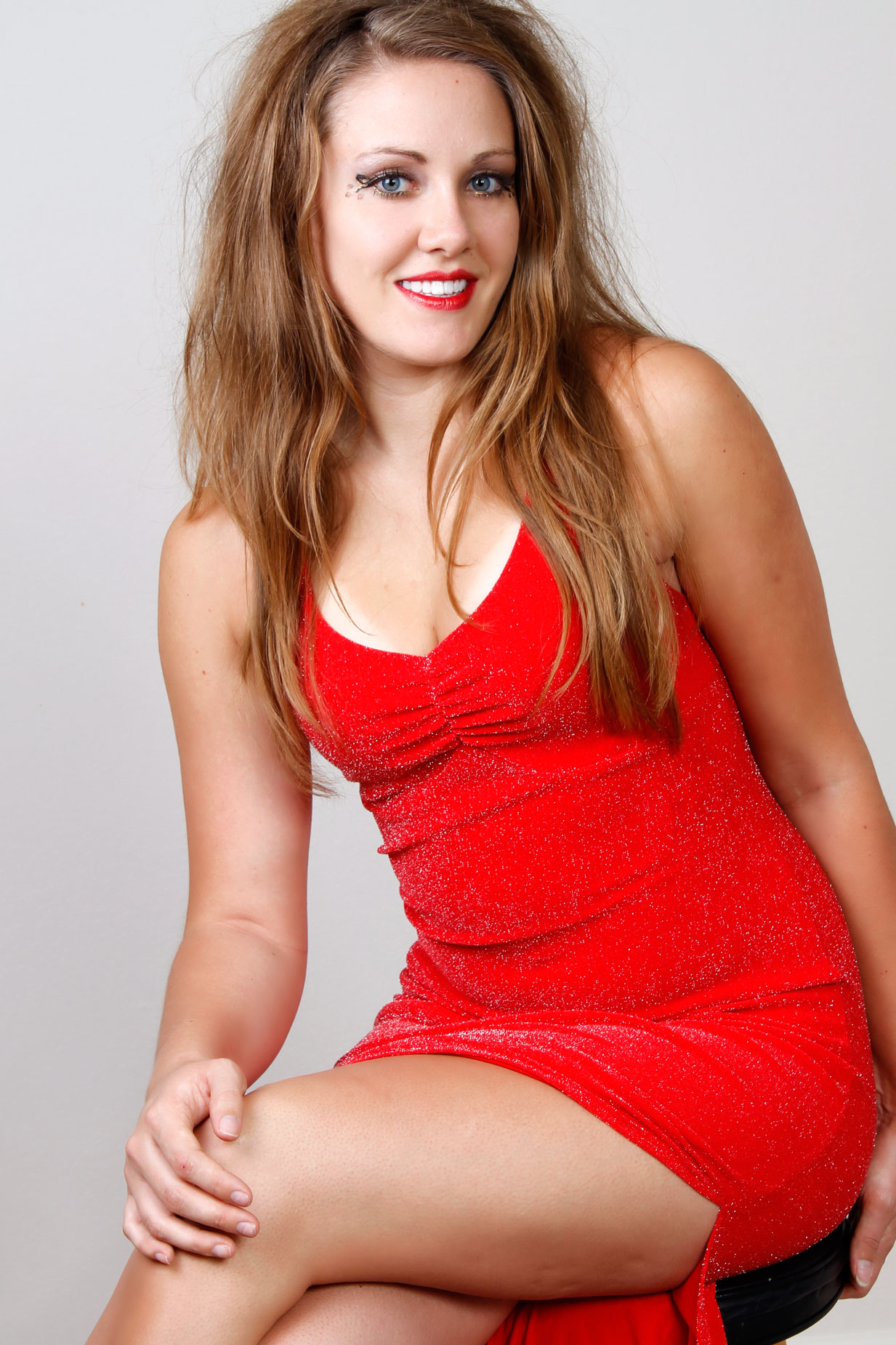
It’s “Tricky Tuesday,” a way for me to share some of the tricks, tips and techniques I’ve used over the years when shooting portraits in the studio. This Tuesday’s post features Amber, a dancer who I photographed several times for Shutterbug magazine. It’s also Random Acts of Kindness Day. Sometimes it’s the smallest act that makes the biggest impact on others, something as simple as saying please or thank you can turn someone’s day around and make life seem that much better. Give it a try today and maybe make it a habit!
Today’s Post by Joe Farace
At the moment I’m getting more and more accustomed to talking to the models while I’m painting, so as to keep the liveliness in their faces.”—Vincent Van Gogh (Letter to Theo van Gogh, Antwerp, Monday, 14 December 1885)
What I find interesting about the above quote is how Van Gogh figured out how talking to his models produces better portraits. This is something that one of my early mentors stressed to me back in the seventies and is just as valid in this century as it was in Van Gogh’s. This is something that I wrote about in Talking with Your Portrait Subjects and if you haven’t read that post yet, maybe take a look when you have time.
Hardware Matters too, to some extent
Monolights, as I’ve written about before, combine the studio light’s power supply and flash head into a single, often compact, unit. Another approach to studio lighting is power pack & heads systems that offer these components as individual units that can be mixed and matched to produce different lighting set-ups.
 Because there’s no internal power supply, the flash heads in these systems tend to be small and some are downright tiny allowing you to place them in locations where larger monolights might not fit. Because these heads are often smaller than a monolight, there’s room for cooling fans without the head size getting too large or the fan too big and noisy.
Another advantage of this system is that the power supply can control more than one head. Usually the output for each flash is controlled separately in either symmetric or asymmetric configurations.The power supply itself can be larger because the design needn’t be concerned as much about heat buildup affecting the flash head allowing more flash heads to be connected. Sometime you can get by with two lights as this set-up demonstrates.
How I Made this portrait: For this portrait of Amber, the main light had a Broncolor head with 28-inch square softbox that was placed at camera left. A second head provided fill and was fitted with a 60-inch parabolic umbrella. I was easily able to change power settings on the power pack putting just the amount of light I wanted to place in whichever head was doing a particular job—key vs. fill light. For a two head system, its versatility was unmatched although occasionally I could have liked a slightly longer cord on one of the heads as I was trying all these various lighting configurations.
The background was my (formerly) white-painted studio wall. The exposure with an entry-level Canon EOS Rebel T3 with EF-S 18-55mm f/3.5-5.6 IS lens (at 51mm) and an exposure of 1/125 sec at f/14 and ISO 100. The image was retouched and processed in Color Efex with the Skin Softener plug in added to smooth the image.
Lighting ratio: When using any studio flash system you’re eventually going to encounter this buzzword. Lighting ratio is the difference between the brightness of light falling on your subject between the main (or key) light and the fill light but there can also be tertiary lights such as adding highlights to the subject’s hair or illuminating the background. Understanding this concept can be important with power packs that offer asymmetric controls that can be set for different output intensities. A lighting ratio of 3:1 is considered “normal” for color photography but you can be flexible in applying this rule and, to tell the truth, I seldom worry about hitting a specific ratio.
 If you enjoyed today’s blog post and would like to treat me to a cup of Earl Grey tea ($2.50), please click here. And if you do, thanks so much.
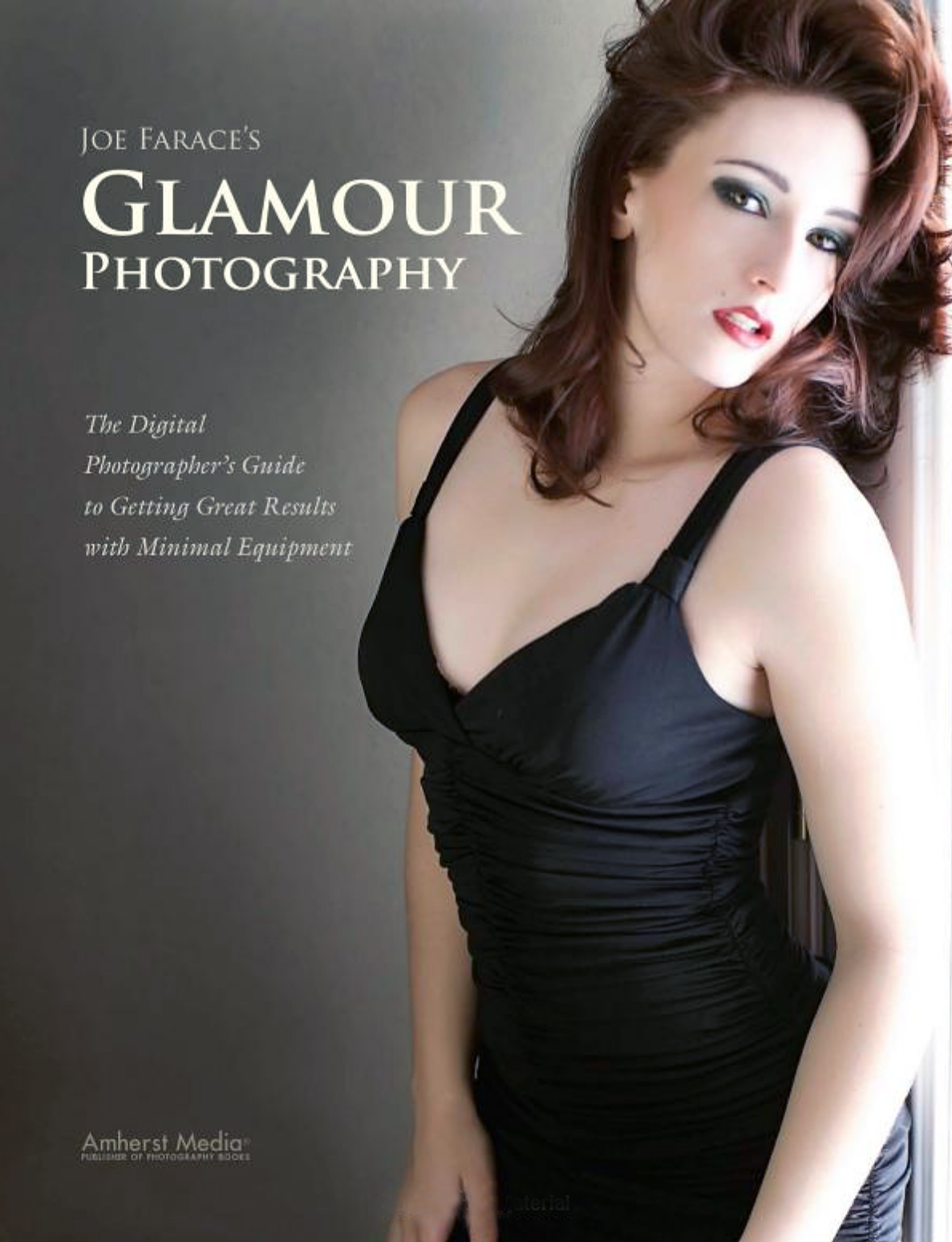
My book Joe Farace’s Glamour Photography is full of tips, tools and techniques for glamour and boudoir photography and includes information on all of the cameras used as well as the complete exposure data for each image. New books are $40.88 with used books starting around thirteen bucks.as I write this. The Kindle version is $19.99 for those preferring a digital format.