
Today is #anythingcanhappenday on the Blog. Lately I’ve increased the number of portrait-related posts appearing here and based on an increased number of page views, people seem to enjoy them.
Today’s Post by Joe Farace
“A portrait is not made in the camera but on either side of it.”– Edward Steichen
When I’m writing blog posts about portraiture, I’ll often quote my friend Rick Sammon who puts it this way: “The camera looks both ways” and suggests “that in picturing the subject, you are also picturing part of yourself.”
Is Your Camera a Mirror?
 When it comes to the amount of output that studio light produces, the output of flash units from monolights to power pack and head systems is usually measured in Watt-seconds. Ws is a unit of electrical energy that’s equal to the work done when a current of one ampere passes through a resistance of one ohm for one second. Sometimes you’ll hear this measurement called a Joule but both terms boil down to a way of measuring the power and discharge capacity of an electronic flash’s power supply.
One way to think of it is like automobile horsepower ratings but because Watt-seconds doesn’t consider reflector design it’s not a perfect indication of the total amount of light that can be produced by a given electronic flash unit. Because of that, you’ll occasionally hear the term Effective Watt-seconds used as a way to give you a better idea of what output you can actually expect from the flash.
Another method of flash output is lumensecond, which is a measurement of a light’s intensity falling onto a surface. A lumensecond refers to the light of one Lumen for one second or the equivalent, such as two Lumens for half a second. (A lumen is the unit for luminous flux, a measurement of the total amount of visible light emitted from a source.) The number of lumenseconds produced by a flash system depends on the efficiency of its electrical-to-light energy conversion. Most electronic flash units produce somewhere between 15 to 50 lumenseconds per Watt-second. This means that sometimes an efficient 300 Ws system can produce as much real output as an inefficient system rated at 1000 Watt-seconds.
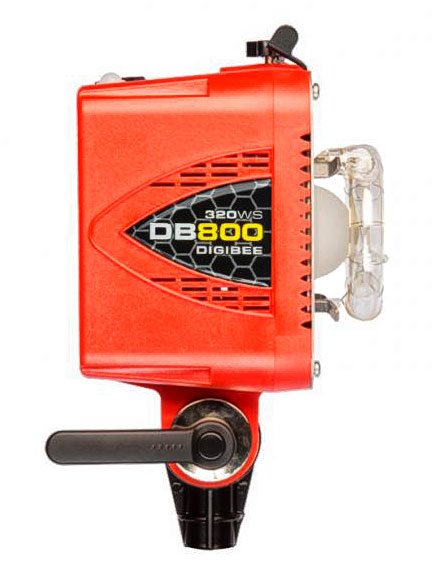 Then there’s the old light measurement standby from the speedlight world: Guide Number aka GN. (If you’re interested, the linked posts beats this sublet to death.)This is a measurement of flash output that considers the entire lighting package. The higher the guide number, the more light is output. Guide Numbers are quoted in feet or meters depending on where you live in the world and are valid for a given ISO setting.
How I Made this Portrait: For this featured portrait of the vivacious Erin Valakari, a Lastolite Distressed Paper collapsible background was used as the backdrop and leaned against another background hanging from my JTL background stands. The lighting was from a single Paul C Buff DigiBee 800 with a Plume Wafer HexOval 100 (37.5 x 27.5 by 12 inches deep) soft box attached and placed at camera right while a 32-inch reflector was located at camera left. The camera used was a Panasonic Lumix GH4 with G Vario 14-45mm f/3.5-5.6 lens at 43mm with an exposure of 1/160 sec and f/6.3 and ISO 200.
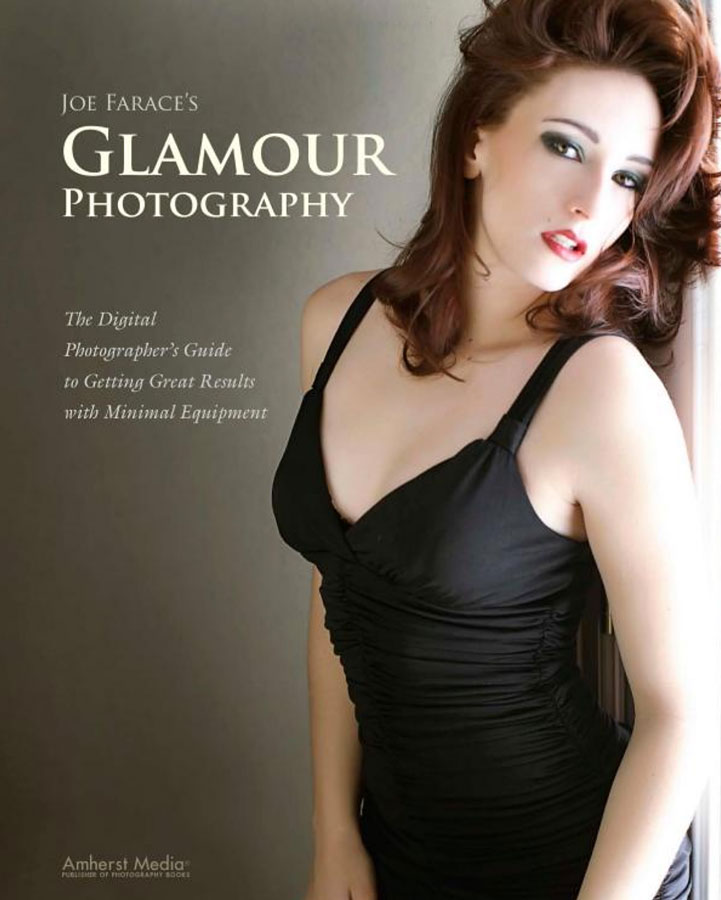
Joe Farace’s Glamour Photography contains tips, tools and techniques for glamour and boudoir photography and includes information on the cameras and lenses I used as well as complete exposure data for every image. Used copies start around ten bucks, as I write this. The Kindle version is $19.99 for those readers preferring a digital format.